With so many products on supermarket shelves calling themselves ‘natural’, ‘organic’, and ‘full of goodness’, it can be easy to assume they’re healthy. But foods with a healthy-sounding label can be misleading and not a healthy option.
The latest Healthylife Living Healthy Report 2026 shows that, despite Australians feeling confident in their health knowledge and ability to look after themselves, we are still not eating enough of the 5 core food groups. We are also eating too many discretionary foods (also called ‘sometimes’ foods), such as biscuits, pastries, fast foods, and sugary soft drinks or energy drinks.
Are we as good at understanding food packaging as we think we are? Or are clever words and wellness trends giving some foods a ‘health halo’?
What is a health halo?
A health halo is when one positive feature of a food makes us perceive the whole product as healthier than it might be.
Take a packet of crackers labelled as ‘wholegrain’. You might naturally assume they’re nutritious, but that one claim doesn’t tell you how much salt, saturated fat or other ingredients are in the product. It also does not tell you whether they are any healthier than a different packet of crackers not labelled as ‘wholegrain’ This is where a little label detective work can be useful.
Some words on food packaging are regulated under the Food Standards Code and have specific criteria attached to them. Others are marketing terms that can create a health impression without giving you the complete nutritional picture.
Here are some common health halo terms to look out for.
Natural
What it sounds like: Minimally processed, wholesome and better for you.
What it actually tells you: Not much about the overall nutritional value of the food.
‘Natural’ and ‘pure’ can create an impression of healthiness, but a food can still be high in added sugar, saturated fat or sodium while using positive-sounding language.
Our expert tip: Flip the packet over and look at the ingredients list and nutrition information panel.
High protein
What it sounds like: A nutritious, filling option that supports a healthy diet.
What it actually tells you: That the food meets the criteria to make a protein content claim. A product must contain at least 5 grams of protein per serve to make this claim, and at least 10 grams per serve to be labelled ‘high protein’. It doesn’t automatically mean the whole product is nutritious.
Protein can be an important part of a balanced diet, but adding protein to a biscuit, bar or dessert does not automatically make it a nutritious option. Often these high-protein foods are ultra-processed and may not give your body other nutrition beyond the protein.
Our expert tip: Ask yourself what else is in it? Can you recognise the first 3 ingredients in the label? If not, it is an ultra-processed food, and your body will thank you for sticking to less processed protein options such as lean-meat, legumes and dairy-foods.
Baked not fried
What it sounds like: Lighter, lower-fat and healthier.
What it actually tells you: That the product has been baked rather than fried. It does not tell you any real nutritional information.
A baked snack can still be high in energy, sodium or saturated fat depending on the ingredients added when it is baked.
Our expert tip: Cooking method is one piece of the puzzle, not the whole puzzle. Check the nutrition information panel before assuming baked means better. Look at how much saturated fat and added sugars the product has compared to similar products.
Organic
What it sounds like: Healthier, cleaner and more nutritious.
What it actually tells you: Organic refers to how agricultural products are grown or produced, or that nothing has been added to a product during processing. But in Australia, organic certification is not mandatory for products sold domestically, so seeing the word ‘organic’ on a product doesn’t necessarily mean it has been certified to an organic standard. Businesses still need to be able to substantiate their organic claims and must not mislead consumers.
While the word ‘organic’ can be a positive, when it comes to dairy alternatives, it doesn’t mean that soy, rice, oat or nut milk is providing added nutritional benefits
Our expert tip: If organic certification matters to you, look for a recognised certification logo and check exactly which ingredients or products the certification applies to. And remember, organic doesn’t automatically mean lower in sugar, saturated fat or sodium, or that a product is more nutritious overall.
For dairy alternatives, choose ones that have added calcium and are ‘calcium-fortified’.
Gluten free
What it sounds like: Cleaner or healthier.
What it actually tells you: That the food meets the requirements for being labelled gluten free.
For people who need to avoid gluten (group of proteins), this information is essential. But for everyone else, gluten free doesn’t automatically mean more nutritious.
Gluten free foods can still be high in added sugar, saturated fat or sodium, such as in a biscuit, and may contain additives to replicate the texture or function of gluten.
Our expert tip: If you don’t need to avoid gluten, ‘gluten free’ is not a shortcut for health. Look at the whole product instead.
No added sugar
What it sounds like: Low sugar or sugar free.
What it actually tells you: That sugars have not been added to the food as part of its ingredients. It doesn’t necessarily mean the food contains no sugar. For example, some foods naturally contain sugars, such as fruit and dairy products. And a product with no added sugar can still be high in energy or contain other sweetening ingredients.
Our expert tip: Check the ingredients list and the total sugars in the nutrition information panel. ‘No added sugar’ is useful information, but it’s not a free health pass.

Light/lite
What it sounds like: Lower in energy (kilojoules or calories), fat or generally healthier.
What it actually tells you: You need to look at what the product is ‘light’ in. It could refer to fat, energy, flavour, colour or another characteristic, depending on the product and how the term is being used. And when one ingredient is reduced, another may sometimes be increased to help maintain flavour or texture.
Our expert tip: Find out what has actually been reduced before assuming ‘lite’ means healthier overall. After all, ‘lite’ isn’t even a word!
No artificial ingredients
What it sounds like: More natural and healthier.
What it actually tells you: It means the product doesn’t contain ingredients classified as artificial, but it doesn’t tell you whether the food is nutritious overall. It can still be high in sugar, saturated fat or sodium as well as contain colours and flavours that are more ‘naturally’ derived.
Our expert tip: Don’t let ‘no artificial ingredients’ distract you from the bigger picture. Check the ingredients list and nutrition information panel to see what you’re actually getting.
A simple label-checking checklist
Next time a product catches your eye with a big health claim, ask:
- What is the claim actually telling me?
Is it about one nutrient, one ingredient or how the food was produced? - What isn’t it telling me?
Check the rest of the nutrition information and ingredients list. - Where does it fit in my diet?
Is it contributing to 1 of the 5 food groups, or is it a discretionary (sometimes) food? - What does the rest of my day look like?
One food doesn’t make or break a healthy diet. Your overall eating pattern matters far more than a single claim on a packet.
Label reading could save you money
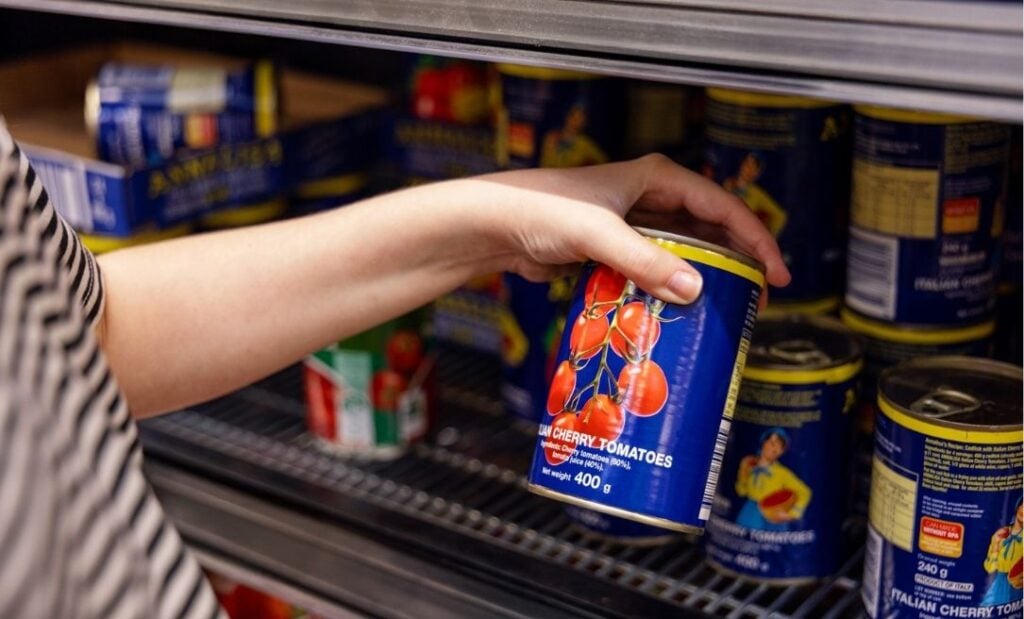
Learning to read food labels helps you choose healthy options. It could also help you save money. That doesn’t mean you need to scrutinise every package. It simply means looking beyond the biggest words on the front.
Many discretionary foods contain multiple ingredients, but their packaging can make them seem like a healthier choice. Once you get better at looking past the marketing spin and checking what’s actually inside, you may find yourself choosing fewer of these products, saving both time and money.
In fact, the Healthylife Living Healthy Report 2026 found that many of the core food groups we should eat more of, including vegetables and legumes, grains, and dairy can cost less per serve than many discretionary foods. So, eating fresh or less food is better for your health, and your wallet!

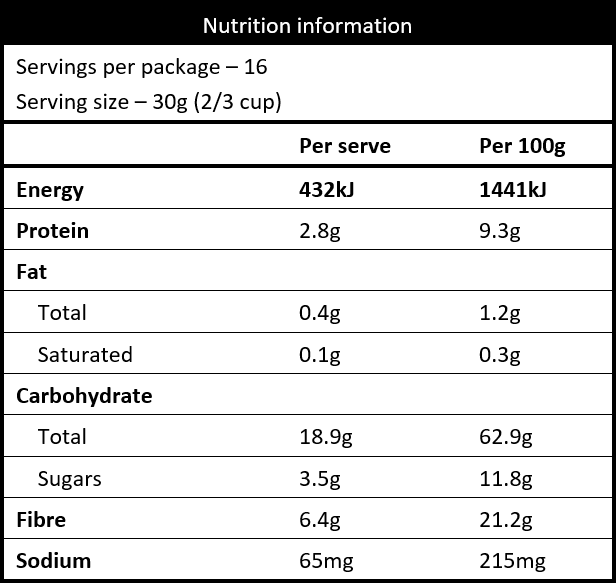
Nutrition panel tips – what to look for
Here are some tips on what to aim for when reading the nutrition panel on packaged foods, to help make healthier choices.
Nutrient target (look at the 100g column, usually on the right hand side)
Total fat: 10g per 100g or less
Saturated fat: 3g per 100g or less
Sugar: 15g per 100g or less of added sugars. To see if it’s added sugar, check the ingredients list. Any sugar listed in the ingredients list is added sugar, and the product may not be a healthy option. Note: Molasses, honey, agave nectar, rice sugar or sryup, golden syrup or coconut sugar are not ‘healthier’ versions of sugar. Our bodies use them in similar ways.
Sodium (salt): 400g per 100g or less is good, 120g per 100g or less is best
Ingredients list: First 3 ingredients are not sugar, fat or salt (sodium)
Example of a nutrition information panel on food packaging:
Don’t fall for the marketing spin
Food packaging is designed to help you choose, but it’s also designed to catch your attention.
The biggest trap with health halos is focusing on one positive feature while forgetting the bigger picture. The trick is not to let one positive health claim become a shortcut for judging the entire food. Look beyond the health halo.
Prioritise a varied diet built around the 5 food groups. Make vegetables a regular feature of your meals. Choose fresh foods over packaged foods whenever possible. And use the front of the packet as a starting point rather than the final verdict.
Related articles
- How to read food labels and make better choices
- Tips to make your family shop cheaper and healthier
- How to master the art of serve sizes and portions
Sources
- Australian Institute of Health and Welfare. (n.d.). Australian Burden of Disease Study 2018: Interactive data – risk factors. Retrieved 3 July 2026. https://www.aihw.gov.au/reports/burden-of-disease/abds-2018-interactive-data-risk-factors/contents/dietary-risk-factors
- Healthylife Living Healthy Report 2026. Retrieved 3 July 2026. https://www.healthylife.com.au/health-report-2026?srsltid=AfmBOop9SqqLQekfHezHuv_B5ywnqqp9DXGIrmHwlFG1bhbf4t15amwG
- Australian Government Department of Health and Aged Care. (n.d.). Australian guide to healthy eating. Eat for Health. Accessed 18 August 2026. https://www.eatforhealth.gov.au/guidelines/australian-guide-healthy-eating
- Australian Government Department of Health and Aged Care. (n.d.). Recommended number of serves for adults. Eat for Health. Accessed 5 July 2026. https://www.eatforhealth.gov.au/food-essentials/how-much-do-we-need-each-day/recommended-number-serves-adults
- Australia New Zealand Food Standards Code—Standard 1.2.7—Nutrition, health and related claims. (2015). Federal Register of Legislation. Accessed 6 July 2026. https://www.legislation.gov.au/F2015L00474/latest/text