Building a Prevention 2.0 ecosystem to tackle chronic disease
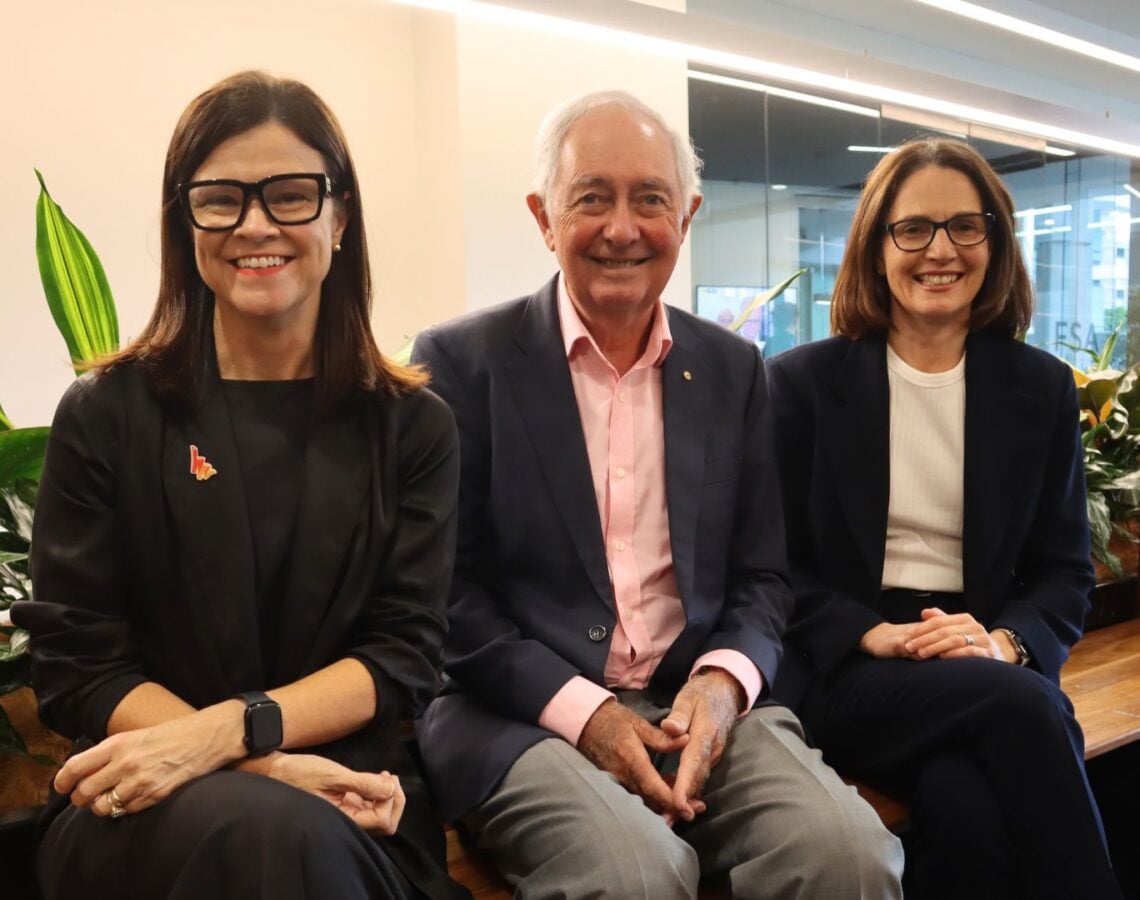
Dr Robyn Littlewood, Professor Ian Lowe and Joanna Munro
Across Australia, a worrying health pattern has been emerging: people are living longer yet developing chronic disease earlier and living with more complex health needs. Since 2013, around 85% of Australia’s total disease burden has been from chronic conditions.
The question is not how we try to lower this incidence, but how we best prevent it.
More than 1/3 of national disease burden is linked to modifiable risk factors such as poor diet, physical inactivity, smoking and harmful alcohol use. At the same time, the environments people live in, shaped by access, affordability and the aggressive marketing of unhealthy products, continue to make healthy choices harder. For example, access to fresh food varies dramatically, with produce in some areas travelling thousands of kilometres over many days to reach shelves, dramatically increasing its cost.
As the National Strategic Framework for Chronic Conditions indicates, the increase in people living with chronic conditions is placing sustained and growing pressure on our healthcare system.
Chronic illnesses are now recorded as an underlying or associated cause in around 90% of deaths nationally, with many still occurring prematurely. In many cases we can see that these deaths would be preventable through stronger public health action, and better follow-up care.
However, as Croakey has reported, the impact of chronic disease, is far from evenly distributed. Life expectancy varies significantly between metropolitan areas and certain regional and remote parts of Australia. The disparity is striking, with some communities facing a median age of death that is decades lower than others.
These are not just health statistics; they are systemic challenges that demand a different response.
The challenge is clear: treating illness alone will not keep pace with demand. As the National Partnership on Preventive Health suggested well over a decade ago, prevention needs to move from the margins to the centre of how Australia approaches health. However, the scale and urgency of today’s challenge demand a step change. Prevention 2.0 represents that shift; from stand-alone programs to a connected, system-wide approach that is better embedded in the places people live, work and learn.
Why Prevention 2.0?
Where prevention was once delivered as individual initiatives at different disease stages, what we at Health and Wellbeing Queensland call Prevention 2.0 focuses on shaping the eco-systems and environments that influence health every day.
This approach builds on established health promotion principles, including those articulated in the Ottawa Charter for Health Promotion, while responding to modern realities of chronic disease, inequity and digital connectivity.
Prevention 2.0 brings together partners across healthcare, government, education, research, community organisations and industry to create aligned, mutually reinforcing action. Health and Wellbeing Queensland has formalised this approach through Memoranda of Understanding with Torres and Cape Hospital and Health Service, South West Hospital and Health Service, and Cook Shire and City of Gold Coast councils, among others.
In practice, this means Federal, State and Local governments working with an expanded network of partners, from healthcare providers to local governments, freight and logistics industry, retailers, producers and community leaders, recognising that health is shaped as much by food systems, transport and local environments as it is by clinical care.
Stacking multiple, evidence-based interventions across settings such as early childhood education, schools, workplaces, healthcare and community environments can produce cumulative and amplified health benefits. The result is not a single program, but a system working together to support healthier lives.
At the same time, the pace of change must accelerate. Traditional models of research translation, that often take many years to move into practice, are no longer sufficient to respond to the scale and urgency of chronic disease.
Delivering Prevention 2.0
Operationalising Prevention 2.0 In Queensland means taking coordinated action in 4 key ways:
1. Embedding prevention where it work
Prevention is most effective when it is part of everyday health interactions. Integrating preventive measures into routine care enables earlier identification of risk and timely access to support, without adding to the burden on frontline clinicians.
The UK-developed Making Every Contact Count (MECC) strategy suggests how brief, opportunistic conversations across health and community settings can support behaviour change at scale.
In Australia, similar models are being applied through initiatives that integrate physical activity screening and brief interventions into routine care. Queensland’s Move and Measure It! program, delivered in partnership with health services and academic collaborators, demonstrates improvements in knowledge and self-reported confidence, and increased engagement in brief intervention.
Health and Wellbeing Queensland also delivers Wellness My Way, a free, personalised approach to improving health and wellbeing across remote and rural communities in the state’s south west. Delivered through a partnership between health services and an academic institution, it provides a single front door to risk assessment, coaching and referral, complementing clinical care while supporting people to stay well in their communities.
Early findings from the 11-month pilot demonstrate improved access to, and coordination of, prevention with 383 completed health checks and 252 referrals to evidence-based prevention pathways.
2. A regional, partnership-led approach
In regional and remote Queensland Prevention 2.0 brings together health services, local government, community organisations, researchers, industry partners and local leaders to design place-based solutions where access to services is limited.
Queensland’s Gather + Grow is the state’s first coordinated food security strategy. It brings together 17 government departments and a broad coalition of partners, from transport and retail to agriculture, education and community leadership, to address food access in remote Aboriginal and Torres Strait Islander communities in the Torres Strait, Cape York and Lower Gulf regions.
Among this program of work is the Healthy Stores Research Project, which is being delivered in partnership. Over 3.5 years, the project implemented evidence-based strategies to encourage healthier food and drink purchases in 21 remote stores, the first project of its kind in Queensland.
Early results are already showing measurable improvements, such as a 10.8% improvement in the store healthiness. Research shows even a 1% improvement can positively influence customer choices, highlighting the potential impact of this work.
3. Data, digital and personalised prevention
Contemporary preventive health relies on high-quality data, digital delivery and rigorous evaluation to reach scale and deliver impact.
Digital platforms, such as Queensland’s 10,000 Steps, demonstrate how use of mobile and wearable technologies, when combined with a care program, can support behaviour change through goal setting, self-monitoring and social motivation, while remaining accessible across diverse populations.
At the same time, data-driven approaches enable health professionals to tailor exercise, personal care and nutrition programs to different life stages, cultures and communities, delivering more personalised and effective disease prevention.
Embedding evaluation and economic analysis into programs, like Logan Healthy Living, ensures that impact can be measured, strengthened and sustained over time.
4. Small changes, big impact
Queensland’s Prevention 2.0 strategy is grounded in the understanding that small, consistent actions can deliver meaningful health gains.
Large-scale research shows that even modest increases in physical activity are associated with measurable reductions in mortality and gains in life expectancy. Similarly, reducing sedentary behaviour by just 30 minutes per day improves health outcomes.
Importantly, the greatest benefits are seen among those who are currently least active, reinforcing the importance of practical, achievable changes that people can maintain over time.
While there is no published Queensland data, there are studies globally that show this:
- A European study including 334,161 individuals showed that the lowest activity groups had the greatest reductions in mortality risk
- A US predictive modelling study found that the greatest gain in lifetime per hour of walking was seen for individuals in the lowest activity quartile where an additional hour’s walk could add approximately 6.3 hours of life expectancy.
Health and Wellbeing Queensland scales its impact through collaborative, evidence-informed approaches that promote health and wellbeing across communities, settings, and systems throughout Queensland.
More specifically, Health and Wellbeing Queensland focuses on:
- Statewide partnerships to increase reach and strengthen coordinated action across Queensland (My health for life)
- Place-based delivery to connect with local partners and leverage local opportunities to support health and wellbeing outcomes (Wellness my Way, Gather + Grow)
- Systems-level approaches to target the environments where people, live, learn, work and play (A Better Choice)
- Building networks and capability to strengthen the prevention workforce and support sustainable, long-term impact (Echo® Learning).
From national challenge to local action
More than 1/2 of Queenslanders live with at least 1 chronic condition, and many live with multiple conditions, with the Australian Bureau of Statistics reporting a significant increase over the past decade. Chronic diseases are driving substantial health system costs, including billions of dollars annually across cardiovascular disease, diabetes, stroke and chronic respiratory conditions.
This trajectory is unsustainable. While people are living longer, there is a real risk that future generations may not live healthier lives, with rising rates of overweight and obesity threatening to reverse decades of progress.
Queensland is responding by applying a Prevention 2.0 approach. This involves building a connected ecosystem that integrates prevention into the health system, scales evidence-based programs, and works in partnership with communities across the state.
Measuring the productivity of prevention
The benefits of prevention extend well beyond the health system. A healthier population supports workforce participation, reduces absenteeism and presenteeism, and strengthens economic productivity.
National modelling by the Productivity Commission has shown that improvements in population health could deliver billions of dollars in economic benefit each year. Early outcomes from place-based programs are also demonstrating strong returns, with evaluations showing up to $1.82 returned for every dollar invested.
At the same time, participants in these programs are experiencing meaningful reductions in hospital admissions and emergency department presentations, providing hard evidence that prevention can deliver both health and economic benefits at scale.
Looking ahead
Prevention 2.0 is about more than reducing risk. It is about reshaping how health is created and sustained across Australia.
It is about moving from isolated efforts to coordinated, system-wide action. It is about supporting today’s health system while protecting future generations. And it is about ensuring that wherever people live, they can be well.
This is what Prevention 2.0 looks like in practice: a proactive, coordinated approach that leverages partnerships and data, empowers communities, and is designed to scale and spread.
It recognises the value of prevention and redefines how we deliver it, ensuring that interventions are targeted, inclusive, and sustainable.
The evidence is clear: prevention works. The challenge now lies in our collective resolve to act decisively and at the speed and scale necessary to meet the growing health challenges of our time. The question is no longer whether we can afford to invest in prevention, but whether we can afford not to.
Sources
- Institute of Health and Welfare. (2024). Australia’s Health: Chronic Conditions. Available from: https://www.aihw.gov.au/reports/australias-health/chronic-conditions
- Australian Institute of Health and Welfare. (2024). Australian Burden of Disease Study: impact and causes of illness and death in Australia. Available from: https://www.aihw.gov.au/reports/burden-of-disease/australian-burden-of-disease-study-2024/contents/summary
- Queensland Government. (2023). Report of the Chief Health Officer Queensland 2025 – The Health of Queenslanders. Available from: https://www.choreport.health.qld.gov.au/archive/2025/our-health/chronic-diseases#section__burdenofdisease
- Smithers LG et al. (2018). Unhealthy food advertising and children’s exposure. Journal of Paediatrics and Child Health. Available from: https://onlinelibrary.wiley.com/doi/epdf/10.1111/jpc.13929
- The State of Queensland, Health and Wellbeing Queensland. (2022). Report 1 – Impact of Obesity on Life Expectancy in Queensland. Available from: https://hw.qld.gov.au/wp-content/uploads/2022/10/HWQld_Impact-of-Obesity-on-Life-Expectancy-in-Queensland_October-2022.pdf
- World Health Organization. Ottawa Charter for Health Promotion (1986).
- Australian Government. National Preventive Health Strategy 2021–2030. Available from: https://www.health.gov.au/sites/default/files/documents/2021/12/national-preventive-health-strategy-2021-2030_1.pdf
- Obesity Evidence Hub. Unhealthy food marketing and children: exposure and impact. Available from: https://www.obesityevidencehub.org.au/collections/prevention/the-impact-of-food-marketing-on-children
- NHS England. Making Every Contact Count. Available from: https://www.england.nhs.uk/wp-content/uploads/2016/04/making-every-contact-count.pdf
- 10 Kirwan M, et al. Using Smartphone Technology to Monitor Physical Activity in the 10,000 Steps Program: A Matched Case–Control Trial. J Med Internet Res 2012;14(2):e55. doi: 10.2196/jmir.1950.
- Saint-Maurice PF et al. (2022). Estimated number of deaths prevented through increased physical activity among US adults. JAMA Internal Medicine, 182(3), 349–352. doi: 10.1001/jamainternmed.2021.7755.
- Eklund U et al. (2026). Deaths potentially averted by small changes in physical activity and sedentary time. The Lancet, 407, 339–349. Available from: https://doi.org/10.1016/S0140-6736(25)02219-6
- Matthews CE & Saint-Maurice PF. (2026). Quantifying the public health impact of physical activity. The Lancet, 407(10526), 310–311. Available from: https://doi.org/10.1016/S0140-6736(26)00093-0
- Australian Bureau of Statistics. (2024). National Health Survey: State and Territory Findings. Latest release. Available from: https://www.abs.gov.au/statistics/health/health-conditions-and-risks/national-health-survey-state-and-territory-findings/latest-release
- Queensland Government. (2023). Report of the Chief Health Officer Queensland 2025 – The Health of Queenslanders. Available from: https://www.choreport.health.qld.gov.au/archive/2025/our-health/chronic-diseases#section__burdenofdisease
- The State of Queensland, Health and Wellbeing Queensland. (2022). Report 1 – Impact of Obesity on Life Expectancy in Queensland. Available from: https://hw.qld.gov.au/wp-content/uploads/2022/10/HWQld_Impact-of-Obesity-on-Life-Expectancy-in-Queensland_October-2022.pdf
- Productivity Commission. Shifting the Dial: 5 Year Productivity Review, Report No. 84. 2017. Canberra. Available from: https://www.pc.gov.au/inquiries/completed/productivity-review/report