Snapshot
Since 2015, Australia has received a D- in children’s physical activity on the Active Healthy Kids Global Alliance Report Card AHKA Report Cards – ASPA. To help change this, the Play Active team and partners have created an intervention for young Australian children to boost energetic play in early childhood education and care (ECEC).
Background
Being physically active is critical for young children’s health and development. Healthy behaviours are often set in childhood, yet 90% of young children (3-5 Years) do not meet the physical activity recommendations in the Australian 24-Hour Movement Guidelines for the Early Years. This is largely due to a lack of energetic play.
Since young Australian children spend a large portion of their waking hours at ECEC, the program was designed to support early learning professionals to provide an active and healthy environment for children in their care. Prior to the development of Play Active, there were no existing guidelines, policies, professional development, or support for ECEC providers to create and implement a physical activity policy. Less than one in five services in Australia had a policy promoting children’s physical activity prior to the launch of Play Active in 2024.
Program implementation
With valuable input from the ECEC sector, Health and Wellbeing QLD, national health promotion agencies, state governments, and the play sector, the Play Active program was developed and trialled in 80 West Australian services in 2021. The trial demonstrated that:
- 100% of services adopted their own physical activity policy.
- 80% of ECEC staff were satisfied or very satisfied with the program.
- Uptake of the policy led to significantly higher adoption of high-impact procedures within centres.
Thanks to the promising results from the trial, additional funding allowed Play Active to launch nationally in 2024, supported by teams in Brisbane, Adelaide, and Perth.
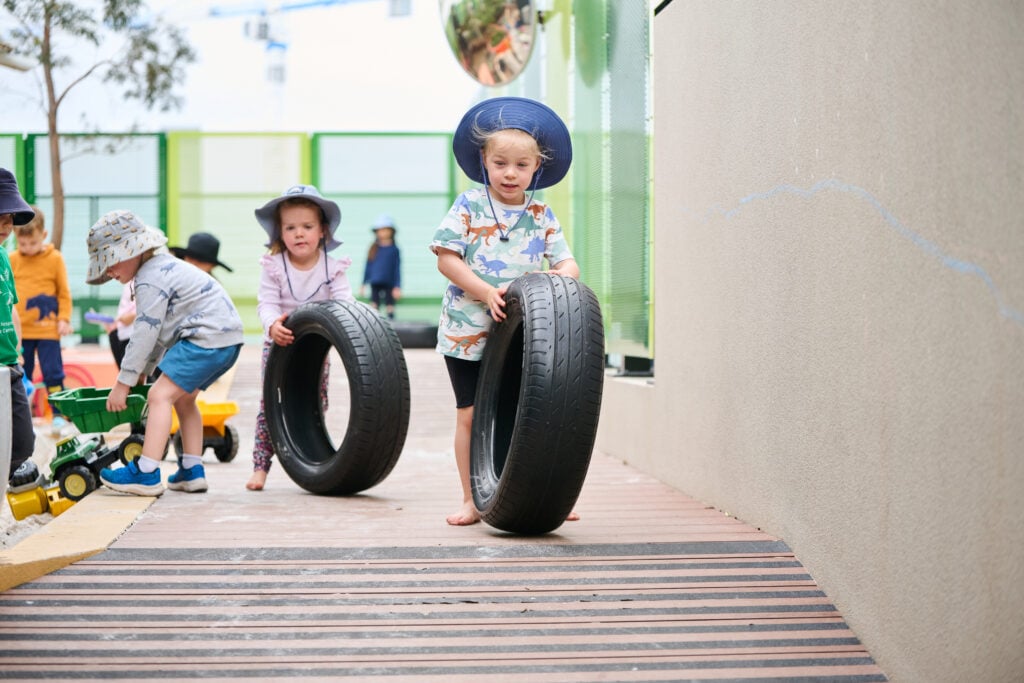
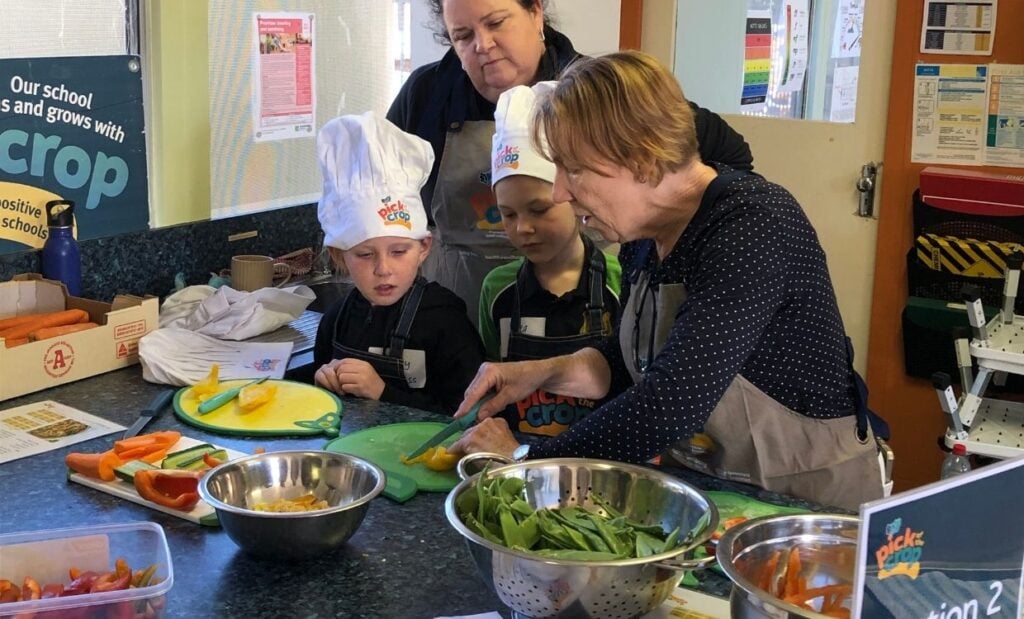
Photo by Play Active.
Monitoring, evaluation and learning
Play Active is an evidence-based program, benefitting from ten years of research. Ongoing research into children’s health and development is built into the core of Play Active, so that while services are learning, so are the research team.
Surveys provide ongoing input to services to monitor their progress as well important evaluation feedback on Play Active. Services and parents can opt to enroll their children in an accelerometer study to capture real time changes in children’s movement behaviours.
The ongoing evaluation provides rich data for analysis, publications, reports, policy documents and other translational outputs.
Funding and resources
Funding for the Play Active program is thanks to The Australian Government Department of Health and Aged Care, Healthway, and the Heart Foundation. The Australian Research Council’s Centre of Excellence for Children and Families over the Life Course also supports the study, Australian National Health and Medical Research Council funded the 2021 trial.
Our Partner Advisory Group
Early childhood education and care sector
- Early Childhood Australia
- Australian Childcare Alliance QLD, WA and SA
- Goodstart Early Learning
- The Y
- Sonas Early Learning & Care
- Sagewood Early Learning
Non-government organisation
- Cancer Council WA
Government sector
- Health and Wellbeing Queensland
- WA Department of Creative Industries, Tourism, and Sport
- WA Department of Health
Play sector
- Nature Play WA
- Play Australia
- Play Matters Collective
Academic sector
- The Kids Research Institute Australia
- The University of Western Australia
- University of Queensland
- University of Southern Denmark
- University of South Australia
- The University of Sydney
- The University of Victoria
Key insights
Ten years of research backed by accelerometry studies have shown that most children do not get enough daily energetic play. While young children are active, they get only two thirds of the recommended 60 minutes per day of energetic play (more is better!). Since energetic play improves physical and social-emotional development, self-regulation, and cognitive school readiness, getting it right is important.
Patterns established in early childhood persist, so the program provides a fantastic opportunity to grow healthy bodies and brains for life.
Play Active provides easy to use, flexible, and evidence-informed support aligned to the Early Year’s Learning Framework and the National Quality Standards.
Based on feedback from the sector around affordable and effective implementation strategy, a low-cost Play Active membership provides an online and self-paced program with tailored feedback and ongoing support for services. The program helps grow the skills, confidence, and knowledge of early childhood educators to create environments that support physical activity, and identify areas for positive change to improve the health and wellbeing of children in their care.
Online video-based professional development for educators is fast and free. Upon completion, educators complete a short quiz and receive a certificate, valid for two years.
While ECEC professionals and associations are the primary audience for the program, parents and professionals in the early years are also influential stakeholders to create lasting change in children’s movement behaviours. Parent resources are also available via the Play Active website.
Next steps/opportunities
Despite national legislation requiring ECEC services to have sun safety and nutrition policies there is currently no legislation to require a physical activity policy. This should to be considered.
The more services participate in the program, the more children will benefit from an active and healthy start to life. Get involved and help us spread the Play Active message and program.
For further information
Visit playactive.org.au
For weekly active play ideas check out Instagram and Facebook.
Sources
- Christian, H. E., Cross, D., Rosenberg, M. Development of physical activity policy and implementation strategies for early childhood education and care settings using the Delphi process. International Journal of Behavioral Nutrition and Physical Activity 2020;17:131. https://doi.org/10.1186/s12966-020-01034-2
- Bai, P., Thornton, A., Lester, L. Nature Play and Fundamental Movement Skills Training Programs Improve Childcare Educator Supportive Physical Activity Behavior. Int. J. Environ. Res. Public Health 2020;17:223. https://doi.org/10.3390/ijerph17010223
- Christian, H., Trapp, G., Villanueva, K. Child’s Play: The Play Spaces and Environments for Children’s Physical Activity (PLAYCE) Study Report. Telethon Kids Institute; 2018. https://www.thekids.org.au/globalassets/media/documents/brain–behaviour/child-physical-activity-health-and-development/christian_2018_childs-play_playce-study-report-2018.pdf
- Maitland, C., Lester, L., Trost, SG., Rosenberg, M. The Influence of the Early Childhood Education and Care Environment on Young Children’s Physical Activity: Development and Reliability of the PLAYCE Study Environmental Audit and Educator Survey. Int J Environ Res Public Health. 2020 Apr 6;17(7):2497. doi: 10.3390/ijerph17072497. https://www.thekids.org.au/our-research/reports-and-findings/2020/april-2020/the-influence-of-the-early-childhood-educati/
- Christian, H., Lester, L., Trost, SG. Shade coverage, ultraviolet radiation and children’s physical activity in early childhood education and care. Int J Public Health. 2019 Dec;64(9):1325-1333. doi: 10.1007/s00038-019-01289-y. https://www.thekids.org.au/our-research/reports-and-findings/2019/december-2019/shade-coverage-ultraviolet-radiation-and-chil/
- Bai, P., Thornton, A., Lester, L. Nature Play and Fundamental Movement Skills Training Programs Improve Childcare Educator Supportive Physical Activity Behaviour. Int J Environ Res Public Health. 2019 Dec 27;17(1):223. doi: 10.3390/ijerph17010223. https://www.thekids.org.au/our-research/reports-and-findings/2020/january-2020/nature-play-and-fundamental-movement-skills/
Case study submitted by Play Active