

Eat healthy, enjoy food and save money – 7 tips on how to do it

We all want to eat better, feel better, and maybe even save a few dollars at the checkout. Nutritionist Mathew Dick from Health and Wellbeing Queensland says it’s entirely possible to do all 3 — and even learn to love what you eat along the way. Check out these 7 tips for building healthy habits that make eating both joyful and budget friendly.
1. Create positive mealtimes — slow down and eat together
Healthy eating isn’t just about what’s on your plate; it’s also about how you eat. Make mealtimes social, relaxing, and screen-free. Sitting down with family or friends helps us slow down, enjoy our food, and naturally make better food choices. When we’re not distracted by screens, we’re able to pay closer attention to our body’s natural cues of feeling full and avoid over-eating.
Try this:
- Turn off the TV and put away phones during meals.
- Sit at the table and chat while you eat.
- If you live alone, make mealtime special — play some music or set the table nicely.
You’ll not only eat more mindfully but also strengthen your connections with others.
2. Cook more meals at home
Cooking at home is one of the simplest ways to improve nutrition and cut costs. Home-cooked meals are usually lower in salt, sugar, and unhealthy fats compared to takeaway options. Plus, cooking together can be a fun and creative family activity.
Try this:
- Choose a couple of simple recipes to master and rotate through the week.
- Get kids involved — washing veggies, stirring sauces, or setting the table.
- Double recipes so you have leftovers for lunch the next day.
Cooking at home isn’t just better for your body — it’s better for your wallet too.

3. Plan your shopping and buy seasonal produce
A little planning goes a long way. Heading to the supermarket with a list (and a plan) helps you buy what you need, waste less, and stick to your budget.
Seasonal produce is fresher, tastier, and much cheaper — Mathew notes that veggies can cost as little as 65 cents per serve when in season.
Try this:
- Check what’s in season before you shop.
- Plan meals around those fruits and veggies.
- Avoid shopping when you’re hungry — it helps reduce impulse buys.
With a bit of planning, grocery shopping can feel less like a chore and more like a small step toward better health.

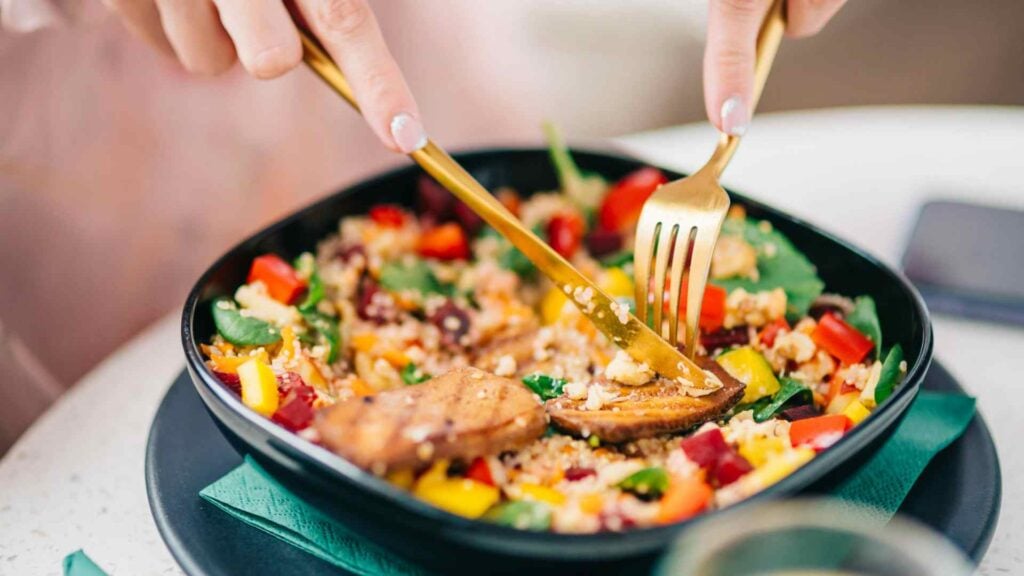
4. Eat with your eyes — Make your plate colourful
We really do eat with our eyes first! A plate full of colourful fruits and vegetables doesn’t just look appealing — it means you’re getting a variety of nutrients, too.
Try this:
- Add a mix of red, green, orange, and purple vegetables to your meals.
- Stir-fries, salads, and grain bowls are easy ways to pack in colour.
- Challenge your family to “eat the rainbow” each day.
The more variety you have on your plate, the more satisfying (and nutritious) your meals will be.
5. Fall (back) in love with vegetables
Most Australians eat less than half the recommended 5 serves of vegetables a day. Mathew says it’s time to bring them back to the centre of our plates — not just as a side dish.
Try this:
- Add extra veggies to pasta sauces, stews, and pizzas.
- Use fresh potatoes, not processed chips — they’re far cheaper and healthier.
- Keep frozen or canned vegetables on hand for busy nights.
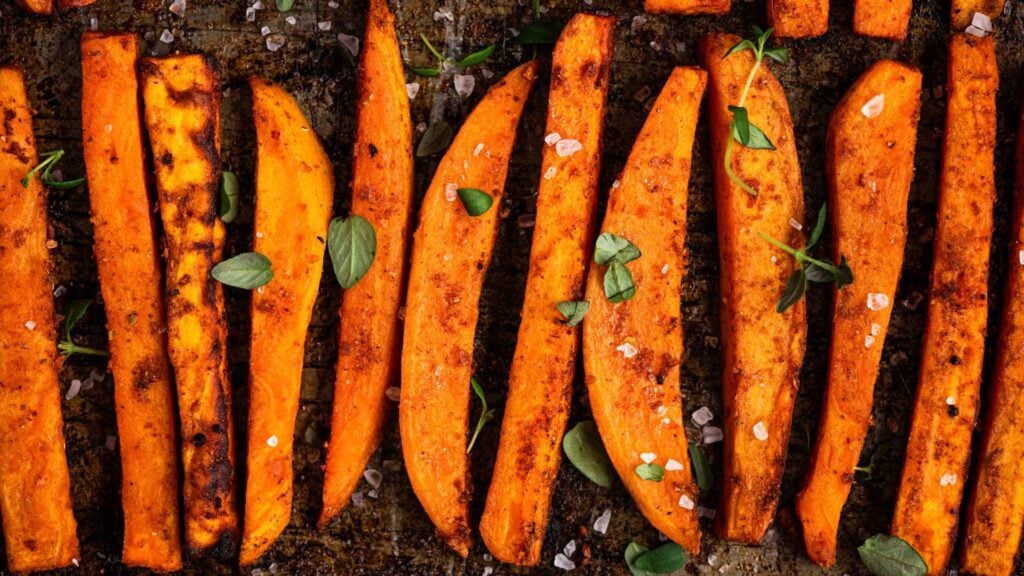
- Try cooking veggies in a new way – on the BBQ, in the air-fryer, or sautéing them to keep their crunch
Vegetables are nutritional powerhouses that boost your immune system, improve gut health, and keep you full longer — all while saving you money.
6. Reduce food waste with smart storage
Food waste hurts both the planet and your pocket. By storing food properly and keeping an eye on what’s in your fridge, you can stretch your grocery budget further.
Try this:
- Rotate older produce to the front of the fridge so it’s used first.
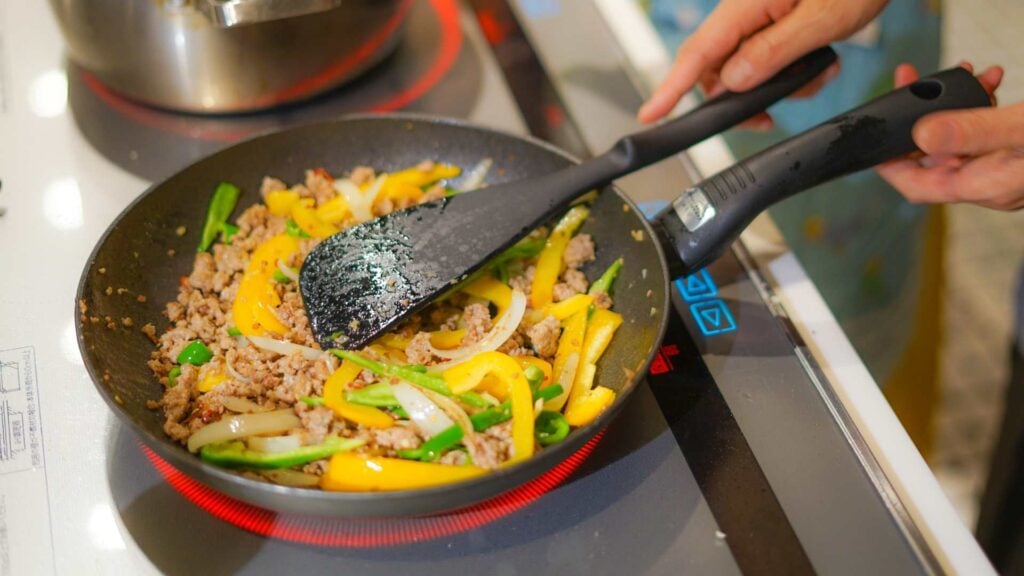
- Have a weekly “use-it-up” meal — stir-fries, soups, shepherd’s pie, or omelettes work perfectly.
- Store leafy greens in airtight containers with a paper towel to keep them fresh longer.
A little organisation can turn wilted veggies into delicious, budget-friendly meals.
7. Eat well on a budget — Choose smart protein sources
Healthy eating doesn’t have to be expensive. Mathew’s research shows that sticking to the 5 food groups is actually the cheaper way to eat. Processed foods and takeaways quickly add up in cost.
Try this:
- Use legumes like beans, lentils, and chickpeas as affordable protein options – these are great meat alternatives but can also be used to bulk out meals like tacos and shepherd’s pie.
- Buy in bulk when staples like rice or oats are on sale.
- Cook in batches and freeze portions for busy weeks.

Eating well on a budget is all about balance, planning, and a few smart swaps. By slowing down, cooking more, planning ahead, and prioritising fresh, colourful foods, you can enjoy every bite — and save money while you’re at it.
Sources
- Australian Bureau of Statistics. Dietary Behaviour. Published December 15, 2023. Accessed November 26, 2025. https://www.abs.gov.au/statistics/health/food-and-nutrition/dietary-behaviour/2022
- HealthyLife and Woolworths Group. Living Healthy Report 2025. https://www.healthylife.com.au/health-report-2025
- Eatforhealth.gov.au. The five food groups. Accessed November 26, 2025. https://www.eatforhealth.gov.au/food-essentials/five-food-groups
Acknowledgment
Content developed by Health and Wellbeing Queensland’s team of expert nutritionists, dietitians, and exercise physiologists.