PRECONCEPTION HEALTH
NUTRITION


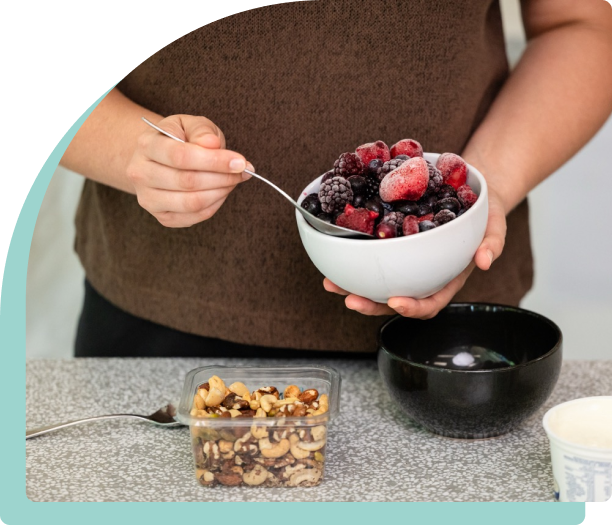
Your nutrition matters months before the bump. Healthy eggs and sperm are supported by healthy foods.
While folic acid and iodine supplements are needed before the baby bump, whole foods offer much more than vitamins and minerals.
Fruit, vegetables, and other whole foods such as wholegrains, legumes, nuts, seeds and lean proteins provide vitamins, minerals, fibre and phytochemicals that work together to support your health, including your fertility and preconception wellbeing. Learn more about what supplements you should take Before the Baby Bump.
A man’s diet affects sperm health, which can influence gene expression in the future baby and affect growth and risk of conditions such as obesity, diabetes and heart disease. Supporting each other to eat well makes it easier to keep healthy nutrition goals, no matter who is carrying the baby.
There are lots of delicious ways you can eat healthily on a budget. Use these tips to eat well without breaking the bank.
What you eat before the baby bump affects your baby’s future health, including their risk of things like diabetes and heart disease later in life
1 in 3 women of childbearing age are estimated to have low iron or anaemia. This can make it harder to fall pregnant and increases the risk of adverse outcomes such as preterm birth.
Around 94% of Australian adults don’t eat enough vegetables, and over half don’t meet fruit intake recommendations. This means many people are missing out on essential nutrients like folate, iron, and antioxidants, which support hormone balance, healthy eggs and sperm, and fertility. A diet rich in fruits, vegetables, wholegrains, lean proteins, dairy, nuts and seeds provides key vitamins, minerals, fibre and phytochemicals that work together to improve preconception health and fertility for both men and women.
Planning your meals and grocery shop can reduce the temptation to buy takeaways or eat on the go. Each homemade meal can save around $5 per serve, and even more if you usually order delivery.
Making healthy swaps in meals and snacks can help keep blood sugar regular, boosting energy levels and reduce mid-afternoon fatigue or late-night snacking.
Adding colourful fruit and vegetables to your daily diet can improve your skin, teeth and eye health.
Eating a diet rich in vegetables, fruits, wholegrains, nuts and lean protein can help lower blood pressure, reduce heart disease risk, and improve blood sugar – potentially reducing the need for long-term medication.
Enjoying a diet rich in vitamins and minerals can help keep you well and reduce the severity of cold or flu-like symptoms.
Fruits, vegetables and wholegrains are plant-foods that contribute to good gut health by adding fibre and probiotics to your diet.
Healthy eating is easier when both partners support each other to eat well. You can enjoy nutritious food without sacrificing time, flavour or money.
Boost healthy habits at shared meals:
Make smart swaps to your grocery list and pantry:
Plan meals and shopping:

Download:
Checklist for women

Download:
Checklist for men

Download:
Fact sheet
Australian Institute of Health and Welfare (2024) Diabetes: Australian facts, AIHW, Australian Government, accessed 16 October 2025.
Jahan-Mihan A, Leftwich J, Berg K, Labyak C, Nodarse RR, Allen S, Griggs J. The Impact of Parental Preconception Nutrition, Body Weight, and Exercise Habits on Offspring Health Outcomes: A Narrative Review. Nutrients. 2024 Dec 11;16(24):4276. Doi: 10.3390/nu16244276. PMID: 39770898; PMCID: PMC11678361.
Skoracka K, Ratajczak AE, Rychter AM, Dobrowolska A, Krela-Kaźmierczak I. Female Fertility and the Nutritional Approach: The Most Essential Aspects. Adv Nutr. 2021 Dec 1;12(6):2372-2386. doi: 10.1093/advances/nmab068. PMID: 34139003; PMCID: PMC8634384. Australian Institute of Health and Welfare. (2024). Diet. Retrieved from https://www.aihw.gov.au/reports/food-nutrition/diet
NHMRC. (2023). Australian Dietary Guidelines. https://www.nhmrc.gov.au/adg
Australian Bureau of Statistics. (2023). National Nutrition and Physical Activity Survey, 2023. Retrieved from https://www.abs.gov.au/statistics/health/food-and-nutrition/national-nutrition-and-physical-activity-survey/latest-release

Health and Wellbeing Queensland acknowledges the Traditional Owners and custodians of the lands from across Queensland. We pay our respects to the Elders past and present for they are holders of the memories, traditions, the culture and aspirations of Aboriginal and Torres Strait Islander peoples across Queensland.


© Health and Wellbeing Queensland 2026
© Health and Wellbeing Queensland 2020
Health and Wellbeing Queensland acknowledges the Traditional Owners and custodians of the lands from across Queensland. We pay our respects to the Elders past and present for they are holders of the memories, traditions, the culture and aspirations of Aboriginal and Torres Strait Islander peoples across Queensland.