
Key things to know
- Before the baby bump, start taking folic acid and iodine supplements to reduce the risk of your baby having serious health problems.
- Folic acid can help prevent serious health problems for your baby. Start taking folic acid (400-500 micrograms daily) 3 months before the baby bump (NHMRC, 2023).
- Iodine helps with the baby’s brain and nervous system development. Start taking iodine (150 micrograms daily) 1 month before trying for a baby
Before the baby bump describes the time before you are pregnant, when you might be thinking about having a baby, or starting to try for one. It is called preconception.
Folate and iodine are two key nutrients needed before pregnancy. While both are found in food, most women need extra from supplements.
Folate helps your baby’s brain and spine development. Taking a folic acid supplement (400-500 micrograms daily) at least 3 months before pregnancy and during the first 3 months greatly reduces the risk of birth defects.
Iodine (150 micrograms daily) supports your baby’s brain and nervous system development. Because food alone doesn’t provide enough, women planning a pregnancy should start taking a supplement at least 1 month before trying and continue if pregnant or breastfeeding.
You don’t need expensive or combined antenatal vitamins – affordable, single-nutrient supplements and generic brands work just as well.
Some women may need higher doses of folate if they:
- have a family history, or a relative who has had a baby with a neural tube defect
- have epilepsy
- take anti-convulsant medication
- have a vitamin B12 deficiency
- have diabetes
- are above a healthy weight.
Taking supplements before the baby bump
Myth busting
'The more expensive vitamins are the best.'
Taking individual folic acid and iodine supplements can cost as little as 20c per day.
'If I eat a healthy diet, I don’t need supplements.'
Pregnancy is a rare time in life where healthy, everyday foods cannot provide everything our bodies need. Folate and iodine are needed in larger volumes than diet along can provide, so supplementation is recommended.
'I can start supplements once I know I’m pregnant.'
A baby’s neural tube forms in the first 3–4 weeks of pregnancy, often before you know you’re pregnant. Taking supplements before the baby bump helps you cover this vital window of development. It’s never too late to start.
'Taking too many vitamins can only help, not harm.'
High doses of some vitamins (e.g. vitamin A) can be harmful once pregnant. Talk to your doctor about your individual needs to best support you, before the baby bump.
Facts
Taking 400–500 micrograms of folic acid daily before and during early pregnancy can reduce the risk of neural tube defects. Starting a supplement is a small step that creates a big, future impact.
Iodine deficiency remains a public health issue in Australia, with supplementation recommended for all women planning a pregnancy, pregnant or breastfeeding.
Planning a pregnancy is a great opportunity to optimise health. Taking iodine, folic acid, and other key nutrients if needed can give your baby the best possible start. Women who start these habits before conception often maintain healthier behaviours throughout pregnancy and beyond.
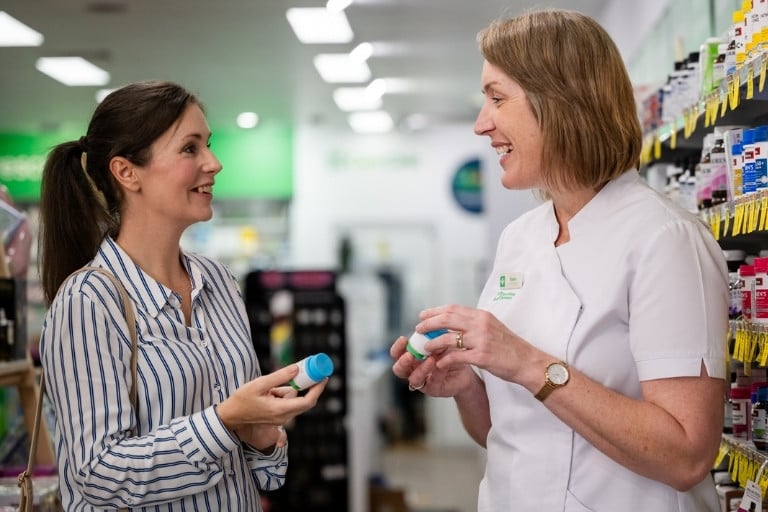
You’re not alone! Help and guidance are available. In Australia, GPs, dietitians, and pharmacists are trained to support you in choosing safe, effective supplements. Many women feel more confident about their pregnancy journey after receiving this support.
Work as a team
Folic acid and iodine supplements are only needed by the person carrying the baby, but both partners can work as a team to eat healthy foods before the baby bump.
| Powered with Folate | Packed with Iodine | |
| Green leafy vegetables (spinach, kale, lettuce) |  | |
| Broccoli, asparagus, brussels sprouts | | |
| Citrus fruits including oranges | | |
| Lentils, chickpeas, kidney beans | | |
| Nuts and seeds | | |
| Fortified breads and cereals | | |
| Wholemeal bread | | |
| Milk, yoghurt or cheese | | |
| Eggs | | |
| Fish | | |
| Seaweed | |
Thinking about having a baby?
Here are 5 ways to improve your chances of pregnancy and having a healthy baby.
References
The Fertility Society of Australia. (2014). Micronutrient (folic acid, iodine and vitamin D) supplements pre-conception and during pregnancy. Retrieved from https://www.yourfertility.org.au/sites/default/files/2018-08/FSA%20Micronutrient%20%28folic%20acid%2C%20iodine%20and%20vitamin%20D%29%20supplements%20pre-conception%20and%20during%20pregnancy_0.pdf
Gaskins, A. J., Chavarro, J. E., & Missmer, S. A. (2014). Diet and fertility: a review. American Journal of Obstetrics and Gynaecology, 210(6), 501–508. https://doi.org/10.1016/j.ajog.2017.08.010
Gaskins, A. J. (2018). Moving the science forward on dietary patterns and male fertility. Fertility and Sterility. Doi: https://doi.org/10.1016/j.fertnstert.2018.03.001
McKenna, E., Hure, A., Perkins, A., & Gresham, E. (2017). Dietary Supplement Use during Preconception: The Australian Longitudinal Study on Women’s Health. Nutrients, 9(10), 1119. https://doi.org/10.3390/nu9101119
National Health and Medical Research Council (NHMRC). (2023). Iodine supplementation for pregnant and breastfeeding women. Retrieved from: https://www.nhmrc.gov.au/about-us/publications/iodine-supplementation-pregnant-and-breastfeeding-women
Queensland Government. (2021). Folate and folic acid. Retrieved from https://www.qld.gov.au/health/staying-healthy/food-pantry/food-safety-for-consumers/food-warnings-and-advice/folate-and-folic-acid
Queensland Government. (2021). Iodine. Retrieved from https://www.qld.gov.au/health/staying-healthy/food-pantry/food-safety-for-consumers/food-warnings-and-advice/iodine
Queensland Government. (2023). Pregnancy and healthy eating. Retrieved from https://www.qld.gov.au/health/staying-healthy/food-pantry/food-safety-for-consumers/food-safety-and-your-health/pregnancy
The Royal Australian and New Zealand College of Obstetricians and Gynaecologists. (2020). Pre-pregnancy Counselling. Retrieved from: https://ranzcog.edu.au/wp-content/uploads/Pre-Pregnancy-Counselling.pdf
Royal Australian College of General Practitioners. (2018). Preconception care. Australian Journal of General Practice, 47(7), 424–429. https://www1.racgp.org.au/ajgp/2018/july/preconception-care
Understand your health before the baby bump
Take a free online preconception health check today or speak to your doctor or pharmacist.