

Listen as our experts delve into the middle years of a woman’s life. For women in their 30s and 40s, this period is often marked by balancing careers, raising children, nurturing relationships, and increasingly, caring for ageing parents. This episode explores how clinicians can better recognise and respond to the unique pressures of this life stage, offering holistic care that supports women not just to cope, but to thrive.
In this episode of The Clinician’s Guide to Women and Girls’ Health, we explore the middle years of a woman’s life – her 30s and 40s – a stage often defined by complexity, convergence, and competing demands.
As women juggle careers, raise children, nurture relationships, and increasingly care for ageing parents, their own health and wellbeing needs can easily slip down the priority list. This episode examines how clinicians can better recognise and respond to the pressures of this life stage, offering proactive, empathetic, and holistic care that helps women not just manage, but truly thrive.
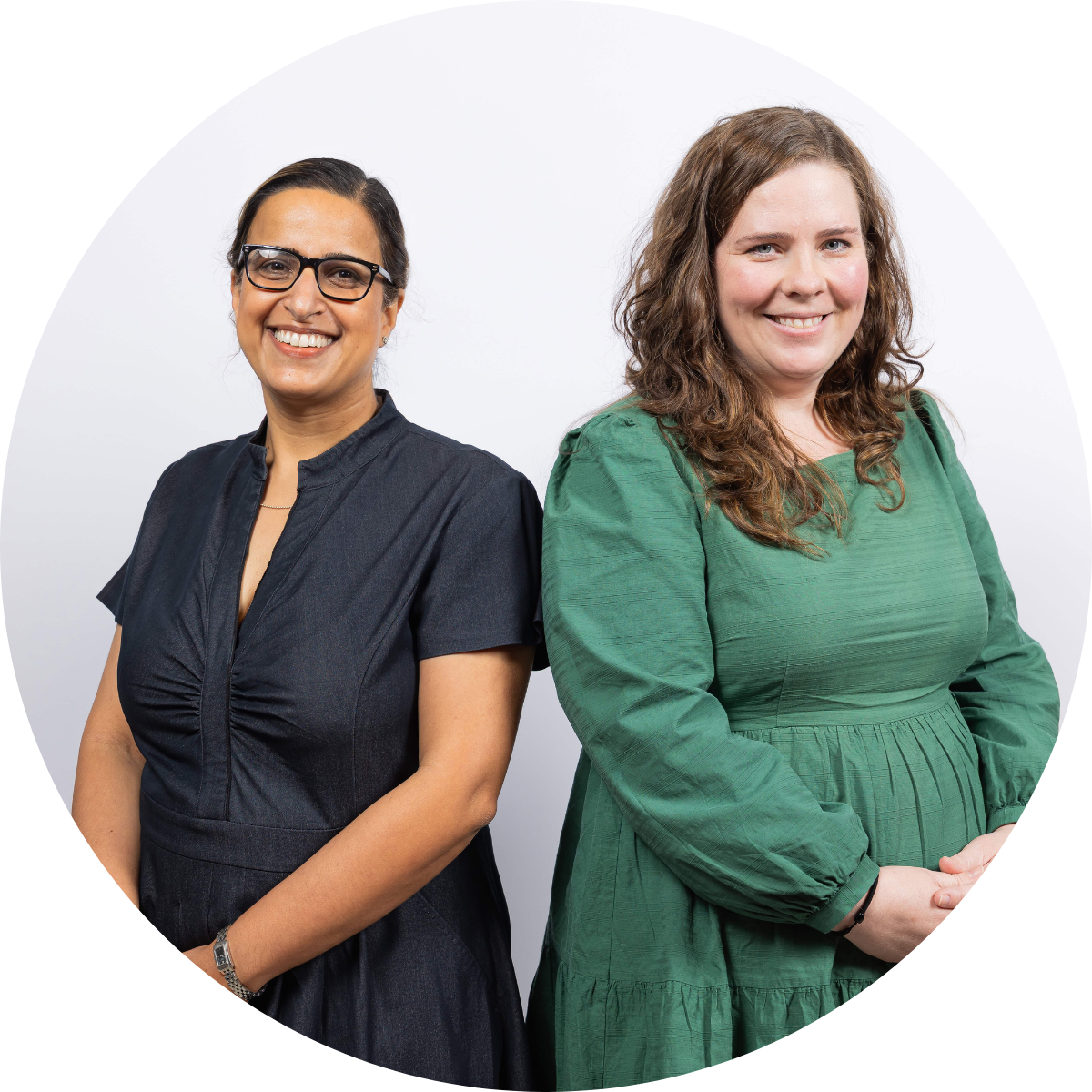
Joining the conversation are Dr Ruchika Luhach, a Brisbane-based GP with a special interest in women’s and children’s health, and Dr Carrie-Anne Lewis, a clinical and research dietitian at the Royal Brisbane and Women’s Hospital whose PhD focuses on person-centred obesity care. Together, they share practical insights into supporting women’s physical and emotional wellbeing during this pivotal chapter.
Victoria C 00:00
Health and Wellbeing Queensland acknowledges the Jagera and Turrbal people, the traditional custodians of the land on which this podcast was recorded, and the traditional custodians of the lands and waters on which you’re listening. We pay our respects to the Aboriginal and Torres Strait Islander Elders past and present, for they hold the memories of the traditions, cultures and aspirations of Australia’s First Nations people.
Carrie-Anne 00:23
If you lose weight, there is an association with improved diet quality, but it’s not causal. So you can improve diet quality and have no change in your weight. And you can also lose weight and not improve your diet quality. We have to be very careful as health professionals to be clear about that.
Victoria C 00:41
Hi, I’m Victoria Carthew a journalist, presenter and your host of this series, the Clinician’s Guide to Women and Girls’ Health brought to you by Health and Wellbeing Queensland, in partnership with the Queensland Government’s women and girls health improvement program. From menstruation to menopause and all things in between, including sexual health, wellbeing and ageing, the Clinician’s Guide to Women and Girls’ Health podcast series speaks to leading Queensland experts about how health professionals can have effective, empathetic conversations with female clients, empowering them to take control of their health journey.
Victoria C 01:18
Today’s episode, we’re turning our attention from maternal health, the subject of our previous episode to health and wellbeing in the middle years – our 30s and 40s. To do so we’re joined by GP Dr Ruchika Luhach and accredited practising dietitian, Dr Carrie-Anne Lewis. Dr Ruchika is a GP, based in Brisbane northside, with an interest in women and children’s health. She has a background in medical education and education research. Dr Ruchika thank you for joining us.
Ruchika 01:46
It’s great to be here. Thanks for having me. Victoria.
Victoria C 01:48
Dr Carrie-Anne Lewis is a clinical and research accredited practising dietitian at the Royal Brisbane and Women’s Hospital. Her PhD has focused on person-centred obesity care. Dr Carrie-Anne, thank you for joining us as well.
Carrie-Anne 02:01
Thanks for having me
Victoria C 02:02
Ladies, I am genuinely so pleased you could find the time to join us for this really important conversation and to come to the issue with the knowledge that really encompasses the whole topic, and I think between you, that’s what we’ve got. As we take a look at the middle years, it is often a time when worlds collide, and in many ways. And for me, one word that generally springs to mind is balance. For women in their 30s and 40s, it’s often a period marked by balancing career, family, personal life or caring for elderly parents. Dr Ruchika what are some of the most common concerns that you see coming in with all of those lifestyle stresses around that balance?
Ruchika 02:39
You’re so right Victoria, it really is such a varied and complex time in women’s lives, and there’s so many different journeys and narratives during these years. So for some women, there’s a real focus on fertility, childbirth, raising a family. For others, there’s actually experiences of loss and grief in those areas. Of course, there’s career challenges for some women, there are personal or relationship struggles, and then there’s that sometimes new role of a carer, whether that’s for children, elderly parents or both. And so yes, the really, the unifying theme is this concept of balancing all these competing demands on your time and energy. And correspondingly, there’s really a huge spectrum of medical presentations in those years as well. So it runs the gamut from a range of gynaecological issues, we see the emergence and sometimes the relapse of mental health conditions in a variety of presentations. And of course, these are the sort of foundational years for the emergence of those chronic disease risk factors. And during these years, there’s a new focus on screening and prevention as well.
Victoria C 03:48
We often hear that word balance, and we think work-life balance, but it’s so much more, because every element of your life in this age bracket is about the balance, the impacts on many fronts. I guess you touched it there as well – socially, emotionally, mentally – it’s a lot all at once, isn’t it?
Ruchika 04:02
It is. And I think when we think about medical conditions in this population, really just realising how a single diagnosis can have very wide-ranging impacts. And so you could look at a condition like endometriosis, which affects something like 14% of women in their reproductive years. And you know this condition can cause such a spectrum of symptoms from painful periods, which can, for some women, become pelvic pain, pain with intercourse. Other women, there’s heavy menstrual bleeding, which can cause iron deficiency and fatigue. There’s impacts on gut health. And so you can start to see how it can affect mental health, relationships and even just work capacity. So really, all spheres of a woman’s life.
Victoria C 04:47
And that really touches into that seen and unseen, doesn’t it, areas of health as well. And touching into those pillars of wellbeing, like how you, how you make sure you can look after yourself while you’re looking after everyone else.
Ruchika 04:59
I like the word pillars. It’s sort of a model I use when I talk to patients about these things. And I talk about these sort of foundational pillars of good health. I refer to good nutrition, physical activity, managing stress and sleep, and even social connection.
Victoria C 05:16
So Dr Carrie-Anne that’s where I think we jump straight to you, because it probably does seem obvious, but those lifestyle factors can be everything when it comes to these types of health concerns that are raising their heads.
Carrie-Anne 05:24
Yeah, nutrition, physical activity and sleep definitely can impact on a woman’s overall health and wellbeing. So their physical health and their mental health, and we also know, as Ruchika said, that when women come to us in these year groups, they are really struggling to find that balance. They are struggling to prioritise their health. And so as health professionals, we have a really important job of not just imparting knowledge on them and telling them they need to eat better or sleep better or move more, but actually understanding behavioural science and understanding that their lives are complex and that their role as a carer, be it for children or their parents, or their role in progressing their career, is important as well, and actually working with them to find practical strategies to try and improve their health, because we know that not just women in this age group, but all Australians, struggle to eat healthy, balanced diets, struggle to meet physical activity recommendations and struggle to get good sleep. So there’s a lot of work for us as health professionals to do to support women, but we need to do it in a really sensitive way that respects the complexity of their lives.
Victoria C 06:34
So that word really jars with me, complex, because no person is the same and what their needs are. So that’s where the role that you can play is to individualise it.
Carrie-Anne 06:42
Yes, absolutely. And that is, I think, as health professionals, no matter who you are, whether you’re a medical professional, a nurse, allied health, we need to continue to do better, to to not just think of our role as imparting knowledge, but also as using behavioural science to actually support women with, in the context of their whole lives.
Victoria C 07:03
Yeah, absolutely. It is an age when vast differences in women become obvious. When we look at reproductive health, no two are the same in what they’re going to experience. At this age, more chronic reproductive health issues can start to be rearing their heads. I guess. What are the more frequent chronic reproductive health concerns you support women with?
Ruchika 07:22
Yeah, diversity is really the name of the game here, and again, it’s that really broad spectrum. So for some women, really fertility is a key focus in these years. For others, it may be finding safe and effective contraception. Some of the common gynaecological concerns are often around menstrual changes, whether that’s heavy periods or painful periods or unscheduled bleeding, and then also this sort of pelvic pain, pain with sexual intercourse, sort of syndromes emerge. And sometimes there’s an underlying diagnosis there, so polycystic ovarian syndrome or endometriosis. And then as women sort of progress into their mid to later 40s, we start to see that menopausal transition start, and that brings some very real changes as well, although, of course, that can happen earlier or later as well.
Victoria C 08:10
Because you think by your 30s, you’ve got it right? You know what is happening with your body around menstrual cycles and that sort of thing, but that’s when things really do change. So, it can be confusing, because you think you know, but you don’t.
Ruchika 08:21
Yeah it’s all a work in progress, isn’t it?
Victoria C 08:23
Yeah, absolutely.
Carrie-Anne 08:24
I just wanted to add that from a fertility point of view, I work in services that do assist people to lose weight, and often women come to us because they are having trouble falling pregnant. And for some women, losing weight can help with that, but not all women. So we have to be very careful not to assume that that weight is a problem for all women in terms of their fertility, but for those women that do need to lose weight to fall pregnant, it’s not simple, and we need to not simplify it for women, and obviously you’ve got your dieting and lifestyle factors that can contribute to improving that. But for some women, their obesity is more complex, and so some of them are relying on pharmacotherapy like your Ozempics and your Wegovis to lose weight, to fall pregnant, and others are using bariatric surgery to do that as well. So we just need to be aware of that, and also know that those pharmacotherapies need a washout period, so you need to have two or three months off that pharmacotherapy before falling pregnant, and that’s relatively new. And Ruchika, you would probably deal with that a lot more than me, but it can take time to fall pregnant. And so, if you have to have that washout period, and then you’re not falling pregnant straight away, that can be quite stressful for women with weight regain.
Victoria C 09:38
I was going to say, because then it might come back, and then you might have to start that whole process over again.
Carrie-Anne 09:43
Yes, and then with bariatric surgery, the recommendation is to not fall pregnant within the first 12 to 18 months after surgery
Victoria C
Because of the, because of what?
Carrie-Anne
Because of the adaptation in the body and the rapid weight loss. But it is not high-quality evidence that that recommendation is based off and there is one of the dietitians in our department, Taylor Guthrie, is doing some really good work in this space, which will hopefully be published soon. But I think one of the messages we do want to get across is that if women do happen to fall pregnant in that earlier post operative period, we don’t want to make women feel bad about it, and we need to support them, congratulate them on that pregnancy and provide them with – they probably will need more support – but provide them with that right support. So it’s about striking that balance between providing the advice so that things can be as safe as possible, but not stigmatising women if they happen to be in a situation where they do fall pregnant early.
Victoria C 10:33
And this is, a lot of it is quite new, isn’t it? I mean, the use of these types of drugs and this type of surgery for GPs that are taking their patients through this process as well. There’s a learning there as well.
Ruchika 10:43
Yeah, I think it’s been a game changer for a lot of patients, but obviously there’s a lot of barriers to access. And I think the really important thing is that, like all medication, it should be viewed not as a magic pill, but as part of an overall treatment plan. And I think that general practice, there’s a really important role for providing the context for the safe use of those medications.
Victoria C 11:03
And I think Dr Carrie-Anne really touched on it there as well. But there are so many other impacts of this, socially, emotionally, the mental health, all these can sort of flow down through all of these issues, can’t they?
Ruchika 11:11
You know, we talked about endometriosis, but when we think about fertility, I guess one of the things that comes to mind is polycystic ovaries, and another really common condition thought to affect about one in 10 women during their reproductive years, and this again, affects so many different systems. So you might have heavy bleeding, you might have acne or some facial hair, and over time, long term consequences for cardiometabolic health, but also a really strong association of mental health disorders when untreated. Fertility is a really important potential long term consequence, although often is very, very treatable, and there’s often an associated increased pregnancy risk as well. So again, we see that these conditions during these very busy years in women’s lives affect them across so many different facets of their daily living.
Victoria C 11:54
Yeah, interesting. Now we will be sort of deep diving, I suppose, into menopause in our next episode. So we’re not going to go too far down the rabbit hole here, because it’s a very big conversation, but many women in their late 40s possibly know they’re in perimenopause or what’s happening, and they know those symptoms, but it can happen to women younger than that. You know, early 30s or early 40s. What sort of symptoms perhaps in a 30 year old might they be looking for if they think they’re experiencing those kind of early stages of peri or menopause?
Ruchika 12:17
Yeah, I think it’s actually quite an important distinction to make, because if we’re looking at women under 40, what we’re talking about is premature ovarian insufficiency, and that’s a very significant medical diagnosis, and affects about one to 4% of women. And so, the hallmarks of that are irregular or absent periods, and women may or may not have other symptoms, like the hot flashes and sweats. Really important in those cases to have laboratory biochemical confirmation and a really thorough medical assessment. As I said, it’s a significant diagnosis, because quite apart from the symptoms side of things, there’s a lot of very significant impacts on a woman’s health. So it affects fertility, but it also affects bone health and cardiovascular risk, and so it really needs to be appropriately managed in those situations to mitigate those risks.
Victoria C 13:06
Don’t go anywhere. Our conversation continues after these messages.
Advertisement 13:11
If your patients need help to maintain a healthy weight, improve their sleep or better manage stress, My Health for Life can support them achieve their health goals. My Health for Life is a free lifestyle program, helping Queenslanders live well and reduce their risk of developing a chronic disease. The program is delivered by qualified health professionals, empowering people with support, knowledge and practical tools to achieve their health goals. Encourage your patients to have a free health check today at myhealthforlife.com.au and begin their journey to improved health.
Victoria C 13:42
This is episode six of our adulthood episode – health, wellbeing, mental and physical health. And I’m so pleased to have with me Dr Ruchika Luhach a GP, and Dr Carrie-Anne Lewis, an accredited, practising dietitian. And don’t forget that all that you’re hearing today and so much more is available in our show notes. Links to more detail, more information, and of course, any studies that we mention. The Women and Girls Health Strategy consultation highlighted that women in this age range often feel quite dismissed or not believed by health professionals when it comes to reproductive health. What do you think Dr Ruchika that GPs need to do, or, I guess, get better at to make sure women don’t feel that way? Because, I mean, in life, you sometimes feel like you’re not heard, but where you want to be heard is when you’re in the practice with your GP.
Ruchika 14:23
Such an important thing, isn’t it, that experience of feeling that you’re heard and understood. And there’s a lot to be said for that therapeutic relationship in and of itself. And I think one of the wonderful things is how much awareness there is now of these issues, and even just conversations around these issues for young women, I think that these areas have been traditionally underdiagnosed and poorly managed. And there’s a bunch of reasons there, but one of them has really been the lack of clear guidelines, and that’s something that’s really changing. So this year, we’ve seen the development of new guidelines for endometriosis from the College of Obstetrics and Gynaecology, which has been very important, and there’s also been very few clear referral pathways and long term strategies for managing some of these chronic conditions. And again, that’s something that is really starting to be considered more carefully now. So I think there is change happening. As General Practitioners. I think we sort of serve our patients best by listening carefully to their concerns and also just being thorough in our assessments. One of the ways I find I can add value is having a real focus on patient education, and I do that so that my sort of thought processes and reasoning are understood by the patient. I think that’s really important in these days, when people are getting their information from so many different sources, and some of those sources have really variable reliability. So I think being able to explain yourself is really, really important as a healthcare worker. The other thing I will say is that there are so many new and wonderful online resources that women can access that might help them explain their symptoms, it might support them in that diagnostic journey, and it can help them navigate treatment as well. They’re great resources for clinicians as well. I use them all the time, so things like the Jean Hailes website, Endometriosis Australia, Pelvic Pain Foundation, and there’s the Ask PCOS app, developed by Monash Uni. So there’s some fantastic information to be found online.
Ruchika 14:27
So important isn’t it for all of our health professionals to be able to share that knowledge Dr Carrie-Anne?
Carrie-Anne 15:36
Yeah, definitely. And I completely agree with what Ruchika was saying. I mean, as a dietitian, there’s there’s not a lot of evidence to support what we do to to help people with things like pelvic pain, but just generally, in terms of the ethos of listening to women and making sure that when we’re seeing them, that we’re asking them what they’re here to see us for and what they want to get out of the session is a translatable skill for all of us.
Victoria C 16:52
For someone who’s having those reproductive concerns and they feel like they’re not being heard, what else can they do? They’ve got someone who they feel like they’re not cutting through with what should they be doing?
Ruchika 17:02
I think that’s a tough situation to be in. I would encourage people to really try and document and track their symptoms and concerns. I think it’s a lot easier to explain your experience and be understood when you actually have data. So I think using things like period tracking apps or symptom diaries can be really useful in this space. I also think there’s absolutely no harm in asking for a second opinion, and that can be in so many different ways. It could be another GP, it could be a specialist, like a gynaecologist, and there’s also some specially funded organisations, like True Clinics, and also the federally funded pelvic pain clinics. So there’s a variety of different ways that women can access further information there.
Victoria C 17:41
Because if you’re doubting yourself, it’s hard you know you’re doubting yourself. So, then you think, I can’t doubt the expert. But you know in yourself, if you feel like they’re not listening.
Ruchika 17:49
Yeah, I think, I mean, you’re the you’re the expert in your lived experience.
Victoria C 17:53
Yeah, absolutely. Right across this series, we’ll be looking at issues from teen health, from reproductive and sexual health in our teens, right through to our seniors in 60 plus, and we’re so pleased right now to be talking about these health and wellbeing in our middle years, because it’s when a lot of things can go right and wrong, because we’re seeing the impacts of perhaps how you’ve lived your early life and what you’ve done, but also you are really, aren’t you planning towards your future and putting in place habits and commitments that are going to serve you well for the rest of your life? It’s also, as you both mentioned, when chronic disease and illness start creeping in, particularly for women in their 30s and 40s. So, things like heart disease, diabetes, high blood pressure. Why now, and what is it just about that time and change in the number of years you’ve been on the planet that this is happening?
Ruchika 18:35
It really is a bit of those things, like you said, Victoria, so I mean, these are some of the busiest years in women’s lives. And I think the first thing that goes out the window are those very foundational things that would support you in the long term. And what we start to see is that cumulative effect of long term habits, so poor nutrition, lack of physical activity, perhaps poor sleep, perhaps alcohol, perhaps smoking, and really the risk accumulates from many of these factors, but there’s also hormonal factors. And we talked about how polycystic ovaries, for example, does increase your risk of cardiometabolic disease. We’re also starting to understand how that perimenopausal transition can lead to changes in things like your lipid profile and your weight. So there’s some very real hormonal factors as well. For women, some things really are just an age game. So we know hypertension incidence just increases with age. And for men and women in Australia, between 45 and 49 the incidence of high blood pressure is something like 10 to 15% so there is an age-related component there. And then there’s, of course, individual factors. So, for some women, it may be the medications they’re on. It might be their own family history. There’s a range of things that often work together.
Victoria C 19:42
It’s a great big melting pot. Dr Ruchika mentioned it there. Dr Carrie-Anne the nutrition, sleep, movement, all of it. It all weighs into at this time, it’s so important,
Carrie-Anne 19:51
Yes and I think what Ruchika was saying was really important, that there are some things that are out of our control, like years on the planet, and also your genes, which can predispose you to certain risks, but there are things that we in health professional world would consider modifiable risk factors. So that would be your nutrition, your sleep and your physical activity, and as I said earlier, they are associated with your overall health and wellbeing. So, they can improve your physical and mental health. I think it’s important when we’re talking about especially nutrition, that’s my bag. What are we trying to modify with women and anyone that we’re seeing and being very clear with women, because we can focus on diet quality or we can focus on weight and both things that are associated with your overall health and wellbeing, but you can modify one without influencing the other.
Victoria C 20:39
That’s such an interesting thing to stand between diet control and weight, like it’s you think they’re the same, but they’re not.
Carrie-Anne 20:45
No so there is an association, but there’s a correlation, but it’s not causal. And we have to be very careful as health professionals to be clear about that, that if you lose weight, there is an association with improved diet quality, but it’s not causal. So you can improve diet quality and have no change in your weight, and you can also lose weight and not improve your diet quality. So, when we’re seeing women, we have to be very clear about what we’re seeing them for. If we’re trying to improve diet quality, that can be a less sticky subject, to be honest. If you’re trying to help people lose weight, it’s trickier.
Victoria C
So, a more comfortable conversation.
Carrie-Anne
Not only is it a more comfortable conversation, but the science around weight and weight control has changed a lot over definitely, since I’ve been a dietitian, what I learned at university is not the up to date science, and that’s true for a lot of health professionals, and so we need to make sure, as health professionals, we understand the science of weight and weight control so that we can support women and everyone well, and also we need to recognise that it’s complex. You know, living in a larger body is complex, and losing weight is tricky. It can be done via a range of different treatment options, but it requires support, and we need to not simplify that for women.
Victoria C 21:59
We know now there’s so much more known about exercise and the values of it and impacts that aren’t just about being the fittest on the planet. There’s so much more, but how that plays into your diet as well.
Carrie-Anne 22:09
Yes, so physical activity is another important one to talk to women about that I often find it helpful to explain to women to focus on the non energy deficit component of physical activity. There is some research out there to suggest that increasing physical activity can actually increase your appetite for some people, so it may not have that energy deficit impact, because you’re hungrier, and therefore you’re searching for more food. And so focusing on the positive mental health impacts of physical activity can be helpful for some people, for some people that can be focusing on that, that social connection. So again, it comes back to that behavioural science knowledge as health professionals and figuring out what is going to actually motivate an individual person to improve their physical activity, and then helping them with that.
Victoria C 22:57
I feel like this is almost the two of you coming together, because it’s quite unseen, isn’t it? Women in their 30s and 40s, they think they know or they’re wondering what’s going on with them. And for a GP to be able to have that conversation about improving their diet, et cetera, but then to be able to come and see someone like you Dr Carrie-Anne, to kind of bring it together. But they’re not easy conversations.
Carrie-Anne 23:20
No, they are not easy conversations, especially when it comes to something that they might not be seeing the consequences of it today. And also, as I mentioned, when it comes to weight they can be really tricky conversations, because weight stigma is very present in our society, and it’s very present in our healthcare setting as well. So we have to acknowledge that as health professionals, that people do experience stigma when they come to see health professionals, I think, as health professionals in our understanding of the science of obesity, but then we have to try and translate that to education for patients. And when I explain that obesity is complex and it’s a chronic condition, and there are genetic factors, and there are hormonal factors that impact on it, and it doesn’t mean that you’re just not trying hard enough. I can get patients that cry because it’s the first time that somebody’s kind of explained their lived experience in a science way to them. And so I think it’s important that we understand the science so that we can appropriately educate patients.
Victoria C 24:18
Is it too simple to say that it’s health, not weight, or is it both?
Carrie-Anne 24:21
It can be both. I think that’s a good question. There was a paper that was published in January this year, the Lancet Commission paper on the diagnostic criteria of clinical obesity. And I think that’s a really important paper for us as health professionals to get our head around. 58 experts from around the world wrote this paper. It took them years to write it so it gives us an understanding of okay, you can have what they describe as excess weight, which is excess adiposity, and most people would use BMI in a clinical setting to look at that. And yes, that is a very flawed measure. It’s supposed to be used at a population level, but it can be a screening tool that shouldn’t be used in isolation to to look at your your body composition. You should also use things like waist circumference and if you have it a body composition measure, but most people don’t. So if you have excess adiposity, is there any health related impact to that? And that’s that next step. So if somebody has ill health because of their excess adiposity. That’s called clinical obesity. So I think starting to use that language that this is a diagnosis that you have, that we need to support you with, as health professionals if you have pre clinical obesity, that paper still suggests that we do support people with their nutrition, their physical activity, their sleep, as we were talking about, but we also need to recognise that those interventions, even if done using behavioural science, can generally achieve between five and 10% weight loss max. So we need to be really clear when we’re educating women what what realistic expectations are, and if someone’s living with complex obesity, so in a significantly larger body, five to 10% of their weight off can improve their health, but it may not be what they’re thinking is going to be achievable. They’re not going to get into their you know, size 10 jeans for example and we need to be really clear with women about what’s realistic and unrealistic if you have clinical obesity, that paper then recommends that they are offered pharmacotherapy and or bariatric surgery. Then you come to the access issue, as Ruchika was saying. Pharmacotherapy, unless you have type two diabetes, is not on the PBS, and so it’s not readily accessible for people, especially of lower socioeconomic status, because it’s really expensive. Bariatric surgery is also expensive unless there are some people that can access it publicly, but it’s not for everyone.
Victoria C 26:44
So that Lancet Paper that Dr Carrie-Anne is referring to, that will be part of our show notes so feel free to dig a little deeper. I think it would be fascinating reading wherever you are in the in the medical industry and wherever our clinicians are. So thank you. And as I said, we’ll link that in our in our show notes. I’m watching your face and your, Dr Ruchika, you’re yes, yes, yes, because this is a it’s a difficult topic to raise, particularly in your office when they may be coming to see you about something else.
Ruchika 27:09
It’s is a difficult topic, and I think it’s an important topic as well. I think it’s sometimes about how you frame that conversation. I really do find having that health focused approach, and I talked about the pillars model, and I use that to try and normalise the conversation. So I might say something like, I like to check in with patients about nutrition or movement. How do you think you’re going there? I do, however, like to ask permission before going there. So I think it can be really valuable to say something like, is it okay if we discuss some of these lifestyle factors today? And like Carrie-Anne alluded to, I think that sort of perspective you bring is really important. So just being sort of empathic, which is actually a very active process, and not about just being nice to people, empathic is really trying to understand what they’re what they’re saying to you. So being empathic and being non judgmental are really, really valuable skill sets to bring to these conversations. And another thing that I found useful in clinical practice is this sort of ask first principle. So, you know, many times people already carry knowledge. And so I find it useful to sometimes say, What are your thoughts about your nutrition? And I’m always amazed at how many people really already know what they need to change. And so I find that, you know, this sort of gently probing approach often leads to a more meaningful, although long term discussion that can lead to real change.
Victoria C 28:28
Because when you’re talking about maintaining a healthy weight range, which is the ultimate goal, and it’s preventing conditions, isn’t it, like type two diabetes and cardiovascular disease, but for women in their 30s and 40s, what is the actual support? What’s there, apart from, obviously, you want the right people on your team, which is, people like you. What other things can they use to help?
Ruchika 28:46
So I think there’s a couple of context things I want to say there actually. So one is what Carrie-Anne already said, which is that weight itself and even BMI are really imperfect tools, along with waist circumference, though that’s usually all we have in the clinical setting. So I guess that’s always important to remember. The other thing is, there really is a spectrum of weight related disease. So just as on one end, we have high BMI, which contributes to cardiometabolic disease, joint disease, even cancer risk. On the other side, we have low BMI, very low BMI can contribute to risk of osteoporosis. And of course, you have conditions with very low BMI, like anorexia nervosa sometimes, which has a very high mortality as a mental health condition. So just remembering there really is a spectrum. And again, on that note, I think eating disorders are really worth flagging in this space, particularly that really common misconception that women with a normal or a high BMI can’t have an eating disorder, and we know that’s just not the case.
Victoria C 29:43
That’s honestly sounds surprising, because you think if someone comes into you and they look okay that they’re not going to
Ruchika 29:53
Really not. And I think Carrie-Anne , you told me at statistic the other day
Carrie-Anne 29:59
It’s up to 70% of people living in a larger body, living with obesity, have an associated binge eating disorder, diagnosed or undiagnosed. So it’s really important. And some of the work that we’re doing in Queensland Health at the moment, through the state, is working with services that provide obesity related care to embed eating disorder risk screening into their services, because it is really important. You can still support someone with a weight loss target if they have a diagnosed binge eating disorder. That’s what that’s some work that’s come out of the EDIT Collaborative from University of New South Wales, but they have to be supported by a mental health professional, a psychologist, at the same time, and so you need to be risk screening for eating disorders to be able to then flag those that need that support. So it’s really important. The crossover between obesity and and especially binge eating disorder is high, but they can, they can have a myriad of disordered eatings diagnoses that we need to be aware of and support them with.
Ruchika 30:46
Yeah and I think screening is something that all healthcare workers can get on board with. I think we can all do it better. And we were talking about tools the other day and trying to think about what sort of tools are available to us. And you mentioned the ED-15, which I wasn’t familiar with.
Carrie-Anne 30:58
Yeah. So the EDE-Q is something that GPs use all the time to get mental health care plans, but we had to find something practical that was a bit quicker within the health health setting. And so what was recommended to us by some psychologists that we work with at the Royal Brisbane, who are experts in this field, was the ED-15 to screen for eating disorder risk in a weight management context. So that’s what we’re trying to embed in some of our services.
Ruchika 31:22
Yeah, and even just remembering that, there is evidence now that sort of, these three P’s; puberty, pregnancy and perimenopause. These times of large, big hormonal flux, are really times of very high levels of body disillusionment in women because of all the changes, and correspondingly, times of increased risk for eating disorder. So really, you often are seeing a number of factors that can be contributing to an underlying, perhaps hidden eating disorder. And the reason is, as you said, Carrie-Anne, not because these women can’t be treated for their weight goals or other things, but because a modified approach is required, and that psychological arm becomes so important. So yeah, I just, I guess I just, I guess I wanted to say that at the outset when we’re talking about weight management. But coming back to your actual question, which is, what resources are there for weight management? It is about finding the right strategy for the right person, and there is such a range of interventions. And as Carrie-Anne said, for many women, we would be looking at lifestyle interventions as the first sort of point of call, and that can look different for different people. I guess one of the really important things is remembering that there are these chronic disease management items that can be accessed through general practice, which can support access to allied health, like exercise physiology and dietitian and that can be absolute gold in supporting a woman and achieving those goals for herself. The other thing is, there’s a lot of online resources and telephone support and so on, a lot of which are federally funded. So there’s My Health For Life, which is a health coaching program in Queensland. And then there’s community organisations that you know have had patients find useful things like Park Run and one called Live Life, Get Active. So there’s sort of different ways that women can access support to help them meet their goals, and you have a programme you’re involved with.
Carrie-Anne 33:04
Yeah. So, so we do have some publicly funded, like state funded services through Queensland Health, that aren’t accessible to everyone, so we have to be aware of that. But for people who live more with, say, the clinical obesity, that’s where Queensland Health is, you know, tends to get more involved, and that’s through all of what we were saying, the healthy eating exercise, the behavioural science and the psychological support, those treatment modalities, limited pharmacotherapy, again, because of it’s not PBS listed, but some with type two diabetes are getting some services for that. And then obviously we do have some publicly funded bariatric surgery, but again, it’s accessible to people who have a comorbid diagnosis like diabetes or endometrial hyperplasia and intracranial hypertension, things like that. So there are services, from a state point of view, in Queensland that are available free, but it’s not accessible to everyone. We have a better public funded bariatric surgery service than most states, so we are lucky, but there are still limits to what we offer. I did want to say from an exercise point of view in terms of what’s available out there in the community, again, because a lot of my research is in understanding people with a lived experience of obesity and how they engage with community services as well. And we need to just be careful with not prescribing something like a park run for someone who’s living with complex obesity. They often, you know, find it difficult to find the right clothes to go to these places and and can’t participate in this,
Victoria C 34:29
Even social anxiety about turning up at something like that.
Carrie-Anne 34:31
But also, even if they were to go to a gym class, some of the machines don’t suit their needs. So we have to be really careful with how we’re prescribing exercise for people who are living with complex obesity and exercise physiologists are a really good resource, and that they can get some money back through Medicare, through a care plan, through your GP, who can provide more tailored advice and exercise support for people who have more complex needs. So I think that’s important just to mention as well.
Ruchika 34:59
Yeah and I think just recognising that there are those different subsets. So like for for women with a more complex needs that really, really even remembering that sometimes life lifestyle interventions come second. And so there is a real role in those spaces for things like a very low calorie diet, the VLCD and then the pharmacotherapy and potentially bariatric surgery. So yeah, that tailored approach. Many things that work for many people, but some women actually do need a more intensive first approach. Rather than just saying, go ahead and change your diet, change your lifestyle.
Victoria C 35:32
This is the Health and Wellbeing Queensland Clinician’s Guide to Women and Girls’ Health, and I’m so pleased to be joined by GP Dr Ruchika Luhach and Dr Lewis, an accredited, practising dietitian. We have talked quite a bit about those weight management issues, etc, but in this age bracket, there are so, these middle years, there are so many other types of chronic illnesses and things that can come up, and cost of living really does become a barrier. You’ve given us some great insights to programmes and opportunities and things you can do, but in so many other ways, cost of living can be a real barrier. Can’t it for women accessing support and services that they need?
Ruchika 36:01
Yeah, absolutely. I think it can be a real stress, and it is a stress for so many of our patients, because involves so many different aspects of their lives. There’s sort of the housing affordability, there’s childcare access costs, education costs, and then healthcare costs, of course. So yeah, it is a barrier for many, many women seeking access to help, and it is important to think about how we can support women as best we can within the limitations of our own systems that we work and function in. One of the things I do like to talk to people about is really thinking very hard about where they’re going to spend their hard-earned health dollars, and encouraging women to really choose sort of evidence-based supports to help them on their health journeys. And I say that fully recognising how much information women are exposed to and how many different formats, and it can be really hard separating the wheat from the chaff. And I do think this is something that perhaps does need to be said more. The other thing is, we’ve talked a little bit about the sort of chronic disease management, and as clinicians, it’s really important to think about what sort of pools of funding might this patient be able to access. And so there’s things like the GP management plans that support allied health access, there’s mental health care plans that can support psychology access, there’s eating disorder plans. There’s a bunch of health checks, so a few different things that might be of value to individual patients. And I will say it again, there’s just so many very, very good, patient-focused online resources that can be an important source of support to women in their health journeys as well.
Victoria C 37:28
You would see that, wouldn’t you people coming in with what they think they know and what the real thing is. So when you’re talking about the path you go down being evidence based and understanding it
Carrie-Anne 37:37
Yeah, I mean, social media has a lot of positives, but it has also increased exposure to misinformation. And so as health professionals, we do have a responsibility to educate in a gentle way, to try and provide that evidence-based advice in a really person-centred way. Because especially women who are trying to juggle everything, they are particularly vulnerable to quick fixes. And when it comes to health, there are obviously some things that can be done that are practical and not too complicated, but quick fixes to improve complex conditions often are a myth, and so we have a job to play in debunking some of those myths.
Victoria C 38:20
At every age, we need screenings, we need prevention. It’s early intervention. When we look at this age group, these middle years, what are the types of other things that we should be looking at in terms of screenings? Be it breast, be it bowels, like what other things should we be looking at Dr Ruchika?
Ruchika 38:34
Really important to say early on that screening is specifically talking about women with no symptoms of concern, and who are otherwise at average risk. So if a woman actually had a breast lump, that’s no longer screening, and that’s a separate pathway and needs its own sort of needs to be assessed on its own merits. So now, thinking about average women with no symptoms, I think the first thing to say is to continue cervical screening. So this programme runs for a woman who’s asymptomatic, at average risk, with no previous abnormalities, every five years. And for many women, it can be self collected now, which really has helped reduce…
Victoria C
What a game changer
Ruchika
Yes, reduce some of the challenges there. So that’s a really important one that continues. You mentioned breast screening, so that is accessible through Breast Screen Queensland from the age of 40, every two years. Again, saying that if you had a symptom, if you have particularly high risk, please see a doctor, because that is a separate pathway. I also talk in terms of breast screening to women about something called breast awareness, and it’s really just learning to self assess your breasts regularly so that you can pick up changes early. And I really don’t think that’s separate to breast screen. It really is something that’s quite complimentary and important. Bowel screen is something that is becoming more talked about, and so bowel screen involves the poo sample test, and it’s mailed out from the age of 50. However, the recommendations are that patients actually access it from 45. The challenge is that from 45 to 50, it doesn’t come to you, you have to contact Bowel Screen and ask for it.
Victoria C 40:03
Oh, here it is. I’ve officially hit the halfway mark, and then it’s in the mail. But to think that you might be, might be wanting to access that earlier is important.
Ruchika 40:11
Yes, and I do recommend patients try and do it. And it’s, every two years, There is a lot of reluctance, I think, from from that sort of ick factor. But you know, colorectal cancer is one of the commonest cancers in Australia, and there’s rising incidents in younger patients. So I’m a big advocate for that one. The other one is cardiovascular risk screening, so risk for heart and other vascular disease, and that’s usually every five years from the age of 45 but that is something that gets individualised based on your own risk. So someone who has a really strong family history or very high lipids, very high cholesterol, might have a different approach there.
Victoria C 40:46
And that’s the trickiness, isn’t it? Because for women in this, certainly in the 40s, then we we see those changes for different reasons. So that’s when you really need to be talking to your GP about what you need.
Ruchika 40:56
Yeah. And we try to look at the whole picture. So certainly from a cardiovascular point of view, we used to just say, here is your cholesterol number, let’s do something about it. And we’ve sort of moved towards more of a framework approach, where we go, let’s consider that along with all these other risk factors, and then let’s try to use a standardised tool like a cardiovascular risk calculator in the clinical context and have a more nuanced understanding of what your cardiovascular risk really is. So yeah, there’s definitely a role for individualising that process and talking of that. There’s a whole range of individualised tests that would depend on your personal sort of circumstances. So that could be sexual health screening, that could be osteoporosis screening if you had a really strong family history. It could be skin cancer screening if you had a history of family history of melanoma. So it’s a bunch of different things that wouldn’t apply to everyone. And also just a just a quick shout out for vaccinations. That’s something we don’t think about in this group, but there’s often a time when there’s an opportunity for catch up for some vaccinations as well.
Victoria C 41:43
And it’s easy to feel like you’ve got behind on those, because we you know, unless you’re tracking yourself in your records, you mightn’t realise that you’ve got behind because you’re too busy worrying about making sure that your kids are covered or your parents
Ruchika
Your kids have had their vaccinations
Victoria C
Yeah, you know you do when you’re busy worrying about that, because you get reminded. Everyone else gets reminders, but you don’t necessarily get those reminders yourself. We have touched on it a little, because it comes up in every aspect, but mental health is certainly becoming more prevalent in this age. How do you start those conversations and how do you approach it when, be it anxiety, be it depression, and we know the stresses we’ve discussed, those stresses in these middle years, how do you have those conversations?
Ruchika 42:27
My big message is to just ask, really, not to shy away from those difficult conversations. And I find it useful to again, have that sort of open ended questions and really normalise asking about these things. So I like to check in with my patients about their mental health regularly. How do you think you’re going in that regard? Could be a simple way to open that conversation, and you really want to encourage help seeking and minimise some of the stigma that these things bring. The other thing is to really screen patients and not just assume it’s just stress. Oh well, they’ve got a lot going on. It must be just stress and really screen for those mental health disorders that are so prevalent. And there’s some very quick and simple tools that you can do, like a PHQ, is a four question tool that screens for anxiety and depression in clinical practice. So that’s something that can be used to really start that process of do we need to dig deeper? The other things that are worth I think that are the useful flags to me, are things like asking about sleep and appetite. They’re really important flags. And also just, you know, is there evidence of sort of maladaptive coping, things like alcohol or substance use, or maybe online shopping or, you know, other things that are that are starting to be used by patients in a way that’s sort of impacting their function, so yeah
Victoria C 43:40
I shouldn’t laugh about that, because shopping, you’re right, it is used sometimes, like alcohol or substance, isn’t it?
Ruchika 43:45
Yeah, it’s fascinating the science around that stuff. Yeah, and so I think that the thing is to really ask. I think that’s my big message, and I say that because there’s so many very real steps that can be taken to support women. If there is help required there.
Victoria C 43:59
Stay with us. We’ll be right back to continue our conversation.
Advertisement 44:03
In Australia, approximately one in seven women live with endometriosis. Queensland Clinical Guidelines have developed a readily accessible and user-friendly guideline to assist healthcare professionals provide evidence-based screening, diagnosis and management of endometriosis using a biopsychosocial framework. The guideline was developed in consultation with subject matter experts and clinicians across Queensland. The endometriosis guideline can be found at www.health.qld.gov.au/qcg
Victoria C 44:41
This is our Health and Wellbeing Queensland Clinician’s Guide to Women and Girls’ Health. And we’re talking about the middle years. And Dr Carrie-Anne, I think part of it would be prioritising yourself, which women don’t tend to do, particularly in the middle years. We’ve talked about all the balancing and the juggling around that, because there are so many other priorities. I feel like someone seeing you actually is prioritising themselves, just a little.
Carrie-Anne 45:01
Definitely, yeah, if they’ve come to us, that’s a sign that they are interested in prioritising their health, but it doesn’t make it easy to implement. And so we do have a role there in supporting women in practical ways and not just telling them to be better.
Ruchika 45:18
Yeah, I think, you know, it’s a million dollar question, really, I think we can all attest to that, and I really don’t think there’s a simple answer. But like all behaviour change, which is really what this is, it’s often really incremental steps, rather than one magic realisation that changes everything. So it’s often a series of small interventions over time, and it’s a really uncomfortable space, that sort of cognitive dissonance of, I know I should be doing this, but I really can’t be doing this, and I think we should validate women’s experiences there and and not be dismissive of how hard and how difficult that position is. And I have found it useful with time and with a good relationship, that is actually something you can lean into and use as a way of inquiry and finding out more about where you can actually intervene and how you can support women to make some of those changes. And so we talked earlier about some of that behavioural change psychology and that motivational interviewing, and you might start to understand, for this woman, is it that she is not really sure that she should be making these changes? Is it a matter of conviction, and then you would lean in with something that’s tailored to that. For instance, you might talk about the empty cup metaphor, like, you can’t really pour from an empty cup. You can’t care for others if you haven’t cared for yourself. And you might sort of talk more about the rationale for those changes. For other women, it’s not that they don’t believe it, it’s just that they don’t have the confidence that they can make that change. And they say, I really want to, I just can’t. And then, of course, your approach needs to be completely different there. And you really have to think about how you can support women to identify their motivations or look at their barriers. And really, you know, have a different sort of behavioural intervention.
Victoria C 46:55
And that really, in a lot of ways, does put the onus on our clinicians. Doesn’t it to read each of them individually, that some women will just do it because my GP said so, or my dietitian said so. Other women need all the information and all of the background, so making sure you give those women what they need.
Carrie-Anne 47:09
Yeah, and I think it’s about so again, I work mostly in the weight management space, and a lot of people, when they come to me that I ask them, what brings you here? Like, what, why are you here? What do you want to get out of the session? And some of them will say, Well, my doctor told me I needed to lose weight, so that’s good to know that that’s where we’re starting from. So I think it’s really important we ask those questions and don’t just dive into treating and doing a thorough assessment on what their needs are, what their wants are. And one of the behavioural science’s kind of theoretical frameworks is the COM-B Behaviour Change Wheel. So it looks at someone’s capability, their opportunity and their motivation. So capability sits more in that kind of what their knowledge and skills are, and then opportunity can be more around those other factors, around their lifestyle. So say, for example, if you’ve got someone who’s really unwell or has a physical impairment, and somebody else is doing their cooking, well you’re going to probably want that person in the session with you, so actually understanding what the intervention needs to be to help that person, you need to understand those different components of behavioural science and starting from the outset, and include that shared decision making with the client, the woman, in terms of what the problem is, What they want to get out of it. For example, if you were talking about in the weight management space, it’s great to have non weight goals. So people who want to be able to fly on an aeroplane again, people who want to run around with their grandkids, people who want to have less joint pain. So they’re really good motivators that aren’t a number on a scale. And unless you ask those questions of them, you’re not going to understand what’s going to drive them and motivate them. So it doesn’t have to take a huge amount of time to ask those different questions, but it’s really important we do spend the time understanding the individual woman and what’s going to motivate them.
Victoria C 48:56
And at no level would anyone suggest your diet’s going to fix your mental health issues, but diet is still such an important – what you’re having, how and when, is still so important isn’t it?
Carrie-Anne 49:04
Yes, there’s been some really good work from another academic group down in Victoria called the Mood and Food Group. Felice Jacka is the lead down there and they have, you know, they’re one of the pioneers in this area. And there is a relationship, again, between some of these modifiable factors and your mental health. That does not mean that if you have a major depressive disorder, you can do it without mental health support and medication. That’s not the message we’re selling. But there is a role for exercise, especially there’s what we call grade two evidence to support the need to exercise to help with mental health. And then there’s grade three, what’s called moderate level evidence to support the role for diet improving mental health if you have a mental health diagnosis. So there is a role to play, but it needs to be in conjunction with your medical professionals, whether it be a GP or a psychiatrist or a psychologist.
Victoria C 50:00
And all excellent points that Dr Carrie-Anne is making with us today. And of course, you’ll be able to find these referenced in our show notes. We’ll be able to link to all of these things, and that’s where I’m driving back to you, Dr Ruchika, because there are some great statewide resources that we can use in this space.
Ruchika 50:14
Yeah, there’s actually a range of resources state and federally funded that are very useful to support patients on these journeys. I guess first I always want to mention acute services. And that could be Lifeline. That could be 13 MH CALL number, which is your acute hospital based mental health services. So that’s always really important to have top of mind. And then the next thing is really those chronic disease management items that I mentioned earlier. So specifically, the mental health care plans, which can be accessed under the Better Access Initiative, and that can support patients to get a rebate for up to 10 sessions with a psychologist every calendar year. Sometimes, as Carrie-Anne said, there is a role for other allied health professionals, and so sometimes there is a role for a GP management plan to support mental health as well, and that can be used to access a dietitian, exercise physiologist, or other things that might be appropriate in certain circumstances. Other resources, there’s a really nifty, free statewide resource called Head to Health, which directs women to appropriate local mental health services. So it’s really good, because it sort of brings that local knowledge in terms of what can be accessed in your area. Then there are phone lines, and you know, there’s a range of phone lines that are for specific circumstances. I guess a common one that comes to mind is PANDA which is for perinatal mental health. And then there’s 1800 4 WOMEN which supports a non-crisis mental health service support for women, especially in rural and remote Australia. So just remembering, you’ve got all these different subgroups, and there’s often targeted programs that can support women. There’s, there’s so much.
Victoria C 51:52
I’m honestly so surprised by how much there is. And I feel like that’s perhaps where one of the biggest gaps is that you you need your team, to know what these are.
Ruchika 52:00
There is, there really is such a burgeoning growth in this area, and it’s wonderful. It’s also bewildering. And I think that that’s actually one of the reasons Head to Health exists is to try and direct women to the appropriate service. There’s so much online. There’s some really good psychological education on websites like Black Dog and Beyond Blue that I use clinically regularly with patients. There are even online programs that offer actual modules. So there’s one called THIS WAY UP, which offers a really good CBT module for insomnia that patients have found useful. And there’s another one called MindSpot, which which I’ve used with patients as well. So there’s a bunch of different things. There’s also apps. I mean, apps, there’s a real variability, but one that I found personally useful is called Smiling Mind, which offers sort of guided meditations and mindfulness practices. So yeah, there is such a spectrum, and it’s about finding your way through to see the most appropriate one.
Victoria C 52:58
Do you know when you suggest all of those, and even something like a Smiling Mind? You know, women in this bracket, as we’ve said, they’ve got work and carer commitments, so they’re not always going to be able to just even getting to those appointments is difficult. So this allows women to do this in their own time as well, doesn’t it, but with the rights direction and strategies.
Ruchika 53:11
Yeah, and that’s why we sort of want to find the best fit for the individual. For it, you sort of want to meet people where they’re at, don’t you? And there’s a role for these things. There’s also one of the reasons why these online modules exist, and also, increasingly, telehealth has brought a new level of flexibility. So there are telehealth psychology providers which can provide services outside regular working hours
Victoria C 53:31
And for you, Dr Carrie-Anne, the apps have been, you know, a bit of a game changer as well, haven’t they?
Carrie-Anne 53:35
Yeah, I mean apps, the research is, in this space, is that that apps can really help to be an adjunct to health professional support. I think the research is still to come in terms of using an app in isolation, a lot of people will engage for a short period of time, but not sustain it. So having that health professional support that understands behavioural science is important as well, but it can play an adjunct role, the same with other asynchronous supports like text messaging, which means you’ll get, you know, you might see someone one week and not see them for another month, but you’ll get some text messages that can help you keep on track between that so there are definitely different digital technologies that are being researched to see how we can best support women with limited health resource to get the same outcomes.
Victoria C 54:22
So I guess what plays into that is, if we talk about women from more diverse or priority communities, how we make that primary care more accessible as well.
Ruchika 54:29
It really is. I think in the first instance, leveraging the supports that are already out there, there’s so much expertise in these sort of specialist organisations, some of which are community organisations, and sometimes just taking a moment as a healthcare worker to look into what resources already exist and using them to support your patient that’s in front of you is a very valuable exercise. I think, also when we talk about women from sort of more marginalised communities, whether that’s a specific area so being rural or remote, or whether that’s women from certain groups. Thinking about how our language and communication impacts inclusivity and accessibility is really important as well. So it’s useful to think about what different pools of funding the person in front of you might be able to access. And this can be really important, particularly when we think about that cost of living, stuff that we talked about earlier. But there is special vaccination programs that might be useful. There are special health checks for different communities, and there’s often access to other programs as well. So sort of thinking broadly about what you can bring, rather than having to reinvent the wheel yourself is a good start.
Victoria C 55:33
Absolutely, and I suppose, and it’s been really wonderful to hear you touch as well on rural and remote, because we know not everyone’s living in a capital city. We are a great big state. Technology and innovation really has a role to play in both your areas, doesn’t it?
Carrie-Anne 55:47
Yeah telehealth has been a huge help. Covid really bolstered telehealth in our state services and but we’ve managed to be able to continue it again for some conditions and for some consults. You want that in person appointment, but telehealth really does help bridge that gap for those more vulnerable communities. I did all just, just want to mention in terms of not just primary care, but all health services, the being conscious of the diversity of size, as I’ve mentioned, and weight stigma, and making sure that people living in larger bodies feel welcomed in our environments, which can mean how we talk to people, but it’s also the physical environment. So making sure that our chairs are accessible for people who live in larger bodies, our scales, our blood pressure cuffs, all of those things cater for people in larger bodies is a really important thing for our health services as well.
Victoria C 56:37
I love your choice of language, Dr Carrie-Anne, like you’re really thoughtful and mindful in the way you do that, because I think it also becomes more understandable as well. We’ve been talking about our middle years. It is such a time of change for women, 30s and 40s, you know, you’re leapfrogging from like the future in the past. You’re right smack bang in it, and you’re setting yourself up for a future which you hope is going to be long and to live well. Before we wrap up Dr Ruchika, is there anything you’d like to add?
Ruchika 56:59
I’ve been thinking a lot about what you’ve been talking about, Carrie-Anne, in terms of that behavioural change psychology, it really is such a key part, I think, as a health care worker, of how we can support women in these years, I’ve found thinking of it in a sort of coaching mindset to be something that’s helped me support women better, and remembering that when we’re asking people to change at the end of the day, they’re the ones that are the agents of change. And our job is really more of a coach. And what we can do is we can educate, we can help with providing options, we can help with goal setting, and we can support but they’re the ones that make the change. And remembering that is often quite important.
Carrie-Anne 57:41
Yeah and I guess for me that one of the things that I probably haven’t articulated enough yet in this session is when we’re talking about diet and diet quality and nutrition interventions. Historically, a lot of work was done looking at single nutrients, but we now know more about the importance of whole dietary patterns, and also that the best diet is a diet that someone can stick to. So it comes back to that person-centred care, that behavioural science, that we need to look at the whole diet approach, a whole dietary pattern approach, but also what’s going to work for the individual? So the Mediterranean diet is an example of a dietary pattern that has some really good evidence behind it. It’s not the only dietary pattern that you can support someone with, though it’s just important, especially if with our audience being held professionals, we don’t want to send messages to people just go on a keto diet and that’ll fix you for life like it is around the whole dietary pattern and looking at things that you can implement for overall, long term health, I think is a really important message to get across.
Victoria C 58:41
And I think something you said that’s really sat with me is how what you learned at university, that you have learned so much more since then, so that for everyone in the industry, ongoing learnings and updating knowledge.
Carrie-Anne 58:51
Yeah that professional development is really important yeah.
Victoria C 58:54
Ladies it has been such a pleasure having you here today. Thank you so much for being a part of Health and Wellbeing Queensland’s Clinician’s Guide to Women and Girls’ Health. I’ve been joined for this episode on the middle years by Dr Ruchika Luhach and Dr Carrie-Ann Lewis. Thanks for your wisdom, your knowledge and your insights, and all of all the work you’re doing in your workplace and your practices and keeping us well. Thank you so much for joining us.
Ruchika 59:17
Thank you.
Carrie-Anne 59:17
Thanks for having me.
Victoria C 59:17
Today, we’ve been talking to Dr Ruchika Luhach and Dr Carrie-Anne Lewis about mental health, well being and chronic disease for adult women. For more information and show notes from today’s episode, visit the Health and Wellbeing Queensland website at www.hw.qld.gov.au If you’ve liked today’s conversation, be sure to subscribe for future episode updates. We’ll see you next time on the Clinician’s Guide to Women and Girls’ Health.
Meet our guests
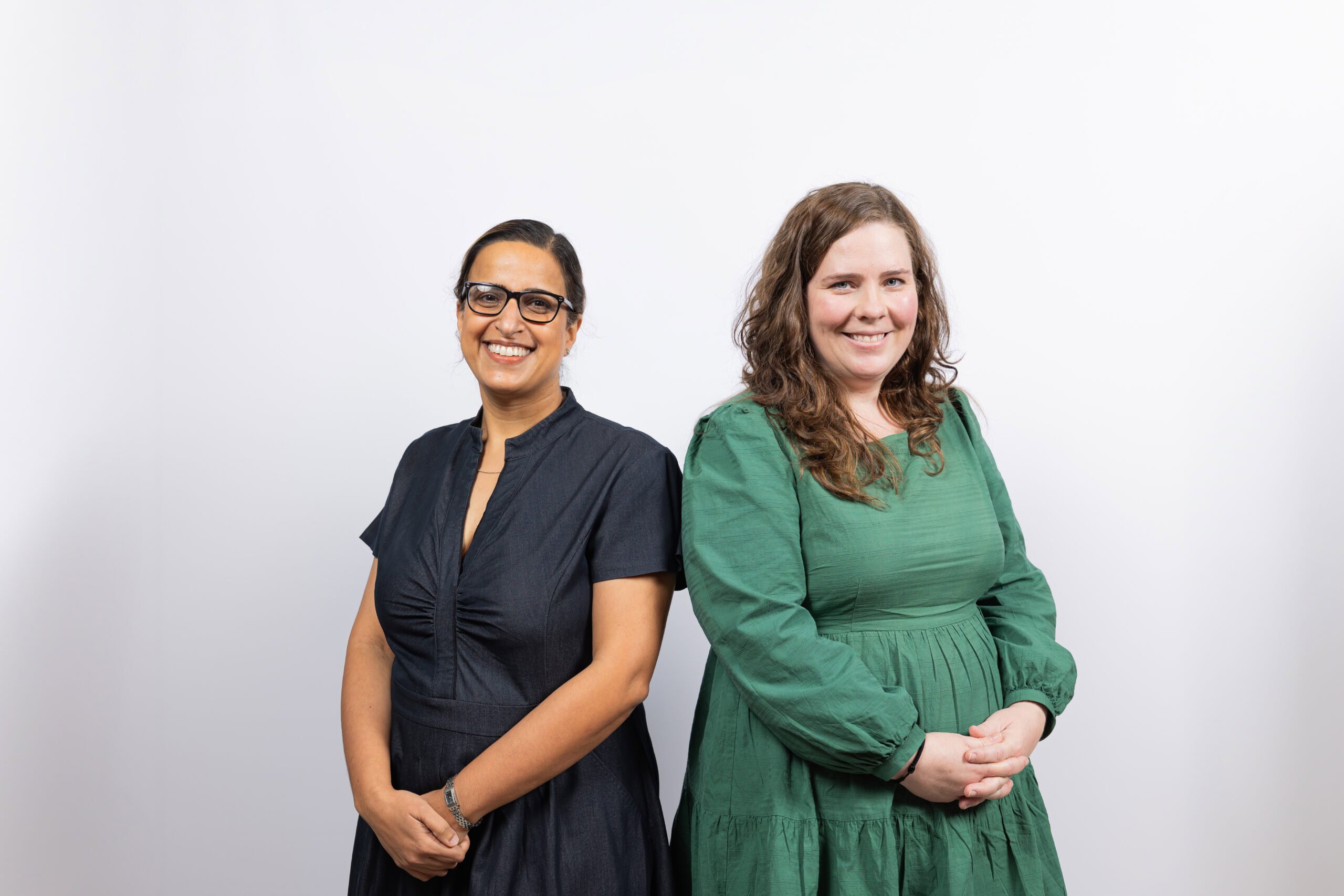
Dr Ruchika Luhach and Dr Carrie-Anne Lewis
Dr Ruchika Luhach is a Brisbane-based GP. She graduated from the University of New South Wales with First class Honours in 2002 and is a Fellow of the Royal Australian College of General Practitioners. She has held various roles in medical education, for both medical students and GP registrars, and has undertaken further study in clinical leadership. Dr Luhach offers thoughtful, holistic care across all life stages, with a special focus on women’s health, pregnancy care, menopause management and children’s health. She practices at Family Drs Plus in Windsor, Qld. --- Dr Carrie-Anne Lewis is a clinical and research dietitian at the Royal Brisbane and Women’s Hospital, with a strong focus on person-centred approaches to obesity care. Her work bridges clinical practice and academic research, aiming to improve how nutrition and weight-related concerns are addressed in healthcare settings. Dr Lewis’s PhD explores how personalised, compassionate care can better support individuals living with obesity, moving beyond traditional models to consider the emotional, social, and psychological factors that influence health. With a commitment to holistic and evidence-based practice, she advocates for respectful, inclusive care that empowers patients and enhances long-term wellbeing.