PRECONCEPTION HEALTH
Vaccinations


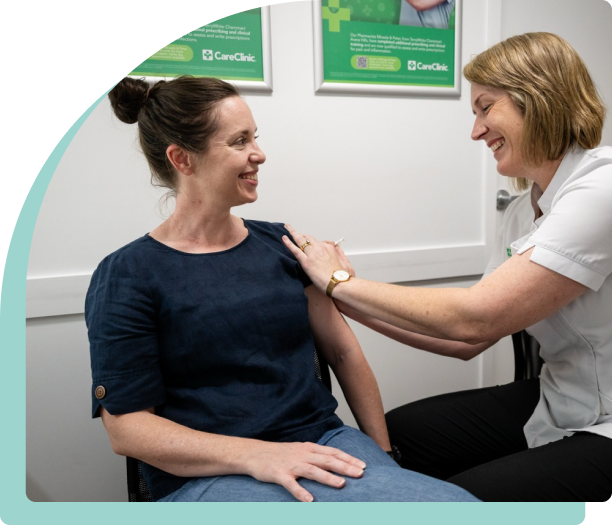
Some viral illnesses, such as measles or chicken pox (varicella), are highly contagious and can cause serious complications during pregnancy, including miscarriage. Vaccinations for these illnesses are safe and effective, helping protect both you and your future baby.
During pregnancy there is an increased risk from certain vaccine preventable diseases. Even healthy women can become seriously ill or face life-threatening complications from infections during pregnancy. Vaccinations are the safest and most effective way to protect both you and your future baby.
Partners and other close family contacts should also make sure their vaccinations are up to date. This helps protect the person carrying the baby and the future child.
Newborns have underdeveloped immune systems and are especially vulnerable to infections. Anyone planning to be around a newborn baby should be up to date on all routine vaccinations.
You may have some mild side effects following vaccination. This is normal and shows your immune system is responding. The most common side effects include pain, swelling or redness at the injection site, tiredness, aching muscles and mild fever. These side effects last no more than a day or two.
Extensive research has found no link between vaccines and autism.
Live vaccines are not given to pregnant women, even though the risk is considered theoretical. Instead, only inactivated vaccines are offered during pregnancy to keep both parent and baby safe.
Taking steps to support your health before pregnancy can help prepare your body and support a healthier pregnancy. Seeing your GP early allows time to look at your overall health, so you can focus on enjoying your pregnancy once you’re expecting.
The best way to support your future baby’s health is by creating a ‘circle of protection’ through vaccinations, this is also known as ‘cocooning’. Parents, caregivers and older siblings should make sure they are up to date on all recommended vaccines to create a protective ‘cocoon’ around the infant.
Planning for a baby is an exciting time. Checking that you are both in your best health is a simple way to share this journey. Before the baby bump both parents should visit a GP for a health check.
Get there first. Many parents wait until they are pregnant to visit the GP, but visiting beforehand helps you optimise health – improving egg and sperm quality, creating a healthier pregnancy environment, and giving your baby the best start. Head to your GP before the baby bump, so you can be the healthiest you when the baby is ready to start growing.

Download:
Checklist for women

Download:
Checklist for men

Download:
Fact sheet
Bar-Oz, B., Levichek, Z., Moretti, M. E., Mah, C., Andreou, S., & Koren, G. (2004). Pregnancy outcome following rubella vaccination: A prospective controlled study. American Journal of Medical Genetics Part A, 130A(1), 52–54. https://doi.org/10.1002/ajmg.a.30225
Department of Health and Aged Care. (n.d.). Vaccinations for women who are planning pregnancy, pregnant or breastfeeding. Australian Immunisation Handbook. Retrieved October 2025, from https://immunisationhandbook.health.gov.au/contents/vaccination-for-special-risk-groups/vaccination-for-women-who-are-planning-pregnancy-pregnant-or-breastfeeding
Goldfarb, I. (2020). Vaccines for women: Before conception, during pregnancy and after a birth. Harvard Health Publishing. Retrieved October 2025, from https://www.health.harvard.edu/blog/vaccines-for-women-before-conception-during-pregnancy-and-after-a-birth-2020011018649
Department of Health and Aged Care. (2023). Vaccinations and pregnancy. Pregnancy Birth & Baby. Retrieved October 2025, from https://www.pregnancybirthbaby.org.au/vaccinations-and-pregnancy
Duque, J., Howe, A. S., AzzizBaumgartner, E., & PetousisHarris, H. (2023). Multidecade national cohort identifies adverse pregnancy and birth outcomes associated with acute respiratory illness hospitalisations during the influenza season. Influenza and Other Respiratory Viruses, 17, Article e13063.

Health and Wellbeing Queensland acknowledges the Traditional Owners and custodians of the lands from across Queensland. We pay our respects to the Elders past and present for they are holders of the memories, traditions, the culture and aspirations of Aboriginal and Torres Strait Islander peoples across Queensland.


© Health and Wellbeing Queensland 2026
© Health and Wellbeing Queensland 2020
Health and Wellbeing Queensland acknowledges the Traditional Owners and custodians of the lands from across Queensland. We pay our respects to the Elders past and present for they are holders of the memories, traditions, the culture and aspirations of Aboriginal and Torres Strait Islander peoples across Queensland.