PRECONCEPTION HEALTH
Physical Activity


Being physically active before the baby bump:
Physical activity is important for both men and women. Research shows that it reduces oxidative stress and helps regulate hormones, which can improve egg and sperm quality.
Being active has benefits for everyone, no matter your weight. Regular physical activity can help maintain healthy blood pressure, boost energy levels, improve sleep and support mental wellbeing.
Physical activity doesn’t always lead to weight loss, but it can help prevent weight gain and reduce the risk of chronic conditions such as heart disease, stroke, certain cancers, dementia, diabetes, depression and anxiety. Building movement into your routine now supports a healthier life long after your baby bump grows up.
Staying active before the baby bump, and during pregnancy, is not only safe – it is beneficial. Regular movement can reduce the risk of pregnancy-related complications like gestational diabetes, incontinence and back pain, while also improving sleep and mood.
Physical activity is a good way to reduce stress and improve mental wellbeing. Stress can impact our health and day-to-day life. While stress won’t disappear with activity, it can help to improve your mood.
Women who do regular, moderate physical activity can help you to fall pregnant quicker than those who do not exercise regularly. Just 30 minutes of extra movement per day can improve menstrual regularity and ovulation within weeks.
Pregnancy places extra demands on the body. Research shows labour is shorter for women who stay active, so building movement habits before the baby bump is key. Preparing your body now helps it do incredible things later.
Staying active will benefit your future child’s long-term health. Women who are active are more likely to have children who are active too.
Supporting each other to build healthy habits before the baby bump sets you up for a stronger, healthier pregnancy. Walking, swimming, cycling, or even heading to the gym together can boost fitness while helping you connect as a couple, with friends, or with family.
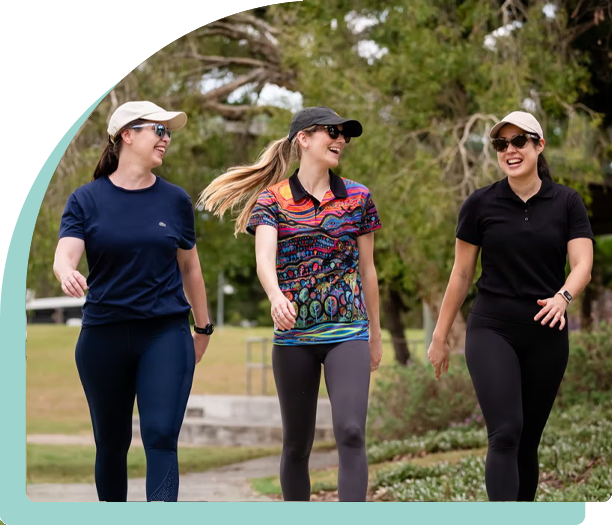
You don’t need to train like an athlete. Walking, swimming, dancing or gardening all count.

Download:
Checklist for women

Download:
Checklist for men

Download:
Fact sheet
Kruszewski A, Przybysz P, Kacperczyk-Bartnik J, Dobrowolska-Redo A, Romejko-Wolniewicz E. Physical Activity during Preconception Impacts Some Maternal Outcomes-A Cross-Sectional Study on a Population of Polish Women. Int J Environ Res Public Health. 2023 Feb 17;20(4):3581. doi: 10.3390/ijerph20043581. PMID: 36834275; PMCID: PMC9962747.
Brown WJ, Hayman M, Haakstad LAH, Mielke GI et al. Evidence-based physical activity guidelines for pregnant women. Report for the Australian Government Department of Health, March 2020. Canberra: Australian Government Department of Health.
Royal Australian and New Zealand College of Obstetricians and Gynaecologists. (2024). Pre-Pregnancy Counselling Clinical Guideline. https://ranzcog.edu.au/wp-content/uploads/Pre-Pregnancy-Counselling.pdf
Sermondade, N., Faure, C., Fezeu, L., Lévy, R., Czernichow, S. (2012). Obesity and increased risk for oligozoospermia and azoospermia. Archives of Internal Medicine, 172(5), 440–442. https://doi.org/10.1001/archinternmed.2011.1382
Queensland Health (2020, May 13). Pre-conception. https://www.health.qld.gov.au/clinical-practice/guidelines-procedures/clinical-staff/maternity/nutrition/lifestyle/pre-conception
Wise, L. A., Rothman, K. J., Mikkelsen, E. M., Toft Sorensen, H., Riis, A. H., & Hatch, E. E. (2012). A prospective cohort study of physical activity and time to pregnancy. Fertility and Sterility, 97(5), 1136–1142. https://doi.org/10.1016/j.fertnstert.2012.02.025
Barbouni, K., Jotautis, V., Metallinou, D., Diamanti, A., Orovou, E., Liepinaitienė, A., Nikolaidis, P., Karampas, G., & Sarantaki, A. (2025). When Weight Matters: How Obesity Impacts Reproductive Health and Pregnancy – A Systematic Review. Current Obesity Reports 14(37). https://doi.org/10.1007/s13679-025-00629-9
Mottola, M. F., Davenport, M. H., Ruchat, S. M., Davies, G. A., Poitras, V. J, Gray, C. E., Garcia, A. J., Barrowman, N., Adamo, K. B., Duggan, M., Barakat, R., Chilibeck, P., Fleming, K., Forte, M., Korolnek, J., Nagpal, T., Slater, L. G., Stirling, D., Zehr, L. (2018). 2019 Canadian guideline for physical activity throughout pregnancy. British Journal of Sports Medicine, 52(21), 1339–1346. https://doi.org/10.1136/bjsports-2018-100056
Mussawar, M., Balsom, A. A., Totosy de Zepetnek, J. O., & Gordon, J. L. (2023). The effect of physical activity on fertility: A mini-review. F&S reports, 4(2), 150–158. https://doi.org/10.1016/j.xfre.2023.04.005
LJ, Redman LM. The Role of Physical Activity in Preconception, Pregnancy and Postpartum Health. Semin Reprod Med. 2016 Mar;34(2):e28-37. doi: 10.1055/s-0036-1583530. Epub 2016 May 11. PMID: 27169984; PMCID: PMC6986386.
Australian Bureau of Statistics. (2022). National Health Survey. https://www.abs.gov.au/statistics/health/health-conditions-and-risks/national-health-survey/2022
Australian Institute of Health and Welfare. (2024). Physical activity. Retrieved from https://www.aihw.gov.au/reports/physical-activity/physical-activity

Health and Wellbeing Queensland acknowledges the Traditional Owners and custodians of the lands from across Queensland. We pay our respects to the Elders past and present for they are holders of the memories, traditions, the culture and aspirations of Aboriginal and Torres Strait Islander peoples across Queensland.


© Health and Wellbeing Queensland 2026
© Health and Wellbeing Queensland 2020
Health and Wellbeing Queensland acknowledges the Traditional Owners and custodians of the lands from across Queensland. We pay our respects to the Elders past and present for they are holders of the memories, traditions, the culture and aspirations of Aboriginal and Torres Strait Islander peoples across Queensland.