

Overview
Introduction
Additional factors
that impact fertility
PCOS (Polycystic Ovary Syndrome)
Further resources
-
Access these resources to support conversations
- Share a PCOS fact sheet for more detailed information about treatment options
- AskPCOS is an app created by Monash University dedicated to providing evidence-based information about PCOS. It provides information for people with or without a diagnosis about the condition, has a symptom tracker and provides information on how to manage PCOS.
- Jean Hailes for Women’s Health is a not-for-profit Australian health promotion organisation that provides
evidence-based PCOS information. - The Monash Centre for Health Research and Implementation website provides a comprehensive range of information for women with PCOS and for health professionals.
- The Polycystic Ovary Syndrome Association of Australia Inc (POSAA) was formed in 1998, by a group of Australian women who found each other on an American-based PCOS website. POSAA is a ‘self-help’ association for women with PCOS and those who suspect they have it. The Association brings together women, their families and friends, and medical professionals interested in supporting the group and PCOS patients.
Age

Encourage open conversations about age and fertility:


Further resources
-
Access these resources to support conversations
-
Resources for health professionals to extend learning
Mental health
Further resources
-
Access these resources to support conversations
- Support Toolkit | Lifeline
- Centre of Perinatal Excellence (COPE) – Preparing for Pregnancy
Environmental toxins
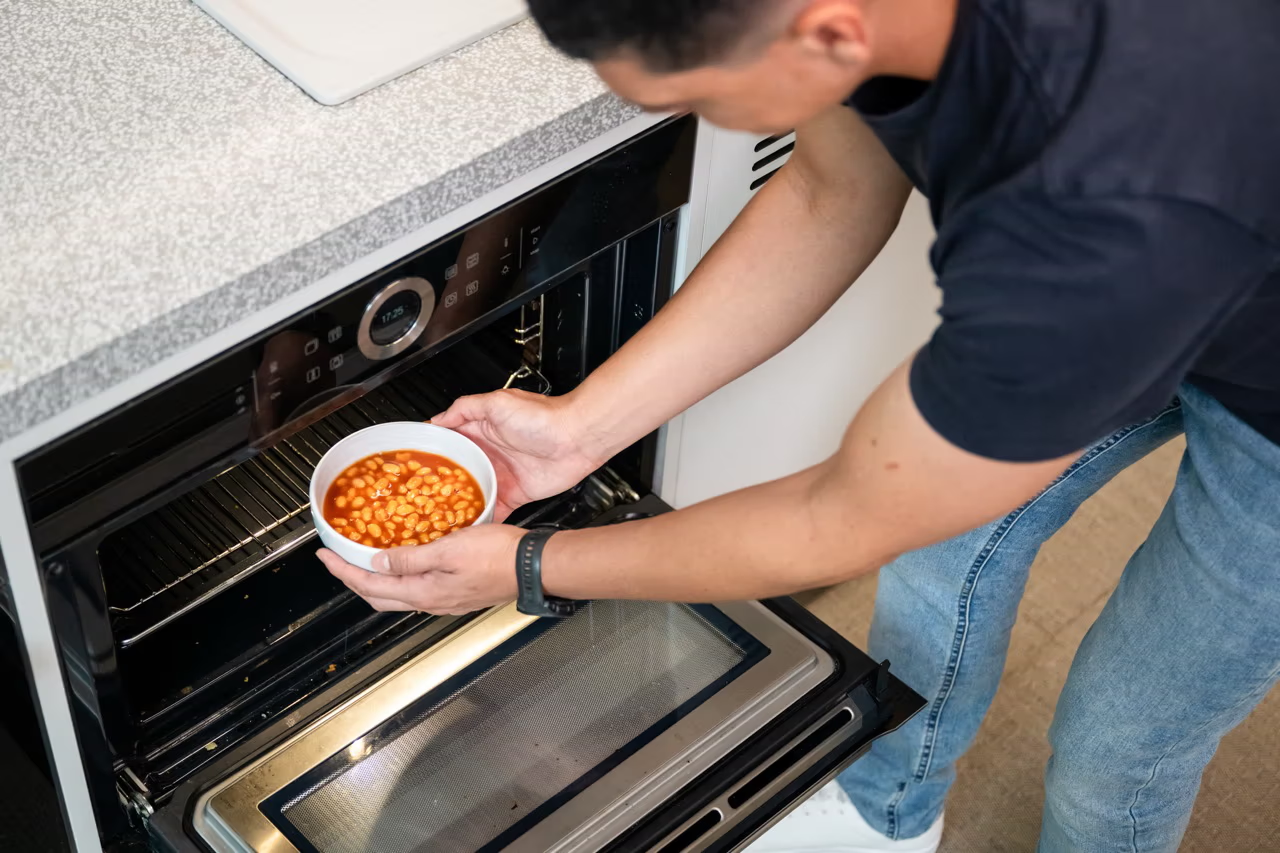
Encourage individuals with PCOS to:


Further resources
-
Access these resources to support conversations
-
Resources for health professionals to extend learning
- Impacts of particular chemicals or heavy metals: Before the Beginning: environmental exposures and reproductive and obstetrical outcomes (2019)
- Brief FAQ to support knowledge and conversations: American College of Obstetricians and Gynaecologists FAQs on Toxic Chemicals
- Expert consensus; International Federation of Gynecology and Obstetrics opinion on reproductive health impacts of exposure to toxic environmental chemicals (2015)
Health and Wellbeing Queensland acknowledges the Traditional Owners and custodians of the lands from across Queensland. We pay our respects to the Elders past and present for they are holders of the memories, traditions, the culture and aspirations of Aboriginal and Torres Strait Islander peoples across Queensland.


© Health and Wellbeing Queensland 2026