PRECONCEPTION HEALTH
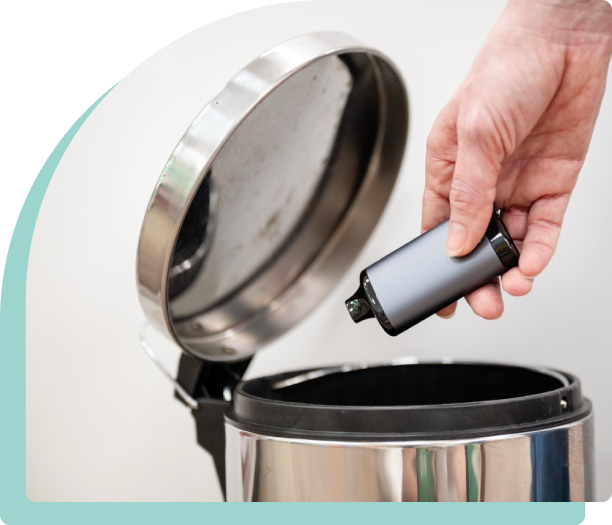
SMOKING AND VAPING



Stopping smoking improves your health, boosts fertility, and lowers the risk of pregnancy complications such as miscarriage, ectopic pregnancy, still birth and premature labour.
Ideally both men and women should stop smoking 4 months before trying for a baby, but stopping any time can help.
Reducing the number of cigarettes or frequency of vaping is a positive step towards health, but even low levels of smoking can make falling pregnant more difficult.
E-cigarettes, or vapes, may help some people quit smoking but their safety before and during pregnancy is not yet known. Proven safer options include Nicotine Replacement Therapy (NRT) and support from trained services.
There are lots of benefits to quitting smoking or vaping.
In 2025, the average cost of a 20-pack of cigarettes in Australia is $45, with the average Australian smoker spending approximately $36 each day*. That’s a saving of $252 per week, or $13,140 a year.
But it’s not just the money you’ll save on cigarettes – you’ll also likely spend less on healthcare, insurance premiums and dental costs.
*Based on 16 cigarettes a day average
Smoking can affect your lungs, sleep, and blood circulation. Quitting smoking improves lung function, boosts energy, helps you sleep better, and supports healthier circulation.
Smoking and vaping are often used to reduce stress, but research shows they actually increase anxiety and tension. Quitting smoking won’t remove stress, but it can help you handle it more effectively.
Smoking and vaping reduce your ability to fight infections. Quitting can reduce the number of times you get sick, and help you recover faster.
What Happens After You Quit: Body Timeline
| Time Since Quitting | What Happens in Your Body |
|---|---|
| 20 minutes | Heart rate and blood pressure drop to normal. |
| 8 hours | Carbon monoxide levels fall; oxygen levels rise. |
| 24 hours | Risk of heart attack already starts to drop. |
| 48 hours | Sense of taste and smell improve. Nerve endings begin to regrow. |
| 72 hours | Breathing feels easier as bronchial tubes relax. Energy levels rise. |
| 2–12 weeks | Circulation improves. Physical activity feels easier. |
| 3–9 months | Coughing and shortness of breath decrease. Lung function improves by up to 10%. |
| 1 year | Risk of coronary heart disease halves compared to a smoker. |
| 5 years | Risk of stroke is like that of a non-smoker. |
| 10 years | Risk of lung cancer is halved. |
Couples who quit smoking or vaping together are more likely to stay smoke-free. They are also more likely to conceive naturally and sooner than couples who continue smoking or vaping.
Passive smoking or vaping can also affect pregnancy. Exposure to second-hand smoke increases the risk of miscarriage and stillbirth, and indoor vaping releases tiny chemical particles that can be harmful to breathe.
If your partner is not ready to quit, ask them not to smoke or vape near you when you start trying for a baby.

Download:
Checklist for women

Download:
Checklist for men

Download:
Fact sheet
Quitline
Pave
Australian Institute of Health and Welfare. (2025). Australia’s mothers and babies. Retrieved from https://www.aihw.gov.au/reports/mothers-babies/australias-mothers-babies
Bayly, M and Scollo, MM. 13.3 How much do tobacco products cost in Australia?. In Greenhalgh, EM, Scollo, MM and Winstanley, MH [editors]. Tobacco in Australia: Facts and issues. Melbourne: Cancer Council Victoria; 2025. Retrieved from https://www.tobaccoinaustralia.org.au/chapter-13-taxation/13-3-how-much-do-tobacco-products-cost-in-australia
Greenhalgh, EM, Scollo, MM and Bayly, M. 2.3 Self-reported measures of tobacco consumption. In Greenhalgh, EM, Scollo, MM and Winstanley, MH [editors]. Tobacco in Australia: Facts and issues. Melbourne: Cancer Council Victoria; 2025. Retrieved from https://www.tobaccoinaustralia.org.au/chapter-2-consumption/2-3-self-reported-measures-of-tobacco-consumption
Greenhalgh, EM, Stillman, S and Ford, C. 7.1 Health and other benefits of quitting. In Greenhalgh, EM, Scollo, MM and Winstanley, MH [editors]. Tobacco in Australia: Facts and issues. Melbourne: Cancer Council Victoria; 2020. Retrieved from https://www.tobaccoinaustralia.org.au/chapter-7-cessation/7-1-health-and-other-benefits-of-quitting
Pineles, B. L., Park, E., & Samet, J. M. (2014). Systematic review and meta-analysis of miscarriage and maternal exposure to tobacco smoke during pregnancy. American journal of epidemiology, 179(7), 807–823. https://doi.org/10.1093/aje/kwt334
Smoking cost data – Based on data from the National Health Survey, the average daily cigarette consumption in 2022-23 was 16 cigarettes per day, which is approximately $36/day.

Health and Wellbeing Queensland acknowledges the Traditional Owners and custodians of the lands from across Queensland. We pay our respects to the Elders past and present for they are holders of the memories, traditions, the culture and aspirations of Aboriginal and Torres Strait Islander peoples across Queensland.


© Health and Wellbeing Queensland 2026
© Health and Wellbeing Queensland 2020
Health and Wellbeing Queensland acknowledges the Traditional Owners and custodians of the lands from across Queensland. We pay our respects to the Elders past and present for they are holders of the memories, traditions, the culture and aspirations of Aboriginal and Torres Strait Islander peoples across Queensland.