


In this final episode of The Clinician’s Guide to Women and Girls’ Health, we explore what healthy ageing looks like for women over 60. Our experts highlight the importance of strength, mobility, and listening to patients’ priorities – encouraging clinicians to take a holistic, person-centred approach that supports women to stay active, independent, and engaged in the things they love.
In this final episode of The Clinician’s Guide to Women and Girls’ Health, we focus on healthy ageing for women over 60. This episode explores how health professionals can support older women to maintain strength, mobility, and independence in this life stage, while promoting lifestyle choices that align with their personal goals.
We’re joined by Dr Sian Edwards, a Toowoomba-based GP with a strong focus on preventative care and women’s health, and Dr Anthony Villani, an accredited practising dietitian and senior lecturer specialising in metabolic health and physical function. Together, they share practical strategies for supporting women beyond menopause, covering topics such as muscle and bone health, cardiovascular risk, mental wellbeing, resistance training, nutrition, and the role of telehealth and social connection. This conversation highlights the importance of listening, personalising care, and helping women thrive in later life.
Victoria C 00:00
Health and Wellbeing Queensland acknowledges the Jagera and Turrbal people, the traditional custodians of the land on which this podcast was recorded, and the traditional custodians of the lands and waters on which you’re listening. We pay our respects to the Aboriginal and Torres Strait Islander Elders past and present, for they hold the memories of the traditions, cultures and aspirations of Australia’s First Nations people.
Anthony Villani 00:23
The SARC-F is it doesn’t have great sensitivity when it comes to predicting sarcopenia, but what it does do is it starts the practitioner talking about muscle health with their patient, and that will then allow them to refer on to others in terms of where interventions may be required.
Victoria C 00:41
Hi, I’m Victoria Carthew, a journalist, presenter and your host of this series, the Clinician’s Guide to Women and Girls’ Health, brought to you by Health and Wellbeing Queensland, in partnership with the Queensland Government’s Women and Girls Health Improvement Program.
Victoria C 00:55
From menstruation to menopause and all things in between, including sexual health, wellbeing and ageing. The Clinicians Guide to Women and Girls Health Podcast series speaks to leading Queensland experts about how health professionals can have effective, empathetic conversations with female clients, empowering them to take control of their health journey. Welcome to our last episode in the Clinician’s Guide to Women and Girls’ Health, where we explore what healthy ageing looks like for women beyond 60 years. And for this last hurrah, we welcome Dr Sian Edwards and Dr Anthony Villani. I’m pleased to say we have sought knowledge again from right across Queensland. Dr Sian Edwards is a general practitioner at Seven Springs Medical Practice in Toowoomba with a passion for supporting patients to maintain their health and quality of life across their lifetime, with a strong focus on preventative health and chronic disease management, she also extends her special interest in women’s and sexual health in her role as medical officer at True Relationships and Reproductive Health. Great to have you with us.
Sian Edwards 01:59
Thank you for having me.
Victoria C 02:00
Dr Villani is an accredited practising dietitian, senior lecturer and program coordinator for the Bachelor of Dietetics in the School of Health at the University of the Sunshine Coast and President of the Australian and New Zealand Society for Sarcopenia and Frailty Research. Anthony’s research expertise includes nutrition and exercise to support musculoskeletal health and physical function for older adults, what a wonderful combination, and I can’t wait to hear what you have to say Dr Anthony.
Anthony Villani 02:27
Thanks so much, Victoria.
Victoria C 02:28
This is a great big conversation, because when we talk about a woman over 60 that looks very different to a woman over 70 and 80 and beyond, but we only have nine episodes, so we are making sure we get it all packed into this one. It is a big conversation, though, isn’t it? Because life changes so much in those years 60 plus, Dr Sian?
Sian Edwards 02:48
It really does. And I think those health needs can really differ greatly over that time. So you know, women between the ages of 60 to 74 if we sort of give that a subset, are still working often. So they’re still working they might have, even if it’s adult children at home or younger children. So that’s a very different sort of group, or sort of issues maybe that we’re looking at, or priorities even, compared to the, say, over 75, or if we’re looking at that 80, 90 age group.
Victoria C 03:18
Which is an interesting challenge for you as a GP, because you are dealing with women right through that spectrum.
Sian Edwards
It certainly is.
Victoria C
Dr Anthony, similarly, for when it comes to your area of expertise, 60 to 70 to 80, the some of the standards are just the same, but it can vary greatly.
Anthony Villani 03:34
Yeah it can. So you’ve got people in their 60s and 70s that are either looking at management of chronic disease or delaying chronic disease. And then when, sort of, we’re moving into our 80s, where we’re starting to think about issues around muscle health, on cognitive health and, by and large, nutrition principles. But there, there are little nuances, and there will be some differences that are important to address as we age, you know, to support healthy ageing.
Victoria C 03:57
Because you’re managing those amongst other conditions that come through as we age?
Anthony Villani 04:01
Absolutely, yeah, absolutely. But some of the good things about from a dietary perspective, a lot of management principles of chronic disease, for example, they can be tackled through good, healthy, balanced diet. So they’re tackling a range of different chronic diseases.
Victoria C 04:14
Absolutely. Dr Sian, so for women aged 60 and over, as they step into this new stage of life, chronic conditions really do become quite a focus, don’t they?
Sian Edwards 04:23
I probably don’t really want to start with talking about chronic conditions with someone at 60, so if I’m seeing them, it’s not necessarily going to be the focus, but we’re keeping that in the back of our mind, because really the 60 to 70 age group, we’re looking at prevention. We’re looking at that, you know, risk factor management, you know, leading cause of death for women in Australia is dementia, and our second leading cause of death is cardiovascular disease. So that’s your stroke, your myocardial infarction. So a heart attack, the pathological changes with dementia start 20 to 30 years before we start to see those symptoms or have a diagnosis. So that’s where at 60 it is really important that we’re thinking about those chronic medical conditions. But when I’m sort of having a consult, I don’t like to focus necessarily straight on that
Victoria C 05:09
Because that’s not necessarily why they’ve come to you is it?
Sian Edwards 05:11
No, that’s right. So you know the other things that we are thinking about, so if we’re talking chronic medical conditions that we might encounter. So it is the type two diabetes, the osteoporosis, or with that, the sarcopenia that we talk about. You know, it could be arthritis, chronic pain. There’s our hypertension, so cardiovascular disease, other things that we might not necessarily be thinking about, but your obstructive sleep apnea, your depression, your urinary incontinence. So there’s a whole range of things that we need to be focusing on in terms of what we can be preventing for the future.
Victoria C 05:50
So you’ve used that word a couple of times now, preventative and prevention. So there’s an awareness and looking to the future. But what you can do now to help with the future.
Sian Edwards 05:59
That’s right, I think, really to sort of help our patients enjoy their age and enjoy into their ageing. And this is what I love about primary health care, is really that opportunity to address things earlier on and look at the risk factors and look at the things that we can be doing in their lifestyle changes to keep that going.
Victoria C 06:18
And it’s this, these are things that can impact their daily lives, aren’t they? I mean, you’re talking about, we were – people joke about, I’m just getting old, but these are daily impacts on lives that can impact your quality of life?
Sian Edwards 06:28
Yes. And I really hate when people sort of just say, Oh yeah, I’m just getting old. Because I think, Oh no, that’s this is, you know, going into your 60s, maybe you’re finishing work, the kids are out of home. So look, this is an amazing time for a lot of people’s lives, and they should be embracing that, and really, that’s why we need to, as clinicians as well, be really mindful of, well, what can we be doing to just help them now, sort of going forwards from that regards, but yeah, in terms of how much they can impact in our lifestyle, like frailty, for instance. So if we’re becoming weaker in our skeletal muscles and osteoporosis, then that has a big fear effect. For falling, they might sort of start to withdraw socially. There’s, you know, there’s a lot more that we see there. If someone does have urinary incontinence symptoms, then they it’s embarrassing to go out. They might not engage with those healthy lifestyle, things that we really want to encourage, like, joining exercise classes, because that’s such a big barrier, you know, if they’re having some incontinence. It’s just beyond the impact of just having a diagnosis, and I’m giving you some medications. There’s so much more that we need to be thinking about so that we can give people that quality of life, so that they’re going into their 80s and 90s, you know, and enjoying that
Victoria C 07:42
I know we’ll talk about it a bit throughout, in terms of education and awareness out there. Anthony sarcopenia is one of, and frailty is one of your absolute areas of expertise. I feel like perhaps even a decade ago, that was not even a word or term many lay people outside of clinicians may have known about. But it is, it is huge with our ageing population, isn’t it? And so much more awareness
Anthony Villani 08:01
Absolutely and more awareness to there still need to be more awareness to had to be honest. Victoria, you’re right. It is gaining a bit more traction. It is gaining a little bit more momentum. To be honest, it’s probably something that people need to start thinking about in their 40s and their 50s, and not their 60s and 70s, because it’s all about prevention and preventing, you know, a decline in your skeletal muscle when your strength and your function, so you can age well, some of the things that Sian was talking about before.
Victoria C 08:24
Do you know I already feel as though, so early in this conversation, we’re talking about women 60 plus, but we’re talking about those years before. So you’re really asking people to be prepared, or talk to clinicians about preparing people for those years ahead
Sian Edwards 08:40
At the moment, there’s such a social media sort of so just to touch upon those earlier years, perimenopause, menopause, and I do see a lot of women coming in in their 40s, and I love it. It’s great. They come in and ask those questions. And it might not be that we need to sort of look at hormone therapy, but that’s the opportunity that we can take at that point in time, in their 40s, to say we need to be moving our bodies. Look at your nutrition. What’s your diet doing and getting stronger, then for the bones, for the muscles. So it is, and that’s again, life expectancy for Australian women is 85 that’s past the menopause. We got 40 more years to sort of eke out of our bodies.
Anthony Villani 09:20
That’s that’s a critical time, isn’t it? Because you live like a third of your life during that stage. So being physically active and eating well is critical during that stage.
Victoria C 09:29
It is a long time, and I think that’s you almost forget, because we’re so busy focusing on those early years and that early fun part of your lives, that you forget that there’s a really important stage to come so we are preventing but when they’re coming to you at 60 plus, there’s a lot of assessments. GPs, need to be looking for when they’re looking at that age group?
Sian Edwards 09:44
Yeah. So I think certainly we should be aware of just those general screening questions. So, you know, thinking about the frequency of just simple things, like, you know, a blood test every year, and it might be your HbA1c, that we can do a blood pressure annually. Looking at how often we’re doing an ECG, every one to two years. So we’re doing that thinking about a heart health check from sort of 60 onwards. We’re really thinking about that kidney health check as well. So it might be every two years that we’re all you know, depending on risk factors, potentially annually, adding in that urine ACR, so the Albumin and Creatinine Ratios. So there’s certainly just very simple things that we can be doing even in the 12 minutes, or if our nursing staff can grab that patient sort of beforehand, if it’s a new patient, or if they haven’t been seen for a while, the height, weight, waist circumference, all of these very simple screening sort of testing or observations can actually add to that picture of, well, what is their health like at the moment? What risk factors should we be thinking about prioritising? You know, when we see when we’re seeing our patients.
Victoria C 10:45
Stay with us. We’ll be right back to continue our conversation.
Speaker 1 10:59
If your patients need help to maintain a healthy weight, improve their sleep or better manage stress. My Health for Life can support them achieve their health goals. My Health for Life is a free lifestyle program helping Queenslanders live well and reduce their risk of developing a chronic disease. The program is delivered by qualified health professionals, empowering people with support, knowledge and practical tools to achieve their health goals. Encourage your patients to have a free health check today at myhealthforlife.com.au and begin their journey to improved health.
Victoria C 11:30
Thanks for listening. Now let’s return to our conversation.
Victoria C 11:35
One thing that I think has really struck me across the series each of our GPs that we’ve had in to speak to us is that quite often someone that comes to see you, they’re coming for one thing, but in your conversation, you will find that there is something else going on. So it’s really about, for our GPs, it’s that conversation isn’t it?
Sian Edwards 11:48
It really is. And that’s the craft of GP, in a way, in that we’re not just someone does come in with priorities, but we also need to be thinking about what else could be going on. What do I need to be thinking, what’s my medical priority for this person, knowing the age group, maybe knowing what other risk factors or chronic disease they currently have, and making sure that we’re always thinking about those things. So Medicare has an annual health assessment, so we have item numbers that will improve the rebate annually so that we can spend a bit more time with our patient. And then that’s that great opportunity to sit down and go through a longer questionnaire, spend a bit more time asking about nutrition, what is their falls risk? What? How are they going socially? What supports are they getting in the household? So with thinking outside, just that person and that one symptom that maybe they’re presenting with at that point in time
Victoria C 12:38
I have to say, I recently was fortunate enough to sit in with my dad for one of those longer appointments. Those assessments. And it was really, really interesting, and really made me also aware of other things I should look for or be, you know, as a family member, what else might be flagged to me. And I thought it was a really valuable thing. I know not everyone would perhaps have a child or a family member that could go with you, but I thought it was really valuable to understand the role a GP played in that bigger picture, care for people over 60.
Sian Edwards 13:02
Yeah, it is. And in that ageing population, it’s actually then really great if we do have family support or someone else that can come along to help with that, because that is also one of the areas. So just in general, support and with management of depression, having that social interaction, so just sort of seeing that it again. It’s not just, here’s your script for an anti-hypertensive. We’re sort of really thinking about, well, what other things can family members be doing? And, you know, on that note, that’s where some of the other assessments that we can be doing. So your GP chronic conditions management plan. So that’s another annual check. But the beauty of that one is that we can start to get that multi-disciplinary team together so we can, you know, do some Allied Health referrals to involve them with an exercise physiologist or a nutritionist to help with that sort of support as well.
Victoria C 13:52
Is this age bracket so over 60 are women going to still be potentially experiencing ongoing menopausal symptoms?
Sian Edwards 13:57
Yeah, that’s a great question. Potentially, there’s a portion of women who will still experience your vasometa symptoms, so your hot flashes into their 60s and 70s, and they can still be quite debilitating and have a big impact on especially if they’re still trying to work and they’re fatigued and they’re not sleeping because of it all. The knowledge that we have around that area with menopause and the safety around hormone treatment is changing. So you know that is potential, but we’ve been really lucky in Australia that there’s a whole range of non-hormonal options now as well, that we have to manage that. But one of the biggest symptoms as we age, and so the longer we are in that oestrogen deficient state is the genitourinary symptoms of menopause. So things like dryness, we can start to see more urinary frequency, increased recurrent UTIs, and the impact on the muscles overall is affecting our pelvic floor. So those urinary incontinence symptoms, and you know, one of the other other areas, and this is just, well, everyone’s generally post-menopausal. It’s. 60, but having a good sex life. It’s really important that we’re still taking those things into account for women in their 60s, 70s, 80s, and not just assuming that they’re not sort of wanting to have a relationship still with their partner from that regards.
Victoria C 15:13
Yeah, interesting, that’s a lot, it’s a lot of bigger picture than I think other people might realise. Nutrition, where does that sit in this mix, Anthony? In terms of this 60 plus we’ve just mentioned there, you know, in terms of menopause and ongoing but where does nutrition fit right at this moment into that?
Anthony Villani 15:27
Good question, particularly if you just focus on the menopause for a second, we’ve got a lot still to learn around nutrition’s role. A lot of the research is around specific food items, in particular soy for managing certain conditions, like hot flows, certain symptoms, I should say, like hot flushes, for example, and night sweats. There’s a little bit of evidence there, but, you know, there’s a lot of inconsistencies with it. within that evidence, there’s not a lot of good clinical trials, not robust clinical trials, and that’s just looking at singular foods as well. We need to be looking at whole dietary patterns for help, helping managing, you know, those symptoms of menopause. So there’s a little bit of evidence around anti-inflammatory type of dietary patterns, like the Mediterranean diet, for example
Victoria C 16:08
This is one of your real areas isn’t it?
Anthony Villani 16:10
It is, but the evidence still is lacking. There’s very few. In fact, I don’t think there is one clinical trial on the Mediterranean diet looking at menopausal symptoms. There’s some cross sectional analysis, or some observational studies, including some stuff that my team have done. But also you need to sort of look beyond menopausal symptoms and looking at the overall health of women as we age. So anti-inflammatory diets, or Mediterranean diet, or a plant based dietary pattern, or, you know what? Even a dietary pattern that’s consistent with the Australian Guide to Healthy Eating. It’s really important to help manage and prevent conditions that women are perhaps more vulnerable to as they transition through that phase. So we’re talking about things like your cancer risk, for example, cardiometabolic diseases like heart disease and diabetes, looking after your bone mineral density, because osteoporosis becomes a real factor as well. So it’s really important that we’re looking at whole diets for chronic disease management during that stage, rather than just looking at isolated foods. But a lot to a lot still to unpack and investigate in the menopause space when it comes to nutrition
Victoria C 17:13
Musculoskeletal health is certainly crucial for healthy ageing. But in recent years, we are hearing so much more about it. It’s one of those catch phrases we’re hearing much more of, and people are really trying to understand what that actually means. What is musculoskeletal health?
Anthony Villani 17:25
Yeah, so good, good question that’s pretty hard to define, but the way I would look at it is being able to maintain your muscle and your function and your strength as you age. So those three things are really critical. Lifestyle plays a really important role in this. So for me and dietitian by background, but for me, when it comes to managing your strength and managing your muscle and your function, exercise really is key here. So nutrition alone is not going to get it done. It really is the exercise. And when we say exercise, we’re really talking about resistance exercise. Now all types of exercise are going to be beneficial. Aerobic exercise is going to be great. But if we’re really talking about maintaining muscle, maintaining our bone mineral density, our strength and our physical performance or our function, it’s really about engaging in resistance exercise at least two to three times per week. But from a nutrition point of view, from a prevention point of view, managing chronic disease is still really important in this space, because having chronic disease, like diabetes, for example, increases the rate of muscle loss as we age, and when you add chronic disease to that. So multiple chronic diseases, it further exacerbates that. It further increases your risk.
Victoria C 18:37
So that layers on top of
Anthony Villani 18:38
Absolutely so we look at the evidence, people that have multi comorbidities, there are they are particularly more vulnerable to declines in skeletal muscle mass, strength and function. So maintaining a healthy diet that’s consistent with, you know, Australian dietary guidelines, it’s predominantly plant based. So we’re talking about lots of fruits and lots of vegetables, lots of colour within that as well. We really emphasise that from a dietary perspective, colour, when it comes to fruits and vegetables, is important because colour means different antioxidants and antioxidants work and behave differently in the body, particularly when we’re trying to lower inflammation, for example. But you know, in terms of looking at a healthy dietary pattern like I mentioned, we’re talking about fruits and vegetables and grains and dairy and good sources of lean proteins, fish, in particular, because of its omega-3 fatty acids, for example, a dietary pattern that really lends itself to a sort of an anti-inflammatory type of approach is that Mediterranean diet, but that is really, really important for the management of chronic disease, and the literature does support that those that have a higher adherence to a healthy dietary pattern that is, like I said, somewhat generally, plant based. We’re not talking about vegetarian or veganism. We’re talking about what’s predominantly on your plate is plant based. It certainly decreases your risk for things like frailty. It decreases your risk of sarcopenia. But what we do know, the strong evidence is it decreases your risk of chronic disease, and it allows you to better manage your chronic disease if you have chronic disease.
Victoria C 20:06
Is this type of education Dr Sian, what you can give your patients, your women, to really empower them, to take those steps themselves?
Sian Edwards 20:14
Yeah, I think this is a fantastic discussion from that regards, it’s so much information, though, isn’t it, sometimes, and it can be hard in that 12 minutes that we might have when we’re sort of having a GP consult to cover all of that. I mean, there’s some very simple, you know, I phrase that as simple, but simple ideas there. But this is where, if we can have those being aware of using a referral to nutritionists for anyone can be really useful to sort of expand upon that. I find sometimes we can say, well, go and do a Mediterranean diet, but it can be really hard for someone to then implement that or make the changes in their own sort of patterns at home
Anthony Villani 20:53
What does that look like?
Sian Edwards 20:54
What does that look like exactly? What’s an actual, sometimes people need just, here’s a recipe, you know, to start exploring that as well. So, but it is so crucial the nutrition conversation
Anthony Villani 21:04
Absolutely, and that’s why referrals to APDs do become important because, you know, accredited practising dietitians can help break down those barriers, to help in, you know, implement and impart knowledge to what does a Mediterranean diet look like, and how can that? How can we better implement that into your current life? So from a dietitian’s perspective, generally, we’re not asking people to follow a Mediterranean diet. We’re asking them to follow a Mediterranean style diet and implement some of the key principles in their current diet, rather than getting their diet and tipping it upside down and changing it all together, because we know they’re not going to adhere to that.
Victoria C 21:36
Not after so many years
Sian Edwards 21:38
No
Anthony Villani 21:38
We’re creatures of habit, right? That’s exactly right. So it’s how, what I like to call, how can I make my diet look a little bit more Mediterranean? So, for example, it could be like incorporating at least one fish meal per week. It could be adding some legumes to your main meal a couple of times a week, maybe using a little bit more olive oil, maybe snacking on some nuts. So those kinds of things, rather than really stripping back your current diet, and, you know, like I said, tipping it upside down and changing it all together. It’s, you know, bringing those principles of a Mediterranean diet to the forefront in their in their current diet.
Victoria C 22:09
Are there any other types of supplementation you particularly recommend for women 60 plus?
Anthony Villani 22:14
That’s a really good question. And all depends on what their current diet looks like. One thing before I do talk about that, I want to link back to protein, yeah, because protein does become important when we age, particularly for maintaining strength function and obviously our muscles. So as we age, we need a little bit more protein, ideally using a food first approach, because it links into the supplement that you just talked about before. So generally, people will consume enough protein. But like I said, as we age, we do need a little bit more, and that’s because as we age we tend not to use once we consume protein, we tend not to use it as well as we did when we were younger to help support muscle protein synthesis, to help maintain muscles. So there’s a couple of things I do want to talk about here. So in terms of protein requirements, as we age, we’re looking sort of certainly beyond 60. Targets will range anywhere between about 1.2 grams to 1.5 grams per kilogram of body weight, depending on the person’s body weight.
Victoria C 23:11
I’m going to get you to repeat that again, because I feel like I listen to a lot, and I feel like I’ve listened to this and hear it a lot. So say that again for everyone
Anthony Villani 23:18
So that’s 1.2 grams to 1.5 grams per kilogram of body weight
Victoria C 23:22
Of what they are at that moment, or what they aspire to be?
Anthony Villani 23:25
Their current body weight of what that is. So that’s just total protein intake, but your type so your source of protein, and how you distribute that throughout the day is also important as well. So as Australians, what do we tend to do with our protein intake? We tend to back end it the last meal of the day, don’t we? And you know, that’s probably okay when we’re younger and middle aged, but as we get a little bit older, we need to be making sure we’re spacing out our protein evenly across the day.
Victoria C 23:53
So distribution matters.
Anthony Villani 23:54
Distribution matters because we don’t utilise the amino acids from protein as well as we once did to help support muscle protein synthesis, which is key to helping maintain your muscle mass as you age. So one of the things that I like to think about is roughly about 20 to 25 grams per eating opportunity. So whether that be breakfast, whether that be a snack, lunch, another snack in the afternoon and your evening meal, so distributing that evenly, as I mentioned, the source becomes important as well. So previously, I’ve talked about mostly a plant based and that is, that’s true, and that’s important. But when it comes to protein preferences, come to an animal based proteins, because they’ve got amino acids in combinations that will help better support muscle protein synthesis. And a classic or really good source of protein here is from dairy actually, particularly whey protein, because it’s got a specific amino acid. It’s a bit of a trigger like a gun. It helps support muscle protein synthesis when consumed in adequate amounts, a 25 gram dose of protein is going to give you that amount of the amino acid to help support muscle protein synthesis. Other great sources of protein include eggs, chicken, fish. I love fish because it doubles up with the omega-3 fatty acids, obviously lean cuts of red meat. But also, plant based proteins are really important too. They shouldn’t be neglected, because the great things with plant based proteins, as is the case with animal based proteins, is they come with their own array of different nutrients. So we’re talking about things like soy, we’re talking about legumes, nuts and seeds. They’re all really important as well.
Victoria C 25:33
And really, I don’t think there’s ever been a time in history when there was more research going on than there is right now into protein. So there’s so much that people can look into if they would like to as well. I suppose Dr Sian one of the challenges, and I want to go back to that supplementation.
Anthony Villani 25:46
Yes, yes I haven’t forgotten about that.
Victoria C 25:48
Is that as people age 60 plus, but certainly those later years, you’ll often hear your mum or your grandma saying, Oh, I eat less now, I don’t need a big meal now, I need less. But that’s where the danger lies, isn’t it? Because if that less or smaller meal isn’t containing that hit of protein, that 25 grams, then that’s, that’s the problem, that’s when malnutrition can kick in.
Sian Edwards 26:05
That’s right. And I think as well as you were talking there, I was just thinking in the women, unfortunately, you know, with that menopause, we’re seeing that and that creep of visceral fat deposition and the weight and then so one of the responses that a lot of women have to that is to then cut back on eating and cut back on their meals, or they start to skip a meal. And the point you were making of having that distribution over the day, and so that’s with having that asking a few questions about, what is your pattern of eating and, you know, and then what are you prioritising in the meal as well? So if you’re going to have something, make sure it’s vegetables and then some protein in it, because we do see those behaviour changes. The other thing that we also start to see, as well as women, women are ageing, is maybe they’ve lost their partner. People have moved out of home. They don’t have as many people to cook for, do they? So they’re not sort of they just start to pull back from actually spending that time actually preparing meals, and it becomes a little bit of a tea and biscuit sort of scenario in some instances
Anthony Villani 27:10
And is this where we potential see a little bit of depression creep in as well?
Sian Edwards 27:13
Exactly. So, yeah. So you’re sort of seeing those changes as a bit of social isolation, because previously that was bringing the family in and eating together, and taking that pride in preparing a meal for other people so that nutrition, sort of it changes in so many ways as well, in terms of how you know
Victoria C 27:33
Food’s not just food. It’s the role it plays in your family, in your lives
Sian Edwards 27:37
But yeah, so it’s a really important question to be asking, sort of at those annual health assessments, or if you’re having a chat to someone about their chronic disease management.
Anthony Villani 27:48
And whilst we do because they’re really, really good points that Sian’s raised, and while we do emphasise that a food first approach for protein, in particular, when we come a little bit more vulnerable and we might be at risk of malnutrition for some of the reasons that you just mentioned Dr Sian oral nutrition support does certainly play a role for those patients that we’ve identified as malnutrition. So that’s where sort of high energy, high protein supplementation, or oral nutrition support does play a role, a short term role, and hopefully be able to transition back into better appetite and consuming food and consuming your protein and other nutrients from food alone
Victoria C 28:28
Because it can be difficult, can’t it? Once people go down that path of as you for all of those reasons you’ve described, eating less, then they become thinner and malnutrition. It’s sometimes it’s hard to turn the mindset around, but also the nutrition around as well
Anthony Villani 28:38
Having to cook a meal, particularly if you’ve lost a partner, for example, suddenly cooking for one becomes a challenge. You lose your appetite, and it is easier to get your nutrients in a bottle. But that’s not very enjoyable is it?
Victoria C 28:50
Anything else, in terms of calcium, or anything else you would suggest that they should be taking?
Anthony Villani 28:53
Yeah, it’s a good, really good question. And in terms of what the literature supports, what the evidence supports, nothing in particular, unless there’s an inadequacy there. So the one I want to highlight is vitamin D. So like there’s potential for vitamin D inadequacies, and that vitamin D is really important to help support muscle health as well, and a little bit of evidence suggests that it may reduce falls risk, for example, certainly helps with bone metabolism. But the benefits of vitamin D are only going to be there if there’s an inadequacy or a deficiency. So the best person to talk to there is your GP to organise, a blood test to see whether where your vitamin D levels are, because if they’re okay, a supplementation is not necessary
Victoria C 29:36
Which slides straight back to you when you mentioned falls. You know, 60 plus 70 plus catastrophic they can be for life and longevity. Is that something in the type of assessment you would perform as a GP?
Sian Edwards 29:46
Yeah, it’s really important to be thinking of falls at all ages, really. So in terms of frequency of falls in that sort of 60 to 70 age group, one in five women, I think, will have had a fall in, in the previous year or have experienced a fall, and then once we get above 80, it’s one in sort of two to three women will have experienced a fall. And one of the biggest predictors of having another fall is having had a fall. So that’s one question you can ask. It doesn’t have to be five, you know, 10 questions when you’re doing a falls assessment, you can just ask, you know, have you had a fall? And, you know, maybe inquire about the mechanism. Was it tripping? Was it dizziness? You know?
Victoria C 30:26
I’ve been in one of those conversations with my family, and it’s really interesting, because they’ll say no, because they didn’t hurt themselves. But it’s actually more than that isn’t it?
Sian Edwards 30:34
Yes, that’s right, it’s just, it’s the frailty. So that’s coming back around to the sarcopenia, the osteoporosis, it’s that. So quite apart from there’s a lot of we have to think about chronic medical conditions that can set us up for risk of falls, obviously so. And also what comes with that is often the medications that are then prescribed to manage the chronic medical condition, or the insomnia or something else like that, but then we can either over medicate or have the side effects that put them at risk, but that that very basic, if they’re not strong enough, if they can’t sit to stand. So looking at those things, if they can’t sort of move about safely, that certainly would then put them at risk of that next one. The other question about falls is that, if you the fear of falling creates a cycle of falls as well. So and you know whether the cognition is going they’ve had one fall, so they don’t want to then do anything that might put them at risk of having a fall. But by virtue of that, they’re then moving less potentially, or they’re not sort of having the confidence to go out and do their walking. So say they used to do, you know, a three kilometer walk and they had a fall, and so then they pull back from that a little bit because they got frightened, because they were alone when they had the fall, or they couldn’t get themselves up. So there’s a lot of things, falls assessment in itself is, you can be thinking about a lot of things from that perspective, but the risk of a fall is a fracture, and then, so if you have a hip fracture when you’re older, then there’s a higher risk of fatality. There’s a higher risk within 12 months of mortality. So it’s, it’s so important to sort of that we’re looking at that, you know, that safety and longevity
Victoria C 32:23
Which is exactly where you come back in, Anthony, because this is another, this is your area of expertise as well, around the frailty of the sarcopenia. But I’m interested, when we talked about women and education and empowering and referring on, I feel like most older folks, that you are the source of all good things. You know, they rely on their GP for so much you are the font of knowledge, but you can’t be everything to everyone can you?
Sian Edwards 32:44
No, that’s right. I think where we can play a really great role as primary care providers is have that knowledge of, okay, well, yes, you’re coming to ask me with the questions, or we’ve identified that there’s this risk, or you’ve had a fall now. What can we do about it? You know, when we’re talking prevention or minimising sort of further risk. But with sort of can be that source of, okay, well, look, we’ve got the exercise physiologist, they are experts at saying, Well, you want to do an exercise program at home. We know you’ve got some osteoarthritis. We know you might get a bit dizzy if you stand too quickly. So they can design a program that is really specific for you and your needs, and do it safely, and then move on from there. So to start to improve from that perspective, and it’s the same with, I mean, there’s great allied health, or so many great services really, that we can be drawing upon. And it might just be the nursing staff in the clinic who spend that extra five minutes and do a quick falls assessment, or ask about nutrition and things like that. Or it might be our nutritionist, physiotherapist, if we if we’re dealing with chronic pain, and that’s what’s sort of adding to the burden of the falls, or anything else like that.
Victoria C 33:53
I feel like you could step in there and talk to us about that frailty
Anthony Villani 33:57
Oh, I’ve been wanting to jump in for a little while, because Dr Sian has said so many wonderful things, and she mentioned earlier about various different screenings for various health checks and those sorts of things. And one of them for me is muscle health. Muscle health is everyone’s priority, from whether it be the GP, whether it be allied health, it’s something that we should all be implementing into our assessments, and there’s a range of factors as to why that doesn’t happen, and there’s really good research on it to support it. Could be competing health interests. It could be because of a lack of time, lack of resources, lack of professional development opportunities. But we know how important muscle health and physical function is as we age, to put it bluntly, a decline in muscle mass and strength and physical performance as you age is predictive of mortality. It’s predictive of a whole host of poor health outcomes. So screening for poor muscle health is everyone’s priority, and it’s difficult to be able to assess sarcopenia, particularly in primary health care. It’s not like you’ve got an access to a DEXA or a bioelectrical impedance analysis in your office, we can assess certain aspects of sarcopenia, like grip strength, for example, if we’ve got access to a handheld dynamometer, if we’ve got access to a tape measure, we could measure calf circumference, which can be used as a proxy for muscle mass. We can certainly do some of the physical functioning tests, like a sit to sand, like Dr Sian talked about earlier, or a gait speed test. These things don’t take a long time, but understand the potential barriers that are associated with doing those in primary health care. The other one that could be implemented as a bit of a screening tool into assessments, whether that be for GPs or other allied health practitioners would be the SARC-F of which is just a few simple questions around falls risk. So how many falls have you had in the past 12 months? Can you climb a flight of stairs? Are you able to mobilise around without any walking support aids and ask questions about the strength? Now, the SARC-F is not a doesn’t have great sensitivity when it comes to predicting sarcopenia, but what it does do is it starts the practitioner talking about muscle health with their patient, and that will then allow them, if necessary, to refer on to others in terms of where interventions may be required, like the EP, the exercise physiologist for exercise prescription, maybe a physiotherapist needs to be involved in there, and certainly the accredited practising dietitian. So my big take home there is muscle health is everyone’s priority.
Victoria C 36:31
Do you think that is something that our GPs are aware of, or is there so much else to worry about?
Sian Edwards 36:36
I’d like to hope that we’re starting to be more aware of it, because it is in the conversation a lot more but traditionally, no, it hasn’t been. And as we get more and more information, really, knowing that lean muscle loss, or that muscle mass reduction as we age, it’s kind of the origin for a lot of chronic medical conditions. So with that lean muscle mass reduction, we’re getting increased insulin resistance. So it’s not just about falls and frailty, it’s about that metabolic balance that’s happening there. So we do really need to know about it and be more aware about it, and be thinking about it from that perspective. And you know, coming back to sort of, how do we educate and think about prevention early on, my sort of take nowadays is actually, to keep it simple to people, and I do start to find I’m talking more and more towards, you know, there’s four things that we need to think about. It’s the muscles, it’s the bone, it’s the heart, and it’s the brain. And if we can sort of just bring it back to a few of those areas, and across the board, like risk factors for cardiovascular health are going to be chronic kidney disease or sugar management and different things from that perspective. But there can be so much information that we’re trying to impart. And you know, if you’re getting, I get, can get worked up and passionate about what, what I’m trying to educate my patients about, but it can be really overwhelming as well, and that’s the same from a clinician’s perspective. Like, what do I talk about? You know, what do I focus on? And again, the beauty of primary health care is it’s not just one consult. We’re building a relationship with our patients, aren’t we, over time. So you know, if we see them at 60, hopefully with we’re helping them through those next 40, 40, or 50 years. And so it can just be a matter of, did you have a think about what we talked about with exercise, or how you might introduce some exercise in or some movement? It doesn’t need to be that formal vision of exercise, does it? So yeah. So I think just simplifying it and bringing it back to some of those basics, and thinking about simple lifestyle things we can do for prevention
Victoria C 38:39
I know you’re dying to jump in Anthony
Anthony Villani 38:41
Oh no, just because Dr Sian said something so really, really important from a screening and assessment perspective, for muscle health, and I like to use in primary health care, I think I like to use the term muscle health as opposed to sarcopenia, because when you look at
Victoria C 38:54
sounds more positive, doesn’t it?
Anthony Villani 38:55
it sounds a little bit more positive. Yeah, one of the things that Dr Sian mentioned earlier, that I totally agree with the challenges with a GP is being able to assess muscle health in people with chronic conditions, because they don’t look like they’re losing muscle. They don’t look like they’re frail, for example, they look like they’re well-muscled
Victoria C 39:13
So size can be masking frailty?
Anthony Villani 39:15
Oh, absolutely, yeah, absolutely, in fact, and there is good evidence to suggest that overweight and obesity in an ageing population increases the risk of frailty, and it certainly can increase your risk of sarcopenia, as a condition called sarcopenic obesity. So you’re still losing muscle, and you’re losing function and you’re losing strength, but visually, it doesn’t look as if you are so that can be challenging for the clinician in that space. So that’s why I like to use the term screening or assessing for muscle health, as opposed to sarcopenia.
Victoria C 39:43
I like that. Indeed. This is the final episode of our Clinicians Guide to Women and Girls Health Podcast. I’m Victoria Carthew, and I’m so pleased to be talking about the senior years, 60 plus. But it does go much, much further with GP Dr Sian Edwards and dietitian Dr Anthony Villani. And remember that we’re about to rattle through for you a bunch of chronic diseases and illnesses and risks we’re going to offer you in our show notes, some fantastic insights, papers, links, websites that you can go to further assist with your knowledge. Because I am going to talk now about cancer risk. This is something when you talk 60 plus, hugely relevant. We know that there is screening, but this is one of those things we really need to look at when we’re 60 plus
Sian Edwards 40:24
Yeah, it certainly can become a bit more of a focus of what we’re thinking about. So risk, you know, in general, increasing with age, with most cancer diagnoses. So in terms of the current screening programs that we have, certainly in that 60 to 75 year old age group. We’ve still got our breast screenings, but we should be continuing that in 60 up until sort of a if you’ve had a normal screen within that sort of around that 74 age group, that also is the same with your cervical screening program. So our old school pap smears, which is now that cervical screening, and this one does also continue as recommended, up until the age of 75, 74 and that’s every five years. And the beauty of that one now is that we have our self-collect option if women are eligible, from that perspective, and it’s really important that just because someone you have seen for the last 20 years, maybe or 10 years, and they’ve declined a pap smear every single time that you do have a chat to them about, well, look, we do have these would you consider doing a self-collect? Because, you know, it’s previously has been very potentially confronting or physically uncomfortable for a lot of women, and they’ve just, you know, haven’t wanted to have a pap smear, but we do find that a lot of women are open to having that self-collect themselves. So that’s still really important that we’re offering that one. The other cancer screening recommendations would be doing a fecal occult blood test. So every at least two years, you’re considering that. And again, we’re picking up those very early, hopefully signs of any bowel cancer from that regards, a lot of people will get the pack in the mail Happy birthday every couple of years,
Victoria C 42:10
Reminds you, you are ageing.
Sian Edwards 42:13
But it’s still really important that we’re asking them, have you done that? Did you receive it? Would you like, did you lose it?
Victoria C 42:18
Is it sitting in the shelf at the back of the cupboard?
Sian Edwards 42:19
Would you like me to order another one? That’s right. So a newer one is the lung cancer screening program that’s now available in Queensland. And so this is having a CT scan of the lung to pick up early lung cancer. And there’s certain eligibility criteria. So it’s between the ages of 50 to 70, 70-year olds, they have to have had a 30 pack year history of smoking and a recency of smoking, so either still smoking or have only quit within the last 10 years. So that’s a referral that you can do now to your to your local radiology provider, and that’s a screening program. So it’s no symptoms of lung cancer. We’re not looking for it if we thought, but that’s an option to be thinking about.
Victoria C 43:06
It’s quite a checklist.
Sian Edwards 43:07
It’s quite a checklist. And this is where having an annual sort of check up with your GP is really useful, from my perspective as a clinician, while I find the GP chronic disease management plans very useful, because we can get caught up in having a chat about, you know, what’s the most acute sort of symptom that’s happening, and aren’t we actually up to date with all these other screening recommendations so that we are capturing things like any early cancers
Victoria C 43:36
Speaking of keeping up to date vaccinations, immunisations challenge at any age. You know, we’ve got it. It’s on our health records now, so it is a little bit easier. But for women over 60, what should they still be receiving?
Sian Edwards 43:47
So women over 60 across Queensland and the National Immunisation Program, the usual recommendation an annual Flu Vax, or influenza vaccine, we’ve got our annual Covid vaccine. Potentially could have that every six months on the scheme from that regards, eligible from 65 is your shingles. So your Shingrix vaccine, which is two doses, sort of two to six months apart, you can have it earlier. So we might find people asking for it on a private script. There has been some recent sort of literature that are hinting towards dementia improvement in people with having a shingles vaccine. So people might come in asking about that, but certainly in some of our higher risk populations, like our Aboriginal and Torres Strait Islander peoples that Shingrix or the shingles is available from the age of 50 as well. So that’s a demographic we haven’t really touched upon as much. But is important that we’re thinking all these of the impact of things like infections in people who have chronic diseases is higher at a younger age, and then that’s also the same for Aboriginal and Torres Strait Islander population. From the age of 70, there’s your pneumococcal vaccine, so one of your pneumonia ones, so your Prevenar13, which is a single dose over that age, and certainly, again, in our higher risk groups, or that can be available from, I think it’s 50 really, with your 13 and your Pneumovax23 so there’s a couple of different ones. So these are all on the schedule. You can look up the schedule on our Queensland Health website. The other newer vaccine that should be a conversation or taken into consideration. So as of 2024 the TGA approved two actual RSV vaccinations. So a Respiratory Syncytial Virus. So there’s now, there are two different options. It is currently on private script, so it’s been approved for use certainly from 60 onwards, and it’s a single dose. So we’re seeing a surge in line with influenza and covid as well. So it’s something certainly above the age of 75, 80, that you might have that conversation if in your you know your elderly patients, or if they’re high risk from that regards
Victoria C 46:09
Don’t go anywhere. Our conversation continues after these messages
Advertisement 46:13
The food and drink options available for purchase outside the home and the incentives provided to drive sales have a big impact on customer selection and ultimately on longer term health. That is why Health and Wellbeing Queensland is working with our hospital and health services to meet targets for healthy food and drink supply in retail outlets, vending machines and staff catering, providing a healthier range of food and drinks is just another way Queensland Health is enabling hospital staff and visitors to live healthier lives, find out more by searching A Better Choice at hw.qld.gov.au
Victoria C 46:47
Welcome back. Let’s return to our conversation.
Victoria C 46:50
Got quite a bit I still want to get through with you both, because this is such a, it’s such an important issue to deal with all the different gamut’s of this. If we talk about chronic pain, be it things like back pain or pelvic pain, can really impact older women. That can also tie into that mental health and wellbeing, doesn’t it? Because we know the impacts on you when you are having chronic pain, how are you going about managing that
Sian Edwards 47:13
Chronic pain is very common and it’s a different level. It’s a very subjective sort of experience for a lot of people, so, and it’s a big barrier for a lot of different things that we’ve been talking about already, so in terms of having the motivation for good nutrition or exercise and movement or getting out socially. So it’s really important that we do think about it. One of the things, though, with chronic pain is the management of that I think really should be in that lifestyle embedded right at the start from a lifestyle management and not just throwing a medication at it and sort of masking it from that regards, because it can be the movement. It can be seeing a physio getting stronger, doing some exercises and I love the phrase movement is medicine, because it can help in so many different areas. And chronic pain is one of those areas there as well. So being aware of a referral to an exercise physiologist or your physio, being aware in your region there’s some classes, so, you know, group classes, balance classes, things like that as well. That can help. So it really impacts a lot of things for a lot of people and one of the big things there is the mental health impact of chronic pain as well. So it’s could be quite debilitating, and then they’re withdrawing as well, and we’ve already talked about that social isolation, but from a mental health perspective, that can have a big impact on depression and anxiety and things
Victoria C 48:42
And that’s where also nutrition can play that role can’t it as well? Because that if you are doing all those other things right, it can help correct this as well?
Anthony Villani 48:48
Oh absolutely. There is a clear link between good nutrition and maintenance of good mental health and good cognition. And fact, tying back in with Mediterranean diet, for example, there’s really good evidence from robust clinical trials to suggest that, you know, adhering to a Mediterranean style diet is associated with less severity of depressive symptoms and anxiety, including in older adults as well.
Victoria C 49:09
So when we, I guess, to step even up from that, because we’ve given a lot of solutions, which is good, but then we come into cost of living and financial hardships, and this is a huge challenge, particularly for women in this age bracket, because we know this is an age bracket we’re seeing particularly challenged in lots of fronts, in terms of finances.
Sian Edwards 49:26
Very difficult. It is because we’re just naturally seeing that increased cost of living. So unfortunately, seeing your GP is more and more expensive, and part of that is the rebate divide with Medicare. But then once we’ve got a chronic disease, or even before it, when we’re trying to look at our prevention, it costs money, doesn’t it? It cost money to see the exercise physiologist, to go and join a gym. And so you need to look at all of those barriers there, and some of the other sort of barriers can be and certainly, I see this out in Toowoomba or further west is access and it’s transport, and it’s being at a distance you have to drive an hour to get to the gym or to see someone and things like that. So there’s a lot of barriers there that are impacting on what we call those social determinants of health, in terms of chronic disease or just prevention and enjoying life, just being able to do things to, you know, that keep that enjoyment there. There are ways. There are lots of and it’s a very this is where we talk about that big the difference between the 60 to 75 demographic, and then that older than 75 demographic, because some of those supports, financial supports, differ
Victoria C 50:41
Don’t kick into much later.
Sian Edwards 50:42
That’s right. People are working in their 60s, so they don’t quite maybe meet the financial sort of for Centrelink or any pension payments for a little bit of extra support there. They might not have a debilitating chronic disease, something that they’re just managing themselves and still active, so that they can’t get any sort of support from that regards over 75 we do see that My Aged Care, so we can start to look at, well, are you eligible for an ACAT assessment and get some support services into the home, or have a package where you might be able to get some relief from that perspective, where we get in the government support services so that then our finances can be directed somewhere else so we’re still getting supports, but we can actually also afford to then do the things as well that either we keep enjoyment out of or that we need to do. So, whether it’s seeing your doctor or another allied health
Victoria C 51:36
And we talk about, you know, that rural, remote, regional transport, it’s, it’s travel time, that sort of thing. But with our health and our nutrition, all of those things still tie in. You can probably access it a little bit more digitally can’t you? You can, some of that information
Anthony Villani 51:48
Yeah, and that’s a potential problem as well. That’s the problem. So we’re all our own nutritionists. It’s very easy to access nutrition information, particularly online, whether it’s all correct or not, that is a that’s a different challenge, but all of those things that Dr Sian mentioned is going, they’re all going to be barriers in terms of being able to eat healthy, in terms of the costs associated with healthy eating, access being able to mobilise and move around in the community, particularly if we’re isolated. But knowledge is one as well, and maybe competing health priorities at home as well. If there’s a partner at home or family at home, they’re all things potential barriers and things to consider.
Victoria C 52:31
And there can be a digital divide in terms of that ageing as well can’t there? Perhaps a woman in her early 60s, as opposed to a woman in her 70s, what their knowledge is and what they’re comfortable accessing. As they age, they might be okay with it now, they might know how to use the tech, but as you age, that might not be the case.
Sian Edwards 52:47
I think we certainly see that. So in that 60 to 70, as you say, people are probably still using it, or they’ve at least had some education in it, or they might still be working and using a lot of that digital technology. But then that digital divide, really, for women who haven’t come through in a working environment, or just haven’t come through in the tech environment, really, it does start to become a barrier. And covid was great for a few things, and some of that was some of the telehealth and the e-scripts and the e-pathology, so which we’ve embraced a lot more, even though some of these were there beforehand. But then it does rely on, do you have a smartphone? Do you, can I send you an e-script and you can actually open this? Can you see it? You know that visual, like when visions going or when hearings going. So just physically being able to use tech is, is one thing in its own. Trying to bridge that divide can be really hard, but there are some online services, so some of the Australian Government, there’s some digital tech websites you can go to get some education. There are lots more apps now available. We were talking about the purple phone, so there are a lot more things available to sort of help with that divide. This is where, again, family or having a support person can be really important or encouraging. Maybe we could get a grandkid to sit down and do a little bit of education around well, what is SMS, or what is this? Just to help, but it is a tricky it’s a tricky area, because we rely on it so much. You know, I love to say, well, why don’t you have a look, have a little read on this website. There’s some great information here, and then you can come back and we can go through it. But, you know, and I really do try and keep in mind that, well, how are they, you know, do you have the internet at home? Do you actually have a computer? How are you going to access this? But unfortunately, more and more we’re leaning towards a lot of that tech in a lot of what we do and so maybe we need to lean on some local services to run, you know, the University of the Third Age. Can we get people in to sort of have a how do I use the internet? Sort of good program
Anthony Villani 55:01
Bit more like the good old days
Sian Edwards 55:05
Yeah.
Anthony Villani 55:05
Community presentations
Sian Edwards 55:05
That’s right
Victoria C 55:05
Anthony, you mentioned specifically that kind of affordability and availability of healthy food options. I also just wonder for dietitians nutrition advice and that it’s more culturally appropriate, or for, you know, diverse older women, because it is a different space, isn’t it?
Anthony Villani 55:15
Yeah it is. It is really important that dietitians are acting a culturally safe way and culturally competent, and that’s going to require practitioners to engage in a range of different professional development opportunities in that space. So they cater for a diverse range of women of varying cultural backgrounds.
Victoria C 55:35
I feel like I can actually ask you both about 1000 more questions, because this has been such a big conversation, not just because of the broad range of ages of women that we’re talking about, because there is so much involved, as you say, because they’ve got another 30, 40 years in them as well before we wrap up, is there anything you’d like to leave to send home with everybody?
Sian Edwards 55:54
Look, I really think it’s more about in terms of a take home. Let’s help our patients just age gracefully with respect, give them the confidence to keep doing the things that they love doing. And so part of that is we need to listen to them. We need to think about their priorities as well. Their priorities might be completely different to what we you know, if they sit down in the chair my medical priorities, so keeping an open ear and listening to what they’re asking of us as well is really important. And I think I really want to talk about, or just wanted to point out that, because it’s a women’s health topics, that there is that gender bias unfortunately, we know maybe we don’t look at women and are aggressive with their risk factor management. And we know this is, we’ve seen this in studies. Maybe they’re not discharged from hospital on as many aggressive sort of, a statin or something, you know, other medication. So I think just having in the back of your mind, you know, these people who have had a very active life, they’ve probably got amazing experience and stories, and how can we just support them with, you know, ageing, you know, in a lovely manner, that that they can have another 40 years
Victoria C 57:08
I love it, Anthony?
Anthony Villani 57:09
I think from the dietetic perspective, it would be prioritising muscle health in your patients and making healthy choices, easy choices.
Victoria C 57:17
Absolutely, that is spot on. Such a valuable conversation. As we turned our thoughts to women 60 plus healthy ageing, chronic conditions and muscles. We love it. Dr Sian Edwards and Dr Anthony Villani. Thank you both so much for your time, your knowledge, your input as we wrap up this series. Thank you.
Sian Edwards 57:35
Thank you
Anthony Villani 57:35
Thank you so much
Victoria C 57:37
Today, we’ve been talking to Dr Sian Edwards and Dr Anthony Villani about supporting healthy ageing for women over 60. For more information and show notes from today’s episode, visit the Health and Wellbeing Queensland website at www.hw.qld.gov.au
Victoria C 57:54
Thank you so much for listening throughout the series.
Meet our guests
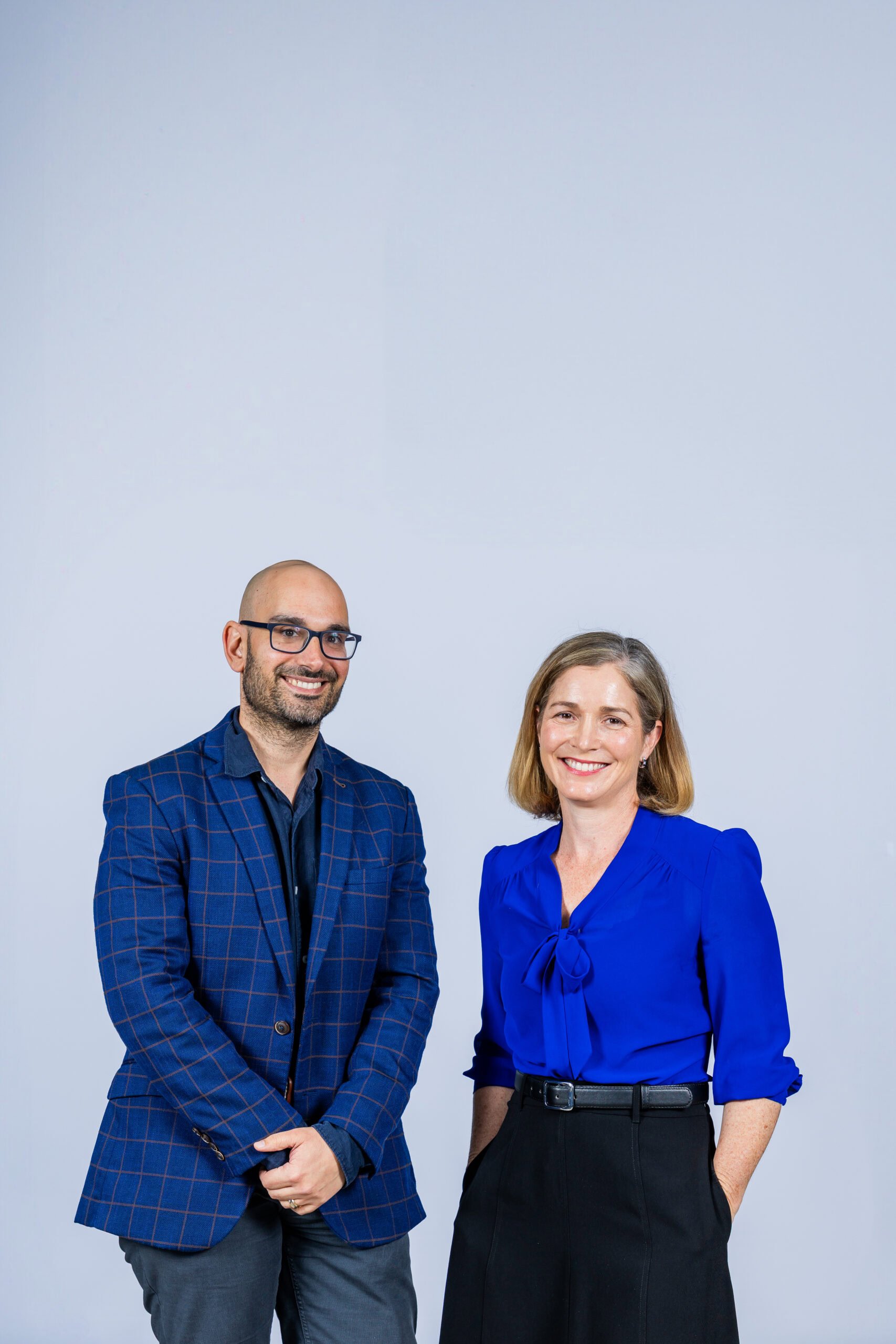
Dr Sian Edwards and Dr Anthony Villani
Dr Anthony Villani is an accredited practising dietitian, senior lecturer, and program coordinator for the Bachelor of Dietetics at the University of the Sunshine Coast. He also serves as President of the Australian and New Zealand Society for Sarcopenia and Frailty Research. His research focuses on the intersection of nutrition and exercise to enhance musculoskeletal health and physical function in older adults - bringing together clinical insight and academic leadership to support healthy ageing. --- Dr Sian Edwards is a general practitioner at Seven Springs Medical Practice in Toowoomba, dedicated to helping patients maintain their health and quality of life across all stages of life. With a strong focus on preventative care and chronic disease management, she brings a holistic, patient-centred approach to her practice. Dr Edwards also extends her expertise in women’s and sexual health through her role as a medical officer at True Relationships and Reproductive Health, where she supports accessible, inclusive care for diverse communities.