

This episode explores the journey into adulthood and the evolving nature of women’s bodies and fertility. Our experts highlight the vital role of healthcare professionals in creating safe, supportive spaces – and the transformative impact of education in empowering women to make informed, confident choices about their reproductive health.
In the third episode of The Clinician’s Guide to Women and Girls’ Health, we shift focus to young adulthood, exploring the evolving nature of women’s bodies, fertility, and the transition to independent healthcare.
As women move from school into work, training, or university, they begin navigating the health system on their own – often for the first time. This episode highlights the importance of creating safe, supportive environments and the power of education in helping women make informed, confident choices about their reproductive health.
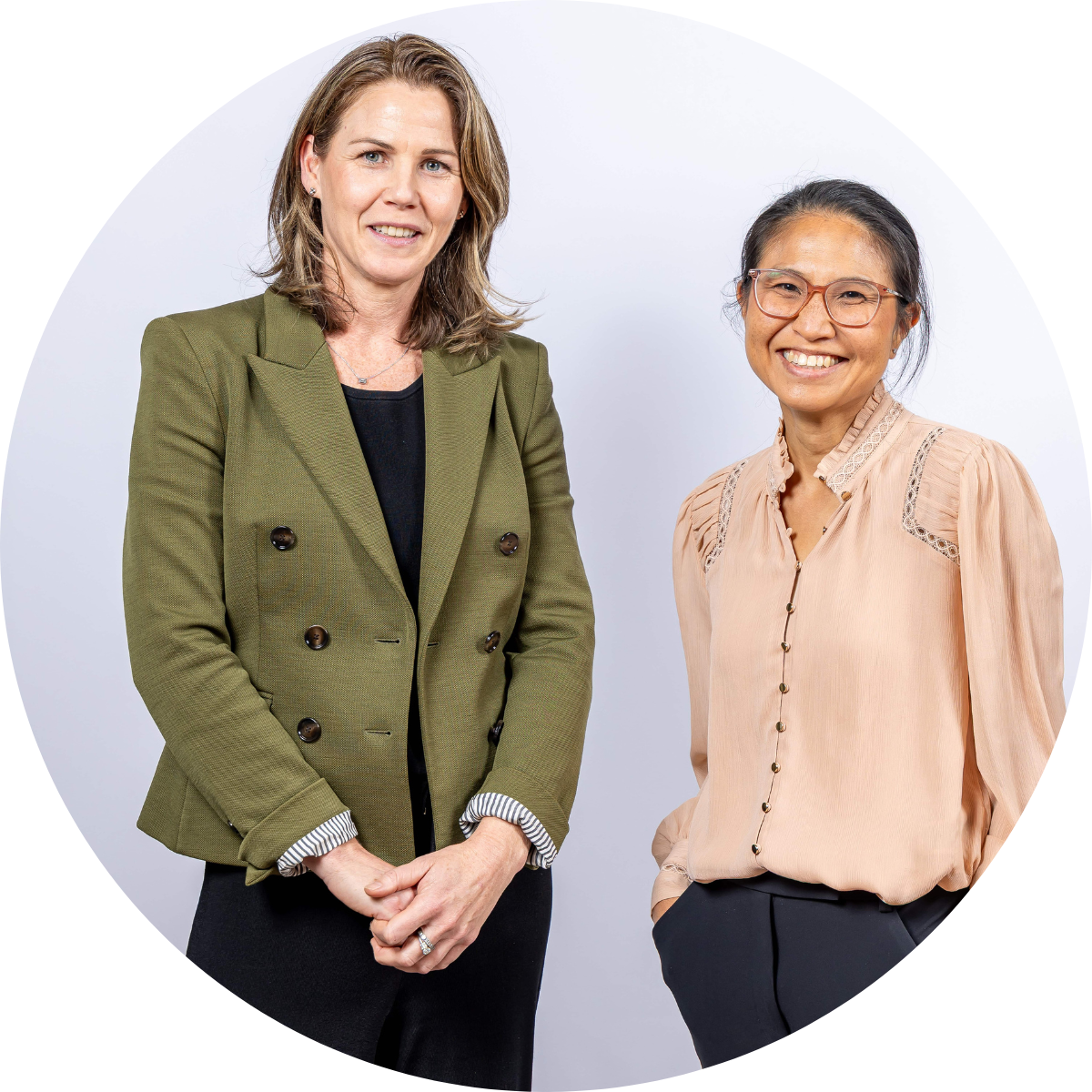
Joining the conversation are Dr Sally Cohen, an experienced obstetrician gynaecologist and laparoscopic surgeon with expertise in adolescent gynaecology and endometriosis, and Dr Vanessa Siu, a North Brisbane GP and medical educator specialising in reproductive and sexual health.
Together, they offer valuable insights into how clinicians can support women through this critical stage of life.
Victoria C 00:00
Health and Wellbeing Queensland acknowledges the Jagera and Turrbal people, the traditional custodians of the land on which this podcast was recorded, and the traditional custodians of the lands and waters on which you’re listening. We pay our respects to the Aboriginal and Torres Strait Islander Elders past and present, for they hold the memories of the traditions, cultures and aspirations of Australia’s First Nations people.
Sally Cohen 00:23
With any of the consultations, it’s assessing what their medical condition is, the complexity, chronicity of that condition, and how that then changes over time, because someone that you see at 15 is going to be very different to 25, to then 35.
Victoria C 00:41
Hi, I’m Victoria Carthew, a journalist, presenter and your host of this series, the Clinician’s Guide to Women and Girls’ Health, brought to you by Health and Wellbeing Queensland, in partnership with the Queensland Government’s Women and Girls Health Improvement Program.
Victoria C 00:57
From menstruation to menopause and all things in between, including sexual health, wellbeing and ageing. the Clinician’s Guide to Women and Girls’ Health podcast series speaks to leading Queensland experts about how health professionals can have effective, empathetic conversations with female clients, empowering them to take control of their health journey.
Victoria C 01:18
Welcome to the third episode of the Clinician’s Guide to Women and Girls Health and our first focusing on women as they transition from school and navigate their 20s. As young adults move into work, training or university, they often begin managing their health more independently and start navigating the health system without the support from a parent or carer. Today, I’m joined by Dr Sally Cohen and Dr Vanessa Siu to discuss reproductive health during this really important stage of life. Dr Sally Cohen is an experienced obstetrician, gynaecologist and laparoscopic surgeon with a special interest in paediatric and adolescent gynaecology, minimally invasive surgery and management of endometriosis. She’s a consultant at the Gold Coast University Hospital and the Queensland Children’s Hospital, as well as working in her private practice in Brisbane and the Gold Coast. That is a lot, and we’re so glad you had time to join us. Hello.
Sally Cohen 02:10
Hi, Victoria.
Victoria C 02:11
Dr Vanessa Sui is a GP at Smart Clinics and TRUE based in North Brisbane. Alongside her medical studies, she has a diploma in child health and a certificate of reproductive and sexual health. She’s also a medical educator, providing education to other health professionals in sexual and reproductive health so she is absolutely perfect for this podcast. Hello
Vanessa Siu 02:31
Hello.
Victoria C 02:32
I’m so pleased you could join us. The connections between our GPs and our specialists to support young women’s health is just so important and in a health sense, as I said, those young women, 18 and up, such a time of change, isn’t it? Almost like a liberation in some senses, because they get to make some choices. Vanessa, can you outline some of the really common reproductive or sexual health concerns you see in our young adults when they come in?
Vanessa Siu 02:55
Yeah, absolutely. I think we start with the reproductive type things. I think, you know the family planning is definitely one of those areas and probably in this age group, you are looking at a mix of them, some wanting pregnancies, and then obviously those that have the unintended pregnancies that you know you’re needing to manage and sometimes you’ll get some that do come in worrying about whether they can fall pregnant, but probably on a smaller group of those,
Victoria C 03:22
There’s an assumption isn’t there, like a natural assumption, Of course, I will, I’m young
Vanessa Siu 03:25
Yeah, absolutely. I think the majority aren’t even thinking about that. I guess the other sort of reproductive health things will be any menstrual issues. These days, they’re getting a lot more information around that, so they will come in and ask about it. But also a lot of the time it’s kind of found because they come in for other reasons. So often they actually come in because they’re saying that they’re tired all the time and things, and so automatically, for a young person with a uterus, coming in and with that, then that’s one of the things that you’d ask about, what their periods are like. And often they don’t even realise they don’t have to put up with their periods as they are. And I guess the other big thing is contraception. That’s a huge thing, you know, with their relationships, and as mentioned, usually they aren’t wanting to fall pregnant, so, you know, they’re wanting to discuss what their options are. And we go through all of that, so they’re probably the key issues.
Victoria C
Around reproductive health. And what about sexual health?
Vanessa Siu
Oh, yes, of course. So sexual health, yes, relationships, then it’s going to be STIs. So, they will come in. A lot of them are, you know, pretty cluey on that, and will ask to get their screening done. Or, you know, obviously, if they’ve heard about something, or, you know, have been told that there might be a contact, then they’ll come in and get that checked out. At the same time you get those that are coming in for other issues, like their you know, if they’re due for their cervical screening, and then you’re asking about their relationships. And then, you know, you might be asking whether they want to get their STI screening done at the same time. And I guess if you talk about sexual health, probably in this age group, I don’t see too much of sexual dysfunction issues, but sometimes there can be that, like if they are having pain with sexual intercourse and things like that, and that’ll come out again, as another secondary issue, I find that a lot of people generally don’t like coming in and asking about that, or they don’t know that they can come in and talk to us about that, and it comes out because you’re asking about other things. The other thing with sexual health is there’s much more awareness around gender health. So people are coming in and when they feel comfortable, and I think that there is a lot of stigma around that. So finding a safe place to talk about their concerns or their health, and especially if they are in the LGBTIQ+ community, I think them finding a safe space to access health is a big thing.
Victoria C 05:38
And I suppose for some of them, if they are younger, it’s the first time they’ve been able to discuss that on their own without an adult present, another adult present.
Vanessa Siu 05:45
Often, yes or that they might start feeling comfortable because I think if they come in about it, they usually have been thinking about it for a long time. A lot of times you know, we are taught that if you are seeing a young person, so we’re talking about 18 to 29 but even in that younger age group, you might consider trying to see them on their own for a couple of minutes, but often it’s sort of at the end of a consult. So again, trying to develop that rapport and assure them that it’s all confidential they may not be ready to discuss at that time anyway.
Victoria C 06:11
And I suppose building on this when they encounter troubles, that’s when they need you Dr Sally.
Victoria C 06:16
What are some of the more complex gynaecological issues that our young adults see when they are talking about when they come to see you?
Sally Cohen 06:22
We have the privilege of being involved in their care when things get a bit more complicated, there’s ongoing diagnostic uncertainty or for the more nuanced or severe gynaecological disorders, and this can be, I guess, the initial workup and investigation for endometriosis, moderate to severe endometriosis, chronic pelvic pain, polycystic ovarian syndrome, fertility issues, menstrual irregularities. If they’ve got masses on their ovaries or in their pelvis, we need to work those up in a specific way, get specific ultrasounds and do additional tests to work out whether it’s something that is nasty or something benign or non cancerous, but needs surgical management.
Victoria C 07:03
Interesting, because you’re specialising really in those, in those younger women. So these are quite young women that we’re seeing, these what sound like very big issues in.
Sally Cohen 07:10
Oh, definitely.
Victoria C 07:11
And is that because there is more awareness out there? I mean, I feel as though we see it much more in the press and in the media now people are talking about endometriosis and these other issues for younger women. Or is it, is that not really the case? Is it still too, people too blinded by it?
Sally Cohen 07:24
Yeah, I think endometriosis, definitely, we’ve made a huge progress in being able to talk about periods, and the effect of periods on women, their life, their ability to participate in school, work, all of those things. I think there’s still a bit of a disconnect between linking period symptoms and endometriosis, and the lag time between a young girl having period issues and then down the track having issues with endometriosis.
Victoria C 07:52
In my mind, I’m thinking it’s probably an old fashioned thinking, but you almost think that young women it takes time to get into your cycle. It takes time to find out. So when perhaps someone’s having terrible periods at quite a young periods at quite a young age, you mightn’t as a parent or an adult, you might not necessarily link it. So it’s longer, isn’t it, until they get to you and are complaining and talking about it, but then you can get them off to a gynaecologist.
Vanessa Siu 08:12
Exactly. I think that people still have that thought that having periods is normal, and however you have your periods, it’s normal. And so that’s what you just got to deal with it. So then it does, you know, delay them even thinking that it’s a problem or coming in to see someone. And that’s why sometimes they’ll they’ll actually come in for another health reason that actually is linked back to their periods.
Victoria C
So other signs or symptoms that come first?
Sally Cohen 08:32
I’ve had women and young girls who have been to see a cardiologist who’s had an echo because they’re short of breath, tired, and so via a cardiologist and gets a full blood count, comes to see me because someone finally has asked about their periods, and they have horrendous, heavy menstrual periods, to the point where they’re low in iron and low in haemoglobin, so they’re breathless, they have tachycardia, they’re bleeding heavily every month, but the referral pathway has been cardiology, and then the gynaecologist.
Victoria C 09:06
That does seem quite extraordinary that you can come to you via a cardiologist.
Sally Cohen 09:09
Well, yeah, we got there eventually
Vanessa Siu 09:12
But I think they’ll come in more for saying that they’re feeling tired all the time. Then come in to say that I’ve got heavy periods, or painful periods, or anything like that, and you know, you can see how that pathway has happened, yeah
Sally Cohen 09:24
But also, because I think it’s a generational thing when, when you’re tired, oh yes, you’re tired, because you’re doing all of these things, yes, and then your period is your period, because that’s just something that you manage and deal with.
Vanessa Siu 09:37
Well, that’s right, because there’ll be some people that have had kids, and it changes again after having kids, but then, because you’re also managing the house with little kids, you just think you’re tired because of that as well. So it can be quite confusing.
Victoria C 09:52
So explain to me that referral process. Is it universal across Queensland? About I’ve been to my GP, but I need to go to a gynaecologist. How does that referral process work?
Vanessa Siu 10:00
Normally what will happen is, whatever their concern is, it’ll be primary care, or GPs will be the first port of call, I guess, to come in and talk about what that issue is. And often at that point they’ll have that, you know, history, the examination, and certainly any workup or assessment that’s considered appropriate for the condition. And then, depending on what shows up there, if it’s something that the GP can manage, or, you know, at least initiate something, and see if that works, then that’s what they would do. But if it obviously shows up a bigger problem or a more significant thing, then then they’ll be referred to the appropriate specialist, and certainly, if it’s a complex sort of menstrual history or anomaly of the anatomy, then you know, they’ll be referred on.
Victoria C 10:44
And is that access, I guess, to tertiary support, universal as well across Queensland, in terms of the way they would they’re able to access?
Sally Cohen 10:51
The referral pathways are fairly clear. I think there is inequity in access, if you’re more rural or remote, that those pathways become more difficult, I think, just in accessing primary health care and then getting the referral to a tertiary centre can be difficult from a distance perspective, transport, cost of getting there, availability that can make those referral paths, even though they may be clear, to actually enact those and to carry it out, can be quite difficult. And then, if you need more complex blood tests, screening, ultrasounds, MRI, that adds a level of complexity. If you’re remote, there aren’t many centres that may have an ultrasound site or an MRI available that have to fly in to have a scan. And then that means a day off work, and the cost of the flight, the cost of the scan.
Victoria C
We’ve talked about, you know, the heavy periods as well. What other types of things might clinicians be looking for?
Sally Cohen
If after the initial GP assessment, the GP might try them on the pill, and if their pain or the periods don’t improve after, for example, six months, it’s affecting their quality of life, their ability to work, go to school. If there’s a suspected or confirmed level of endometriosis through a scan. That’s a fairly easy referral pathway if you’ve got a scan saying there’s evidence of deep infiltrating endometriosis, obviously you’ll need to see a specialist for that. Other sort of more complex gynaecological problems, such as primary amenorrhea, so someone not having their period after the age of 16 or secondary amenorrhea, when someone stops having a regular cycle for more than six months. As we said, painful periods, pelvic pain, chronic pelvic pain, some ovarian cysts that need surgical management. So again, they might have had pain, had a scan with a GP on the scan you see a cyst. It may be a certain size, and there might be features that are concerning, and so you’d refer to a gynaecologist for further assessment and management. Well, if you had known or suspected endometriosis or polycystic ovarian syndrome and you were having trouble falling pregnant, we would see women in that category as well.
Victoria C 12:55
That’s a lot at once, isn’t it, for everyone to be managing, so I suspect, Dr Vanessa, that would also come with some emotional and psychological aspects that you need to give them strategies to manage when some of these things are coming their way.
Vanessa Siu 13:08
Firstly, it depends on which aspect, and I probably what we’re seeing a little bit more, and the awareness is with the persistent pelvic pain is probably one of the big things. And sometimes they already may have some background in mental health issues, but if not, having to deal with this chronic pain day in day out, affecting their everyday life and actually affecting the choices that they make on what they can and can’t do and what work they can do has a really significant impact. And so it is trying to find that network or that community around that support around them, and it won’t just be the GP we absolutely need to call in our specialists, our allied health to give them that education, that support and help them build their little toolkit of skills that they can draw on, so that it empowers them to Learn about what’s going on and have strategies to be able to deal with it.
Victoria C 14:04
Don’t go anywhere. Our conversation continues after these messages.
Advertisement 14:08
A walk a day can keep the doctor away and if your patients are looking for a free, regular activity that can be done anywhere, anytime, they can join the 10,000 Steps Program today. The program raises awareness about the importance of physical activity and increases participation by encouraging incidental activity as part of everyday living. To find out how the 10,000 Steps Program can help your patients live a healthier life through physical activity, visit 10000steps.org.au
Victoria C 14:35
Welcome back. Let’s return to our conversation.
Victoria C 14:40
We’re speaking to Dr Vanessa Siu a GP and Dr Sally Cohen, an Obstetrician and Gynaecologist, on the Clinician’s Guide to Women and Girls’ Health. And there’s a wonderful Queensland Health page anyone can access, which looks at women’s health at every age. And what I really loved is it walks you through each age group, what women should be looking for in terms of their screenings as they go through the decades.
Victoria C 15:00
What are some of the recommended screenings for sexual and reproductive health in this age group? And how can we, I suppose, really get young people to prioritise it?
Vanessa Siu 15:07
Yes, well, that’s always the that’s always the difficulty. Yes, absolutely, but really something that we’ve already talked about. So STI screening, it would be absolutely recommended that they are having screening when they have new partners, or if they have multiple casual partners, really screening at least every three months, and then considering the annual blood test screening for blood borne viruses like HIV, syphilis, hepatitis C. Hepatitis B, they usually had vaccinations for but again, you need to get their history and understand if that’s something that they need. And there will be groups at Hepatitis A you know you might need to screen for, or certainly recommend vaccination for, if it’s appropriate. And then you’ve got the cervical cancer screening that starts at the age of 25 but there is that group that if they’ve been sexually active or started being sexually active before the age of 14, then it’s actually recommended that they start their cervical screening between the ages of 20-24, have their first one then, and certainly, if they have any abnormal bleeding, then we test for that anyway, those are the key things. You touched on mental health – there’s probably no test per se, but certainly in this age group, it’s something that you can certainly screen for is part of your consultation, just assessing what their mental health is. You know, simple questions, without a full on questionnaire or anything. And I think they would be sort of the key things that you’re looking at.
Victoria C 16:32
The reproductive health leave directive mentions preventative screening associated with reproductive health, including breast screening. I imagine for some young women, that would come as a bit of a shock, that that was something they needed to be considering.
Vanessa Siu 16:43
So what we know about breast cancer is that the target age group, or the highest risk age group, is between the ages of 50 to 70. So when you look at, well, Breast Screen Queensland, if we’re in Queensland, that’s the group that they will screen for and I think they accept people from the age of 40. So if you were looking at the ages of 18 to 29 then really what you’re looking at is someone who has some significant family history that would then drive us to recommend them to start screening earlier. And usually in that situation, they will be told they will know, you know, they’ve got the family member who’s had the testing or whatever, and they will be told to go and see your doctor and get things tested and checked.
Victoria C 17:22
We touched on fertility a little bit. I imagine it can be a sensitive topic when they’ve made their way to you. Dr Sally, they might feel a little bit awkward or unsure or how to go about those conversations. What are the initial points of discussion for you when they might be expressing concern?
Sally Cohen 17:34
Well, first of all, making them feel comfortable. Open ended questions. No questions are silly. I think that’s really important to establish. And I think initially gauging their health literacy, how much they know don’t know, about their own health and the potential risks that they may have engaged in, and then working out what their ideas are. You know, what is fertility for them? Is it something that needs to happen sooner rather than later? Is it something they haven’t really considered that, something that’s very much for later on? And I think once you work out where they are in their fertility life cycle, you can then work out what their needs are, and is this something that we need to address now? Do they need information? Is this something that it’s is going to help a decision about their options. Do they have a partner? I think that’s a quite a an increasing issue today is women looking at fertility options independently. That’s something that we don’t really talk about, but plays on a lot of women’s mind as they get older. So we have discussions about different options. I guess having a frank, open discussion with these women about what their fertility wants and needs are. What’s realistic? I think the financial burden is huge as well. I think the idea of just freezing your eggs is lovely, but in reality, what that means from a financial perspective in today’s economic climate is quite significant.
Victoria C 18:57
Do you know what’s interesting is that the Queensland Women and Girls Health Strategy 2032 emphasises the importance of prevention and early intervention. I suppose this is for both of you. But how do you kind of counsel young adults in making those family planning decisions when they might have underlying medical issues, when there’s other things going on? Is that a difficult conversation?
Sally Cohen 19:12
Very much so.
Vanessa Siu 19:15
Yes, because, as you say, they feel young, invincible that you know, they don’t expect to be having these issues at this time, so for them to then have to wrap their head around all this new information and to make a decision that will affect their future,
Sally Cohen 19:31
I think it depends on the condition. There are young women who have had cancer and have needed chemotherapy early on, and so that fertility conversation has happened early on, and whether they’re able then to conceive and carry a pregnancy and later on is something that’s quite difficult to counsel about, but also know what’s going to be happening in 5 or 10 years. So I think with any of the consultations, it’s assessing what their medical condition is, the complexity, chronicity of that condition, and that how that then changes over time, because someone that you see at 15 is going to be very different to 25 to then 35 and their needs are very different. Their circumstances will be very different. So I think having a very open, frank discussion about the evolving nature of both a chronic disease and also a woman’s body and her fertility, and what that means now and in 10, 15, years. And to say, we don’t have all the answers. We don’t know, this is the information that we have, and we need to keep checking in along the road, and we’ll, we’ll go with you through that journey.
Victoria C 20:45
And I guess you add to that mix. You talked about remoteness, you know, a little bit earlier, but you know, socioeconomic status, location and also cultural background can really influence some of these conversations, can’t they Dr Vanessa?
Vanessa Siu 20:55
Oh, yes, yes, that’s right. And I think with any conversation that you have, you have to understand it from their viewpoint, and you can’t assume anything. That’s why, I think, especially if they do come from a different cultural background, it’s really important that you’re asking them questions openly, so that they you can understand what you know, cultural beliefs or religion may influence what their decision you know, understand what their perspectives might be.
Victoria C 21:18
Thank you for joining us for this really important discussion on sexual and reproductive health for young adults. I’m joined by Dr Sally Cohen and Dr Vanessa Siu and I should mention that we do follow up on this age group once again in our next episode, where we’ll talk a bit more about healthy lifestyle and mental health for women in their late teens and early 20s, so it is a very big conversation so if we move on to sexual health, specifically, how do you approach conversations about contraceptive choices with young adults, because there is so much available now. There are so many choices. A big smile for those of you listening, a big smile from Dr Vanessa.
Vanessa Siu 21:49
Yes, I well, look, if you don’t already know about it, the Family Planning Alliance Australia has this wonderful chart. It talks about all the options of contraception, and it has them kind of categorised in their efficacy, or how effectively they work for preventing pregnancy. And that’s a really great chart where it really summarises what all those options are. And it’s really great visual aid so that when you’re talking through them, you know, you can point to an image of what it is. And basically you just run through all those options. And I think the research has shown what we call the long acting reversible contraception, because they are more effective and they will reduce the numbers of unintended pregnancies for those you know that don’t want to fall pregnant. You know research has shown that if you actually start when you’re counselling patients about their options, and if you start talking about those, that there can be an increase in uptake in them. But by far, I think the research still shows that the most common contraception will still be the pill and condoms.
Victoria C
In this young age group,
Vanessa Siu
It’s changing, though, and I think definitely more the intrauterine devices and the Implanons are increasing in their uptake, and they work really well. And the main issue will be that cost wise, you just have that higher upfront cost initially, and sometimes that can be a big barrier for people accessing it.
Victoria C 23:06
Absolutely. And anything we reference throughout today, any of our studies, any of our that resource you’ve just told us about, they will, of course, be in our show notes. At the end. You’re welcome to join in and gain any further information that you would like. I suppose this is a health and a societal issue, but how do healthcare professionals initiate those conversations around healthy relationships, consent, boundaries, in context of sexual health, with with young adults, because it’s a huge topic, and something we’re hearing so much about.
Sally Cohen 23:31
I think with any of these consultations, you do just have to go in with a very non-judgmental, open minded approach. I think you’re there to listen in the first place and establish trust. As you mentioned earlier, they are accessing the health system in a different way compared to when they were children and then so the dynamic is slightly different, and I think you have to work a bit harder to engage them. And that’s not even touching on culturally diverse or linguistically different established rapport, so that they come back and you develop a relationship with your patient, so that you can improve their health over time.
Victoria C 24:12
So I take it from that that there’s no one point where a health professional says, Okay, here’s the referral to the GP or the specialist, because it’s very individualised.
Vanessa Siu 24:20
Yes, yes, absolutely. And something I just wanted to add with what you’re saying is that I think the other thing is that sometimes it can feel like it’s hard to ask, but the at the same time, often they probably do want to talk about it, but they don’t know who to talk about it with. And the fact that you ask about it makes them think, okay, maybe this is someone that I can, you know, share this with and even if they don’t share it on that particular appointment, the fact that you’ve actually shown interest and shown to be someone that is willing to discuss it with them means that you keep that engagement. They come back, then they will eventually open up.
Victoria C 24:57
And the research tells us that women under 30 see this as a huge issue in terms of the mental health and wellbeing of this sexual reproductive area. So it’s something to really consider, isn’t it, the impacts any of these matters on sexual health are going to have on the mental health of your patients?
Vanessa Siu 25:11
Yes, absolutely, when we talk about sexual dysfunction and people having pain, and then with sexual intercourse, which is, you know, an important part of their relationship, and how it affects them and how they navigate that with their relationships. Again, I think that’s one of the most difficult topics to come in and talk about. And again, it requires the clinician, actually, I think, to be open to asking them about it, and if they choose not to discuss it, that’s fine, but at least they know that you’re available and open to discussing it. But it’s that bio psychosocial model that every part of their life affects them, their physical, mental and wellbeing
Victoria C 25:48
Which is the perfect link to talk about health behaviours. And for all of them, we’ve just talked about a lot of big issues around reproduction, around fertility, around sexual health. What about health behaviours? How much do health behaviours, alcohol, smoking, nutrition, physical activity play into the management of those?
Sally Cohen 26:03
I think health and life hygiene is a really important thing that I go on and on with my patients about, because I think a lot of the symptoms that you know, we end up seeing at the tip of the iceberg, and very rarely is there a quick fix to a lot of these things. And if you start digging a bit deeper, you realise that the biopsychosocial picture and the cause of pain, there are so many levels to it, and this is actually complex. So if you can get the simple things like eating well, sleeping well, exercising regularly, sort of the life hygiene aspects, that goes a long way to then trying to approach and manage anything else, more complex that you’re then seeing us for.
Vanessa Siu 26:54
It’s absolutely the foundation of how you need to manage, really any health condition. And so really important that you are asking, and so say, for smoking, I ask them if they are smoking, and when they say, No, it’s like, Have you ever smoked? Because you really want to find out. And, you know, ask how long they’ve been smoking, how many they smoke a day, really, to get an idea of how significant it is. And the trickier thing now is also this vaping, so you need to make sure that they don’t not include the vaping when you’re asking about it as well. Exercise, it’s really good to go into the detail, like when you say exercise, what does that mean? How often are you doing it? How long, what are you doing because, you know, cardiovascular is good, but you know, we know that weights and resistance and you know, keeping muscle strength is really important as well. So the type of exercise that they’re doing is so important. And then sleep as well, you know, sleep is everything.
Victoria C 27:45
Everything! It feels like it’s everything right now.
Vanessa Siu 27:49
Yes! Yes, absolutely. So you want to know, you know, are you falling asleep easily? Are you waking much during the night? How much sleep are you getting and do you wake up feeling refreshed, or either getting a good quality sleep. So it does make a big difference, because they are really key things that you want to improve. You know, before you sort of doing anything else.
Victoria C 28:11
Dr Sally, when you’re talking about endometriosis, you’re very specific, aren’t you, in those healthy habits you’re looking for?
Sally Cohen 28:16
Well, I think for diet, for example, that can play a big role on exacerbation of symptoms of pelvic pain. And we know that, some women will experience worsening pelvic pain, bloating pain when they open their bowels, pass urine. And that can be linked with certain food groups. And there’s an increased propensity for lactose intolerance, gluten and so there’s diets such as the FODMAP, which looks at going through the different food groups and working out whether you have a reaction or or an inflammatory response to certain food groups. And I think people need more education around what they’re putting in their mouths, what’s coming out the other end, and how that impacts on their feeling in their abdomen, and then linking it with certain conditions, and that may be endometriosis, it may be irritable bowel syndrome, it might be some other gastrointestinal condition, but diet has a huge effect and impact on potential symptoms that someone’s experiencing.
Victoria C 29:16
And I’d love to know from both of your perspectives, is there a particular health behaviour that’s harder to discuss with women of this age?
Vanessa Siu 29:22
I don’t think anything is harder to discuss, but I guess what you’re asking is, is anything that might be more difficult to change their perspective on on whether you know they’re doing, making the best choices for them at this stage? I think they all are because they’re just not in that they’re not in that age group where they’re ageing and starting to see their you know, more aches and pains and things…
Sally Cohen 29:46
The effects of a misspent youth.
Vanessa Siu 29:48
Yeah!
Victoria C 29:51
Because you are setting them up for the future, aren’t you? I mean, you know you are going to put them on a path to a long life of wellness.
Vanessa Siu 29:58
I think it comes down to if they have a good motivation. So I think fertility is a great one, because if they’re having trouble falling pregnant, I think the lifestyle is a big thing there, right? You know, they do have to look after themselves. They do have to look at their weight management, because we know that if they’re not having regular cycles, that losing weight can help to regulate that.
Victoria C 30:19
And if anyone knows, it’s you, the healthy habits they young adults can adopt to help with that reproductive health. I mean, you’ve just mentioned one there, obviously, in terms of watching your weight, that sort of thing. But what other things can they be doing about their healthy lifestyle?
Sally Cohen 30:31
I think, for young girls, is protect themselves, protect against STIs. So I think you’ve got the initial effect, chlamydia, gonorrhoeae, but the longer term effects could affect, as you said, fertility, cause chronic pelvic pain. I have a conversation, a spiel with my young adults, but I’m like, you have to look after yourself. You have to be, you’re the priority and in terms of your sexual health, great to be comfortable being sexually active, but be safe and protect yourself against STIs, because if you do get them, and you get them repeatedly, it can have long term consequences which you don’t really foresee at that age and stage, I think that’s something that really I try and encourage young girls to consider, and that’s got to be a priority for them.
Victoria C 31:18
Interested. Are there statewide resources or technologies that exist to support women across Queensland. I mean, we’ve mentioned obviously things like telehealth calls, that sort of thing, but are there statewide, what can people do to help deal with their reproductive health or make sure they are doing the right thing along the way.
Sally Cohen 31:33
There’s quite a number of like resources on the internet, the Jean Hailes website. There’s Your Fertility website, there’s the Pelvic Pain Foundation.
Vanessa Siu 31:43
Oh, yes. And that reminded me, TRUE actually does do check up clinics. So it’s sexual and reproductive health clinics that they go to regional and remote locations on a sort of rotating basis, and they, you know, they basically have their campaign. So they let the people in the town know when they’re coming through, and they’ll book in. And so that’s a face to face service that goes out there.
Sally Cohen 32:05
In Northern Queensland, there must be things that exist similarly. But in Darwin, we used to do fly in, fly out clinics. So we as the doctors, would fly into a remote town, and we’d do like a Pap smear clinic, and yeah, try and do things like that, and so I do think there are some services that try and access remote communities, but that’s a bit hit and miss obviously.
Victoria C
Because the time frames and lags could be quite significant couldn’t they, between when you make it to see someone.
Sally Cohen
Oh very much so. And then who you’re accessing. They may be the most motivated people, but not necessarily the ones that need the most help, especially if you’re looking at rural and remote communities.
Victoria C 32:27
So much valuable information came out of the Queensland Women and Girls Health Strategy 2032, including the importance of trauma informed care. To touch on it just a little bit. But how does the approach from your consultations with young adults when you’re talking about really sensitive matters, certainly around trauma. How does that impact your approach?
Vanessa Siu 32:44
I think the way I think about trauma informed care is that really, every consult you have really needs to be about around providing that safe space for them and showing them that respect and so including them in the decision making, giving the education to empower them, so that they feel like they understand and know what’s being talked about, and so that they are able to make decisions about their own bodies. And really, I think when we provide that non-judgmental, open questioning, you know, hopefully we are giving them that ability to share. And then, I guess the other thing is, it’s not always about knowing, you know, asking them if they have a trauma history. It’s just about making sure that you have that space, that even if they have that, they still feel comfortable and feel able to access healthcare.
Victoria C 33:34
Dr Sally, you particularly, are seeing women at quite a young age in terms of their health journey, about when they’re seeing doctors and, you know, procedures and things can feel quite invasive or uncomfortable. So I guess for you, it’s very much making them feel well, where consent sits in all of that, but making them understand and feel comfortable around that.
Sally Cohen 33:50
Very much so, I think creating an environment they feel uncomfortable with. I think using language that isn’t too technical and being relatable, that’s important for the younger women, explaining in detail what the steps are, and so that they have the information from A to Z, so that they have an understanding of a what’s happening now, but what that leads to, and what the end point is. And then also just being aware and sensitive to, you know, consultations, quite intimate, and so being mindful of even a scenario where the idea of them thinking about needing to be examined can be quite stressful for them, and talking about it and potentially deferring examinations until they feel ready,
Victoria C
Which can be quite dangerous right?
Sally Cohen
Yeh, I think you have to judge, is this really necessary for today’s consultation, because it will then inform and help decide treatment, or is this something that is useful but not necessary today so they can go and think about it and come back feeling prepared, allowing a support person, whether it be a parent, a friend, into the consultation and just having that openness in the discussion about where their comfort lies, what they’re not comfortable with, making sure that they’re covered appropriately, that they’re not exposed unnecessarily, being gentle in any of the examinations. And they’re all things I think, that contribute to the overall process of providing care, and then, genuinely being concerned about your patient and and following up with them and making sure that at the end, you provide good information about, if they are having surgery, what the results were, giving them access to their results, explaining what you found, and then what the consequences are. It’s not a sort of open, shut thing.
Victoria C
Because that experience stays with them for life, doesn’t it?
Sally Cohen
Very much so. And I think respecting the woman and their individual self is really, really important as a baseline, whether it’s trauma based or not just having a good level of respect. And I think gentleness and concern is important.
Victoria C 36:01
Gentle is the word that comes to my mind when I hear you saying that.
Sally Cohen 36:04
Yeah, I think women aren’t very good at coming to doctors. And for the older women, I think they come a bit later, and that’s when there’s really a problem. And so I think they’ve been dealing with multitudes of layers of work, kids, family, and then there’s a problem that arises. And so once they get to you, I think there needs to be some understanding that there’s probably a lot of other things going on in the background, and this is sort of just a small manifestation of the complexity of their life. And so I think with that in mind, yeah, you need to just be what I don’t want to keep saying, mindful of this, but just there’s always more more to things than you think.
Victoria C 36:50
We’ll be back after some brief messages about other ways Health and Wellbeing Queensland can support you and your community.
Advertisement 36:57
It is common for girls and adolescents to experience challenges related to their periods, especially in the first few years of menstruation.
Queensland Clinical Guidelines have developed a user-friendly guideline to assist healthcare providers with evidence-based assessment and management recommendations. The guideline was developed in consultation with subject matter experts and clinicians across Queensland.
The Menstrual management in children and adolescent’s guideline can be found at www.health.qld.gov.au/qcg
Victoria C 37:30
Thanks for listening. Now, let’s return to our conversation.
Victoria C 37:34
Dr Vanessa, the outcomes report also highlighted that some participants felt dismissed by healthcare professionals because of their gender. So that’s an awareness you would have, isn’t it, when you’re when you’re seeing young women in this space that are making these choices for the first time?
Vanessa Siu 37:46
Yeah, absolutely. I think some of the common themes that come through is that, you know, they’ll go in with a problem, and as you say, they just get dismissed, it doesn’t, not believed. And really an important part is, you know, acknowledging what their concerns are, and, you know, validating, you know, those concerns, because if they come in saying that they’re getting a lot of pain, or, you know, whatever it might be, to them, they are. So you need to understand, you know, what is going on for them and how you can help around that
Victoria C 38:13
And creating that safe and supportive environment. That’s very much the role of our clinicians as well, isn’t it?
Vanessa Siu 38:18
Yes, yes, absolutely. And you know, as mentioned, I think so many times they will have come in and they’ll be quite scared. They’ve obviously gotten to a point where they feel that they really need to talk to someone about it. But then when you talk to them, they’ll just, it will be because they’ve had a bad experience in the past, and they, you know, they’re still carrying, as you said, they carry that memory of it, and they just get so worried about?
Victoria C 38:41
The Queensland Government has implemented reproductive health leave for public sector workers. Is there awareness around that those sort of policies and how that will influence young people in the workplace? Do you think are we seeing enough information for young people to know that that’s going to be there for them in the future?
Vanessa Siu 38:57
I think it’s starting to roll out. I have had some people come in and, you know, request that medical certificate for it. It’s actually been really great to see that we you know that some workplaces are starting to bring that into into the workplace, and people are able to utilise it.
Victoria C 39:13
We’ve almost out of time but I’d love to know if you have any final thoughts for clinicians that are tuning in. I suspect some young people that might be tuning in and joining us as well about their sexual reproductive health at this really important. Just like a it’s such a start in life, isn’t it, it almost feels like it’s starting again and you would see that over and over, Dr Sally.
Sally Cohen 39:29
For clinicians, just be open minded. And if someone comes in requesting a review for a gynaecologist, then help enable that to happen. And then also, I think just early recognition, if something’s not working or it’s beyond your scope, then refer get help. We’re all here to help each other, and the priority for all of us is patient centred care. So as long as it’s working for the patient, and I think if you’re not sure or it’s a bit more complex, then bring a friend in, get help where you need it. No one expects everyone to know everything. And I think for those patients who need it, the more specialists and the more people that you have looking at a problem, the better it is. Is finding a solution that addresses all the multi facets of someone’s issue.
Victoria C 40:18
Because it feels as if they’ve had the courage to come in to ask you so that they we want them to take those next steps.
Vanessa Siu 40:23
Yes, that’s right. And I think also, just for a lot of clinicians, maybe that it’s out of their comfort zone to ask about it, but just be willing to ask. And you’re using the same principles you ask about any issue or problem you know. So use those foundations that you already know. Ask about it, be curious, and if it is out of your comfort zone, that’s when you do you know, gently pass on to someone else who is able to help them.
Victoria C 40:47
Well, it has been a fantastic conversation. Thank you for your brevity. Thank you for raising some really great, challenging issues and how they might be attacked and approached by our clinicians as well. We really appreciate your time. Dr Sally Cohen and Dr Vanessa Siu thank you for joining us on episode three of our women and girls podcast series, Clinician’s Guide from Health and Wellbeing Queensland.
Vanessa Siu 41:05
Thank you.
Sally Cohen 41:05
Thanks Victoria
Victoria C 41:08
Today we’ve been talking to Dr Vanessa Siu and Dr Sally Cohen about the sexual and reproductive health of young adults once they leave school and through their 20s. For more information and show notes from today’s episode, visit the Health and Wellbeing Queensland website at www.hw.qld.gov.au
Victoria C 41:27
If you’ve liked today’s conversation, be sure to subscribe for future episode updates. We’ll see you next time on the Clinician’s Guide to Women and Girls’ Health.
Meet our guests
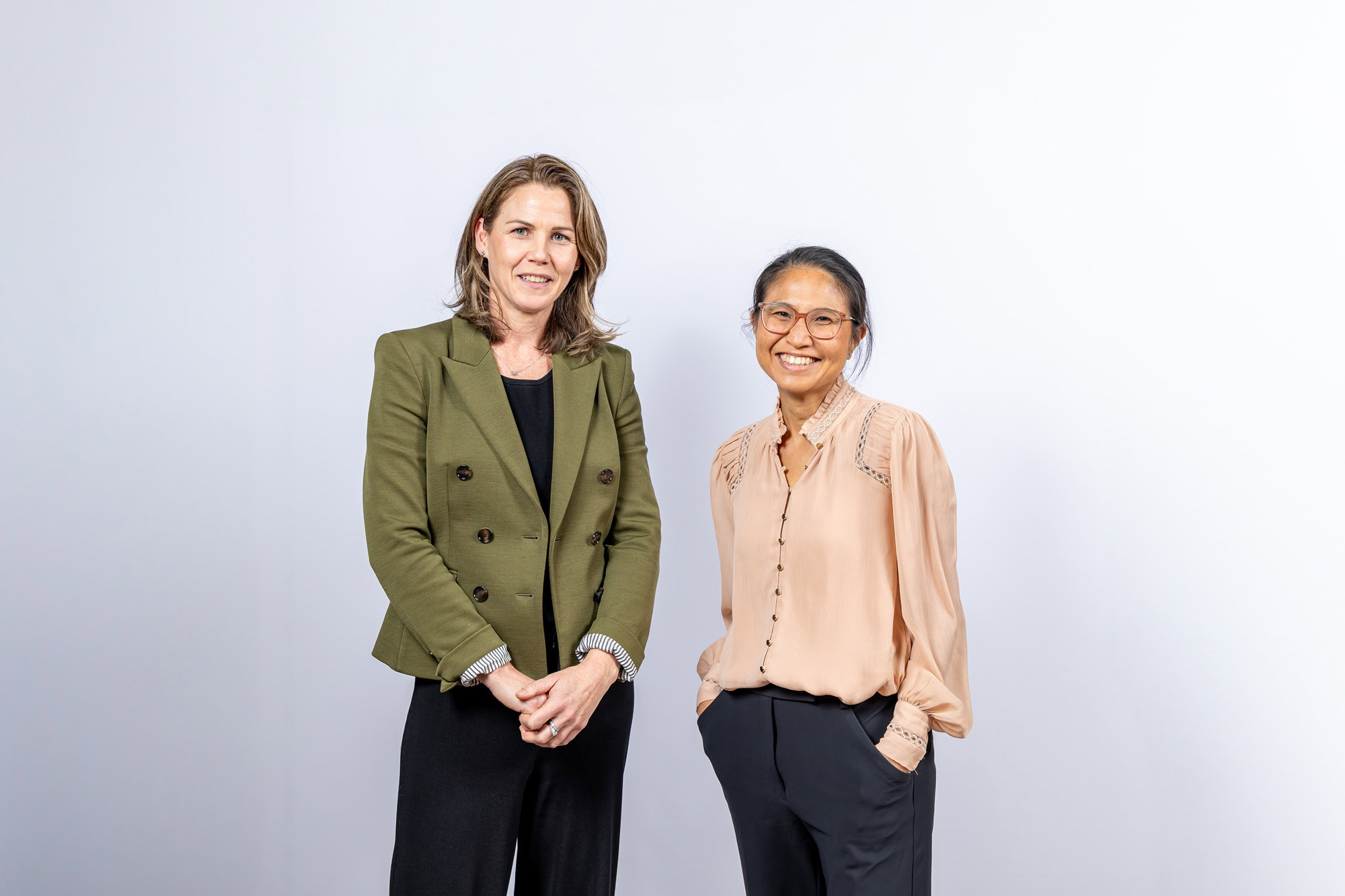
Dr Sally Cohen and Dr Vanessa Siu
Dr Sally Cohen is a Gynaecologist and Obstetrician based in Brisbane and the Gold Coast, with expertise in minimally invasive surgery and adolescent gynaecology. She trained at the University of Sydney and Royal Prince Alfred Hospital, and is currently completing an observership in Paediatric and Adolescent Gynaecology in Brisbane. Dr Cohen also speaks fluent French and offers consults in French when needed. --- Dr Vanessa Siu is a GP at True Relationships and Reproductive Health with a special interest in women’s health, including contraception, pregnancy care, menstrual issues, and menopause. She holds a Diploma in Child Health and a Certificate in Reproductive & Sexual Health, and also works as a medical educator, training other health professionals in sexual and reproductive care. Dr Siu is known for her collaborative approach and commitment to patient wellbeing.