

How will you move today? Free and low-cost ideas for teens

We all know that being active is good for us, and finding ways to move that you enjoy makes it easier to stay active regularly. There’s no one ‘right way’ to be active, it’s about finding what works for you. In this blog, we’ll explore simple ways that you can get active, whether it’s on your own or with friends and family, that don’t require expensive memberships or equipment.
Why does movement matter?
Being active isn’t just about keeping our body healthy, it also plays a huge role in our mood, energy, sleep, and stress levels.
Australian guidelines recommend that young people (5–17 years) aim for at least 60 minutes of moderate to vigorous physical activity each day1. This can be broken up across the day, such as 2 x 30-minutes, or 40 minutes + 20 minutes.
Moderate-intensity activities are things that makes your heart beat a little faster but still let you talk. Examples include a fast walk, bike-riding, skateboarding, or easy swimming.
Vigorous-intensity activity makes you breathe harder and talking becomes more difficult, such as running, high-energy dancing or playing sports.
It’s recommended that this time also includes muscle and bone strengthening activities at least 3 days per week. This could be things like climbing, carrying and lifting things around the house, using weights, or doing body weight movements like push-ups, squats or lunges.
It’s also important to limit the time spent sitting or being sedentary each day. Try to break up long periods of sitting (like during the school day) with some movement wherever you can. Even small everyday activities, like walking or standing in your break times, can help reduce your sedentary time.
Research consistently shows that regular movement can also2,3,4:
- Boost your mood and energy levels
- Reduce stress and anxiety
- Help you focus better at school or work
- Improve confidence and self-esteem
- Improve sleep quality
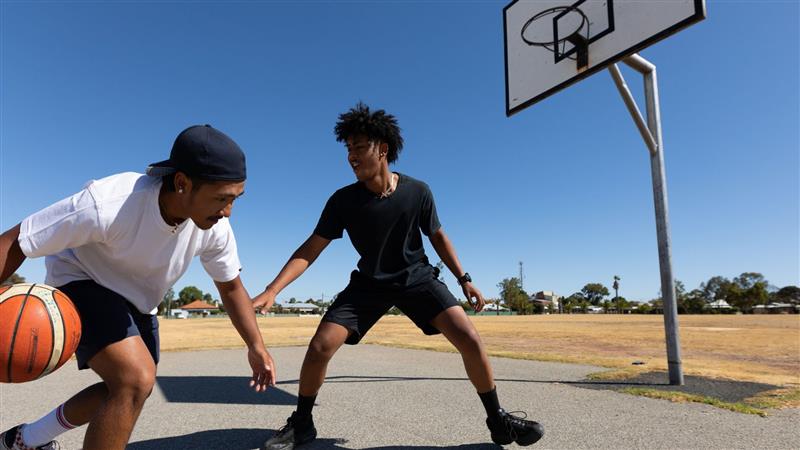
Move together: make it social
For some people, moving is more fun with friends. Being active together can be a great way to hang out, catch up, and stay connected 5,6. Going for a walk, having a kick around, skating, dancing, or trying a workout together can make movement feel less like a chore and more like social time. Having a friend with you can also give you extra motivation on days when you don’t really feel like moving.
Some ideas on how to make it social:
- Go for a walk, jog or bushwalk together and catch up
- Choreograph a new dance
- Throw a frisbee
- Kick a football or organise a social game together at the local park
- Active gaming (e.g. Just Dance, Wii Fit)
- Meet up for a swim at the local council pool
- See if your local council offers any free or low-cost exercise classes you can join

Move solo: time for yourself
Not everyone wants to be active with other people, and that’s totally OK. Moving on your own can be a chance to clear your head, reset, and have some time just for you.
Activities like walking, swimming, stretching, or following an online workout can help you unwind and focus on how your body feels. Solo movement can be calm, flexible, and done at your own pace, without worrying about anyone else.
Some ideas to move on your own:
- An online workout video (e.g. yoga, pilates, dance class)
- Walking (listen to music or a podcast, or try a guided meditation walk)
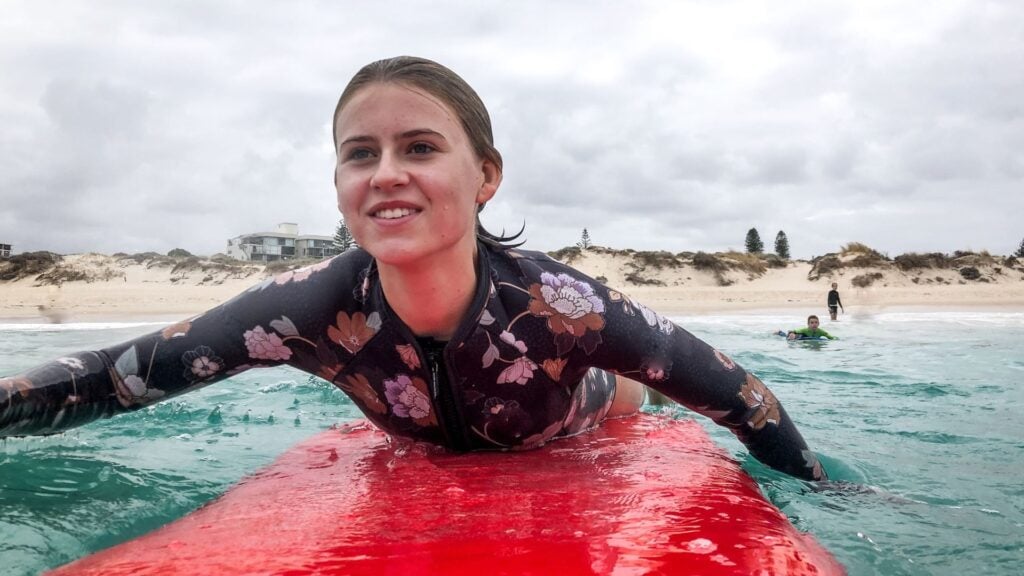
- Swimming laps at the local pool
- Practising your basketball shots or cricket bowling
- Jogging
- Bike riding, scootering, skateboarding or rollerblading
Move as you go: fit it into your day
You don’t always need to set aside ‘exercise time’ to be active. Movement can be built into things you already do, or by making small choices that get your body moving a little more. These small moments add up and still count toward being active.
Some ideas to boost your physical activity each day:
- Walk or cycle to school, work, or friends’ houses (or part of the way)
- Choose the stairs instead of the lift or escalator
- Do some stretches while watching TV
- Take a slightly longer route between classes
Make it meaningful to you
Moving your body shouldn’t feel like a chore, it should feel doable, fun, and meaningful to you. Whether it’s walking your dog, dancing with friends, or kicking the footy around with mates after school, every bit of movement counts.
You don’t have to do everything at once. Start small and build it into your day. Try getting off the bus one stop earlier or choosing to meet up with your mates for a walk around the neighbourhood.
The goal is to find your way to move - whatever that may look like.
So… how will you move today?
Sources
- Australian Government Department of Health, Disability and Ageing. 24-hour movement guidelines for all Australians [Internet]. 2026 [cited 2026 March 20]. Available from: https://www.health.gov.au/topics/physical-activity-and-exercise/physical-activity-and-exercise-guidelines-for-all-australians/recommendations-for-children-and-young-people-5-to-17-years?language=en
- Biddle, S. et al. (2019). Research on physical activity and mental health in young people.
- Lubans, D. et al. (2016). How physical activity supports cognitive and mental health.
- Rebar, A. et al. (2015). Exercise effects on depression and anxiety.
- Eime, R. et al. (2013). Social and psychological benefits of sport for youth
- Rosenkranz, R. et al. (2020). The role of friends and family in youth activity levels.
Acknowledgment
Content developed by Health and Wellbeing Queensland’s team of exercise physiologists, with contributions from Emily Nason-Brown and Elizabeth Edyvane (Master of Psychology (Health) at the University of Queensland) during their placement at Health and Wellbeing Queensland.
This blog post has been updated to reflect the Australian Government’s 24-hour movement guidelines.